Small businesses won more than $54 million in services and materials contracts from the Port of Long Beach, Calif., in the past fiscal year.
Program delivers record participation
The gateway termed a success its Small Business Enterprise Program, which awarded $54.4 million, or almost 45% of port funds spent on eligible contracts, for services and materials from companies defined as “small business enterprises” and “very small business enterprises.”
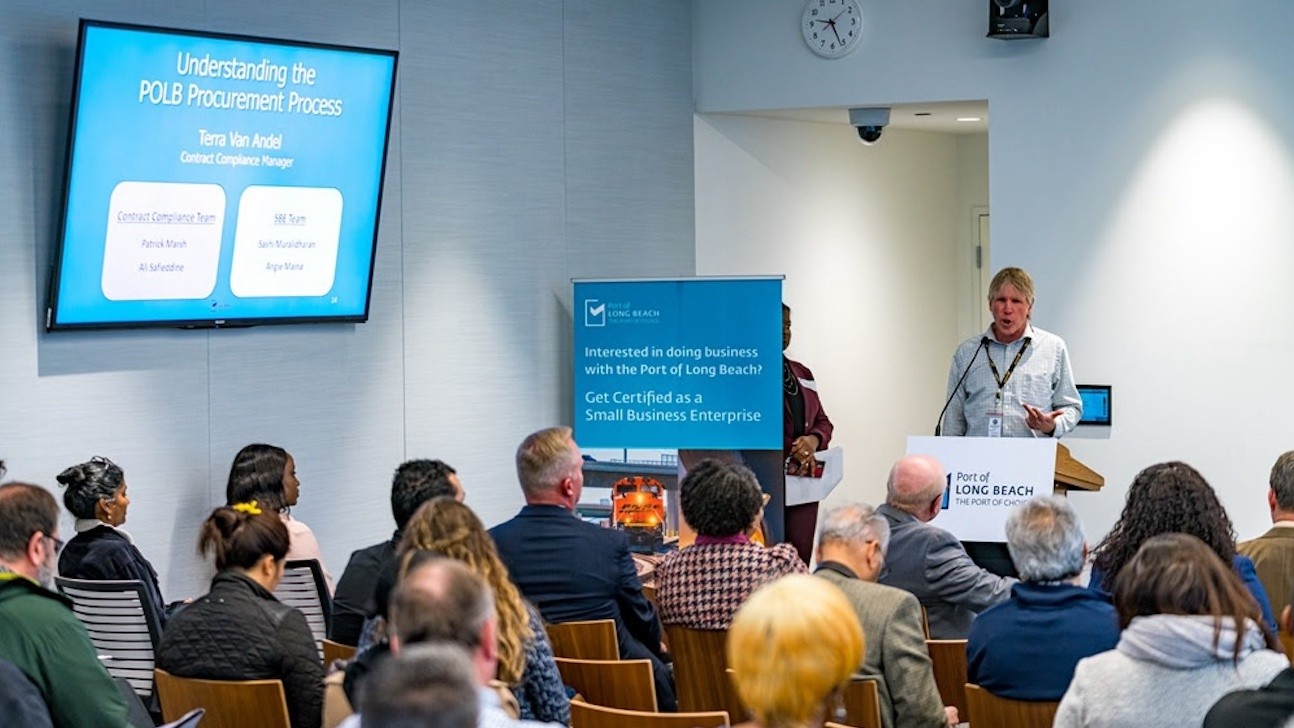
The port in a release said its staff participated in more than 40 outreach events throughout the year to boost participation in the program. The goal set for small business enterprise participation at the port, a department of the City of Long Beach, is 27%, which it claimed is one of the highest when compared to other California ports and municipal agencies. The Port’s 44.6% utilization in the 2025 fiscal year is the third-highest since the program was founded in 2004.
Leadership commitment and eligibility criteria
“Our vision to double our cargo to 20 million containers annually by 2050 and build the Port of the Future is going to take a big team,” said Port of Long Beach Chief Executive Dr. Noel Hacegaba. “We want to make sure smaller businesses – the backbone of the U.S. economy – are equipped with the knowledge and ability to compete and win port-related construction and professional services contract opportunities.”
The very small business eligibility is equivalent to the state of California’s microbusiness designation: those with $5 million or less in annual gross sales, averaged over the last three fiscal years, or manufacturers with 25 or fewer employees. This definition anchors the program’s inclusivity framework and aligns with statutory thresholds established under California Government Code §12011.5.
Contextual background and industry alignment
The Port of Long Beach is the second-busiest container port in the United States, handling 9.2 million TEUs in fiscal year 2025 — down 3.1% from 2024 but still exceeding pre-pandemic volumes. Its Small Business Enterprise Program operates under the City of Long Beach’s Municipal Code Chapter 2.85, mandating annual reporting and third-party verification of contract award data. Comparable initiatives at other major gateways include the Port of Los Angeles’ 30% small business goal (achieved 32.7% in FY2025) and the Port of Oakland’s 25% target (28.4% achieved). All three ports are signatories to the California State Contracting Plan for Small Businesses, adopted in 2019.
Supply chain professionals engaged in public procurement note that such programs directly impact bid readiness timelines, bonding requirements, and subcontractor tiering compliance. For example, prime contractors bidding on Port of Long Beach infrastructure projects must submit Small Business Subcontracting Plans certified by the Office of Small Business Development — a process requiring minimum documentation turnaround of 14 business days
Source: FreightWaves
Compiled from international media by the SCI.AI editorial team.