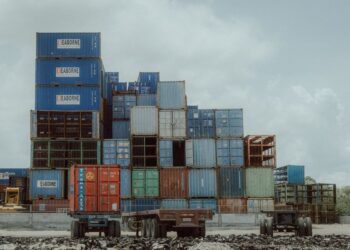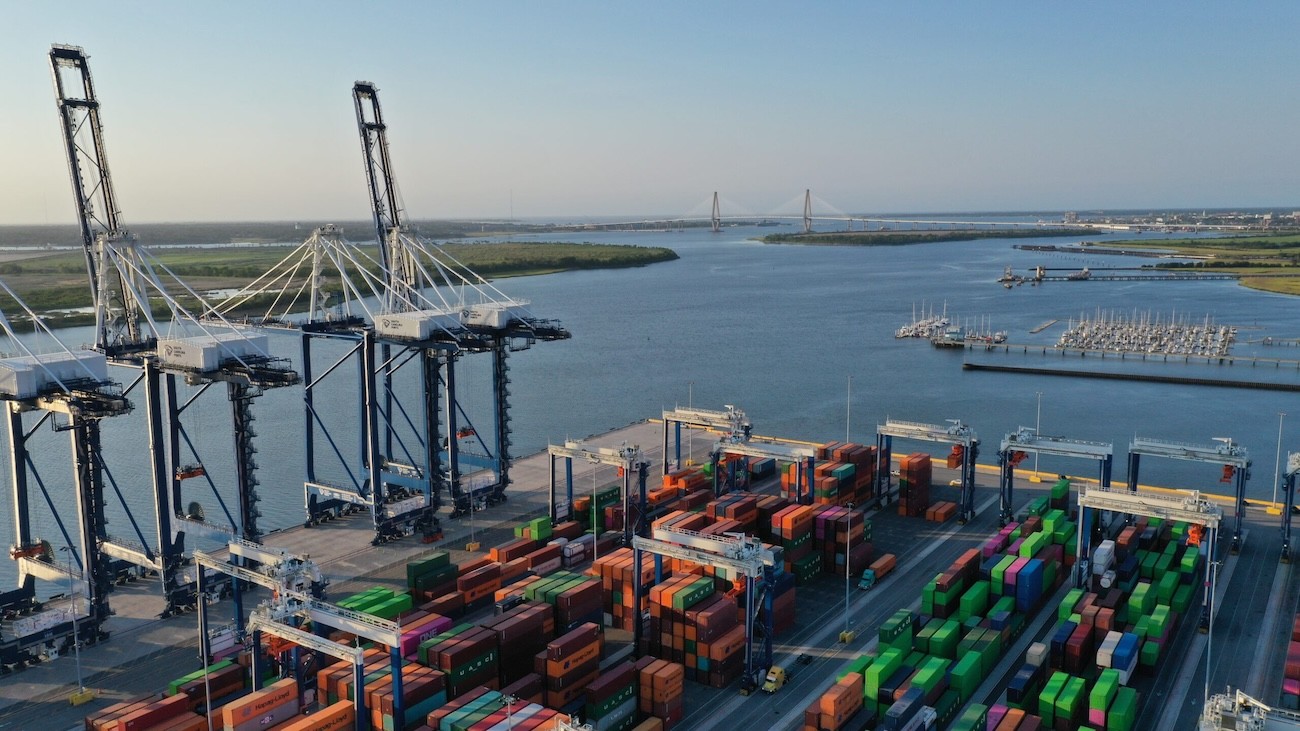
According to FreightWaves, the South Carolina Ports Authority (SC Ports) will temporarily suspend operations at the Hugh K. Leatherman Terminal in North Charleston, beginning Aug. 1, 2026, citing an uncertain trade outlook for the second half of 2026 and the need to reduce operating costs.
Strategic consolidation, not cancellation
The pause is described by SC Ports as a short-term operational adjustment, not a permanent closure or abandonment of the terminal’s long-term expansion plan. The facility — which reopened in 2024 following a labor dispute — was designed to add critical capacity to the Charleston port complex. Its initial capacity stands at 700,000 TEUs, with full buildout targeting 2.4 million TEUs. That construction remains underway, according to the agency’s official statement.
SC Ports emphasized that container handling will be consolidated across existing facilities: the Wando Welch Terminal and the North Charleston Terminal. Both terminals collectively hold sufficient capacity to absorb near-term volume shifts without requiring new infrastructure investment. This consolidation reflects a deliberate recalibration toward cost competitiveness rather than growth-at-all-costs, especially amid tempered import volumes and persistent macroeconomic headwinds.
Drivers: demand softness and cost discipline
“An uncertain trade outlook in the back half of 2026 coupled with the need to lower costs” drove the decision, SC Ports stated in its public announcement. The agency explicitly linked the move to broader industry conditions: “The industry faces numerous headwinds, an uncertain trade forecast, and tempered volumes.”
“This decision aligns with the port’s continued focus on cost competitiveness to ensure the business is well-positioned for growth.”
The statement deliberately distinguishes this pause from prior disruptions — notably the 2024 labor-related shutdown — underscoring that current pressures stem from external market forces, not internal labor relations. No workforce reductions were announced; instead, personnel are expected to be redeployed across the active terminals.
Operational ripple effects
While container handling capacity remains intact across the Charleston port complex, inland logistics networks will face measurable adjustments. Cargo previously destined for Leatherman’s intermodal chain — particularly rail movements tied to the planned Navy Base Intermodal Facility — will now route through Wando Welch and North Charleston. This shift necessitates recalibration of rail schedules, drayage patterns, and inland ramp timing.
The Navy Base Intermodal Facility remains a separate, long-term initiative and is unaffected by the temporary pause. However, its integration timeline may be indirectly influenced by revised throughput projections and capital allocation priorities stemming from the current consolidation. Drayage providers serving the North Charleston area report preparing for increased truck traffic at the remaining terminals, with some already adjusting fleet deployment and appointment windows.
Broader context in U.S. port operations
SC Ports’ move follows a pattern of strategic recalibration among major U.S. gateways. In May 2026, the Port of Los Angeles reported a 12% year-over-year decline in loaded import containers for Q1, while the Port of New York and New Jersey cited “softening trans-Pacific demand” in its April 2026 volume update. These trends reflect ongoing tariff volatility, inventory normalization after pandemic-era overstocking, and shifting sourcing strategies away from China toward Southeast Asia and Mexico — a realignment tracked by FreightWaves’ SONAR platform.
Notably, this pause occurs just months after the CSX $495 million Baltimore intermodal rail tunnel — a key link for East Coast freight — officially opened in March 2026. That project enhances connectivity for Charleston-bound cargo but does not offset the immediate need for terminal-level cost optimization in the face of declining utilization rates at Leatherman.
Source: FreightWaves
Compiled from international media by the SCI.AI editorial team.