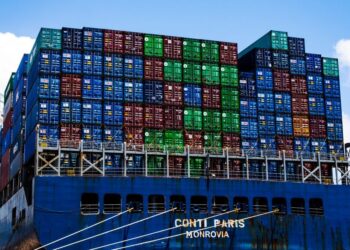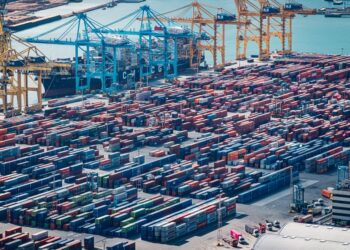
The U.S. is preparing to install new restrictions for foreign importers while establishing higher penalty floors for those noncompliant with customs regulations, according to an executive order signed on June 3 by President Donald Trump.
Immediate operational implications
Companies must evaluate their importer of record arrangements and ensure they have deep levels of supply chain visibility ahead of the changes, experts said.
Under the executive order issued on June 3, 2026, U.S. Customs and Border Protection (CBP) is directed to revise its enforcement framework to impose stricter accountability on overseas entities shipping goods into the United States. The order mandates that CBP establish minimum civil penalty amounts for violations related to misclassification, undervaluation, and origin misrepresentation — effectively eliminating de minimis enforcement discretion for repeat or high-risk actors.
One provision requires all foreign-based importers without a U.S. legal presence to designate a U.S.-based agent authorized to receive service of process and retain full records for five years. This aligns with longstanding CBP guidance but now carries statutory weight under the new directive.
Penalty structure overhauled
The executive order sets new baseline penalties: a minimum civil fine of $10,000 for first-time violations involving intentional misdeclaration of country of origin, and $25,000 for repeat offenses within a three-year window.
For valuation discrepancies exceeding 15% of declared value — whether due to omission of royalties, assists, or freight costs — the order directs CBP to apply a tiered penalty schedule beginning at $7,500 These figures replace prior case-by-case assessments where penalties could fall below $1,000 for minor infractions.
“This isn’t about revenue generation — it’s about deterrence through predictability,” said Max Garland, Lead Reporter at Supply Chain Dive. “Shippers now face hard floors, not soft ceilings. A single incorrect HTS code on a shipment valued at $2 million could trigger automatic review if the error pushes duty liability more than 5% off target.”
“Companies must evaluate their importer of record arrangements and ensure they have deep levels of supply chain visibility ahead of the changes.” — Max Garland, Lead Reporter, Supply Chain Dive
Importer of record (IOR) requirements tightened
The order explicitly prohibits foreign corporations from serving as their own importer of record unless they maintain a physical office, full-time staff, and bonded warehouse facilities in the United States — criteria that disqualify most e-commerce sellers registered in Hong Kong, Singapore, or the UAE.
Over 82% of non-U.S. import entries in fiscal year 2025 were processed through third-party IORs, ’s latest annual enforcement report. The new rule shifts liability entirely to the designated U.S. agent, who must now certify compliance annually using CBP Form 4811-A, effective October 1, 2026.
U.S.-based logistics providers such as C.H. Robinson and Flexport have already begun rolling out updated IOR service packages with expanded audit support and real-time tariff classification validation tools — features previously optional but now critical for clients importing from China, Vietnam, and Mexico.
Supply chain visibility now mandatory
The executive order defines “deep supply chain visibility” as the ability to trace every component across at least three tiers of the supply network, including raw material sourcing, contract manufacturing locations, and final assembly points — with documentation available to CBP within 72 hours of request.
This requirement directly affects shippers using multi-tier subcontracting in electronics, apparel, and automotive parts. For example, a garment shipped from Bangladesh must include verifiable evidence of cotton origin (e.g., farm-level certification), spinning mill location, dye house compliance status, and cut-make-trim facility licensing — all stored in a CBP-accessible digital repository.
The order also authorizes CBP to conduct unannounced audits of IORs’ recordkeeping systems starting January 2027, with failure to produce compliant data within the 72-hour window triggering automatic suspension of import privileges for up to 90 days.
Source: Supply Chain Dive
Compiled from international media by the SCI.AI editorial team.