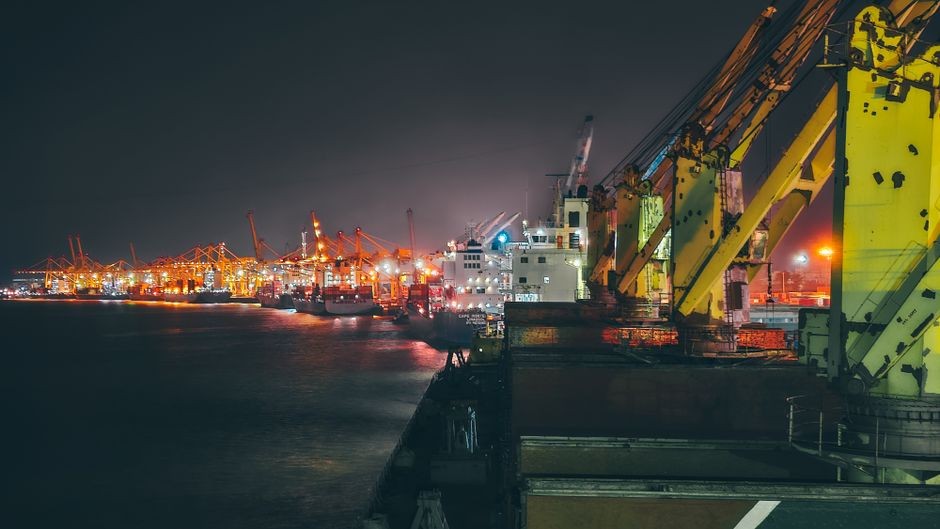
Following strong May volumes, the port is forecast to handle more than 900,000 container units in both June and July, Executive Director Gene Seroka said.
Dive Brief
Ocean shippers are moving quickly to take advantage of the current “window of stability,” pushing to speed cargo through the supply chain as conditions allow, Port of Los Angeles Executive Director Gene Seroka said during a June 16 media briefing.
Record May Volumes Signal Short-Term Relief
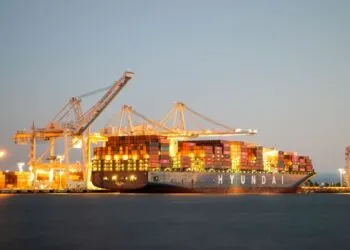
The Port of Los Angeles processed 840,165 TEUs in May, up 17% year over year. This marks the highest May volume since 2023, data released on June 18, 2026. The surge followed a prolonged period of congestion caused by Red Sea disruptions, Panama Canal drought restrictions, and labor uncertainty at U.S. East Coast ports.
The port’s May performance exceeded forecasts by 6.2%, with import volumes rising 22.4% compared to May 2025. Export volumes increased 8.7% year over year, reflecting stronger domestic manufacturing output and restocking activity across retail and industrial sectors. Pier 400 — the port’s largest and most automated terminal — accounted for 34% of total May throughput.
Stability Window Driven by Multiple Converging Factors
Seroka attributed the improved flow to three concurrent developments: the resolution of the U.S. East Coast port labor negotiations in early May, normalization of transit times through the Panama Canal following rainfall-driven draft relaxation, and a temporary lull in new tariff announcements affecting trans-Pacific trade lanes.
This convergence has created what Seroka termed a “window of stability” — not a return to pre-2022 predictability, but a measurable reduction in volatility lasting approximately six to eight weeks. During this period, average vessel dwell time at Berth 102 dropped from 4.8 days in April to 2.3 days in mid-June. Truck turn times at gate facilities fell to 22 minutes, down from 47 minutes in March.
Operational Response from Carriers and Shippers
Major ocean carriers including Maersk, COSCO, and Hapag-Lloyd have accelerated blank sailings on Asia–East Coast routes while adding dedicated weekly services into Los Angeles. According to Supply Chain Dive’s carrier scheduling database, 14 additional direct Asia–LA sailings were added between June 1 and June 15, 2026 — a 23% increase over the same period in 2025.
Shippers are responding operationally: Walmart Logistics confirmed it shifted 12% of its planned Q2 East Coast imports to West Coast ports, primarily Los Angeles and Long Beach. Target Corp. reported rerouting $840 million worth of goods originally scheduled for Savannah and Newark terminals. These decisions reflect a calculated trade-off: accepting slightly higher inland freight costs to avoid multi-week delays and demurrage penalties.
Underlying Structural Pressures Remain
Despite the near-term relief, structural headwinds persist. The 2026 State of Logistics Report — authored by Kearney and presented by Penske Logistics for the Council of Supply Chain Management Professionals — notes that U.S. business logistics costs totaled $2.4 trillion last year, or 7.8% of gross domestic product. This remains elevated versus the 5.2% historical average (1990–2019). The report identifies five persistent forces reshaping operations: asymmetrical global growth, tightening financial conditions, geoeconomic realignment, labor constraints, and energy price volatility.
Regional divergence is pronounced: the United States projects 2.2% to 2.4% GDP growth for 2026, while Europe lags at roughly 1%. GCC economies contracted 1.2% in 2025 due to Middle East conflict–driven energy flow disruption. Meanwhile, the Strait of Hormuz continues to carry 20 million barrels of oil and 20% of global liquefied natural gas trade — a critical vulnerability amplified by tariff policy changes occurring on average every 1.5 weeks in 2025.
“The supply chain of right now is incredibly complex and requires a series of constant adjustments. Last year’s supply chain looks different than today’s supply chain. I surmise that next year’s logistics network will be hardly recognizable.” — Mark Baxa, president and chief executive officer of the Council of Supply Chain Management Professionals
Source: Supply Chain Dive
Compiled from international media by the SCI.AI editorial team.