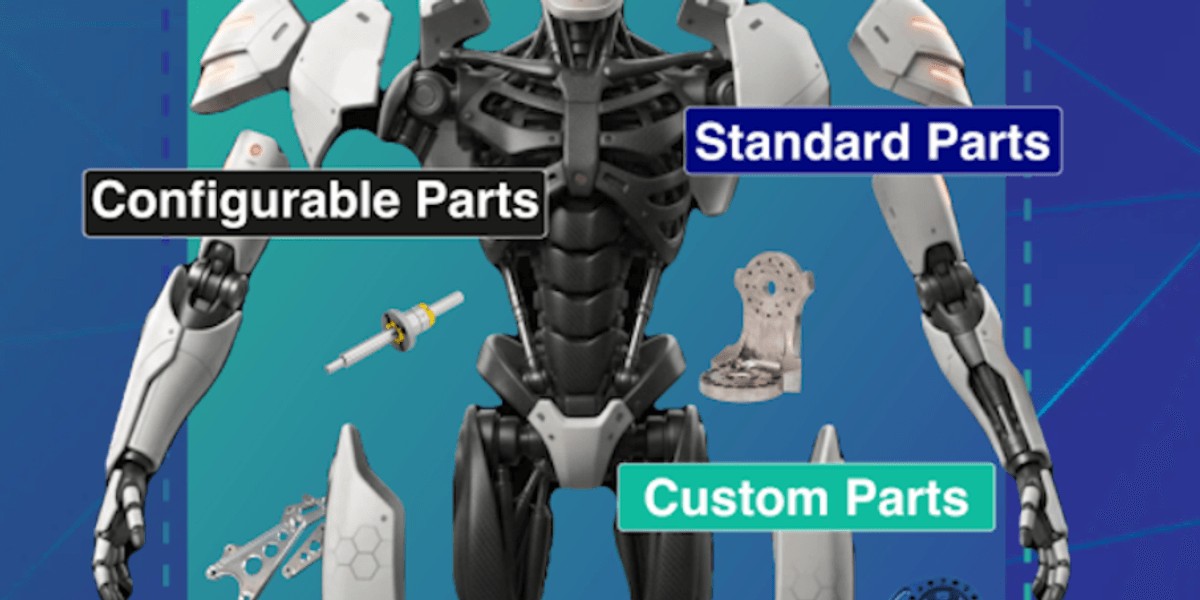
According to www.dcvelocity.com, Japanese manufacturing company Misumi Group Inc. launched Misumi Americas on May 28, 2026, establishing a U.S.-based custom manufacturing division focused on standard, configurable, and custom-fabricated mechanical parts.
Strategic Acquisition and Operational Integration
The launch follows Misumi Group’s 2025 acquisition of Fictiv, a San Francisco-based custom manufacturing service provider. This acquisition enabled Misumi to integrate Fictiv’s AI-powered digital manufacturing platform with its own decades-long legacy in precision component supply. The combined capability supports specification-driven engineering workflows across North America and globally. Misumi Americas now positions itself as a comprehensive digital manufacturing and supply chain partner—not merely a component supplier—enabling end-to-end mechanical bill of materials (BOM) execution.
Global Manufacturing Network and Target Sectors
Misumi Americas operates through a resilient multi-regional manufacturing network with physical hubs in the U.S., Mexico, China, Japan, and India—a total of five geographically distributed production centers. The division specifically targets high-precision sectors including factory automation, robotics, aerospace, eVTOL (electric vertical takeoff and landing), satellites, and medical devices. According to the report, this geographic footprint enables localized responsiveness while maintaining consistent quality standards rooted in Japanese operational discipline.
Leadership Vision and Technical Differentiation
Dave Evans, CEO of MISUMI Americas, stated:
“By combining Misumi’s decades of precision and reliability with Fictiv’s AI-powered digital manufacturing platform, we’re transforming static supply chains into living, self-optimizing production systems, empowering innovators to move from design to production faster and with greater confidence.”
The platform’s technical foundation includes automated quoting, real-time manufacturability feedback, and dynamic capacity allocation across the five hubs. This contrasts with traditional procurement models that rely on fragmented vendor sourcing and manual RFQ cycles.
Industry Context and Competitive Alignment
This expansion aligns with broader nearshoring and supply chain resilience trends. In parallel, Schaeffler—a German automotive hardware maker—announced in May 2026 it will deploy thousands of humanoid robots across two German facilities starting in December 2026. That deployment is supported by a five-year supply agreement under which Schaeffler will provide over 50% of Humanoid’s joint actuator demand for wheeled platforms through 2031, translating to a seven-digit number of actuators (i.e., between 1 million and 9 million units). Meanwhile, China’s latest Five-Year Plan—cited by the International Federation of Robotics—explicitly prioritizes AI-powered robots as primary drivers of economic growth, reinforcing global momentum toward digitally integrated, physically capable manufacturing infrastructure.
Source: DC Velocity
Compiled from international media by the SCI.AI editorial team.