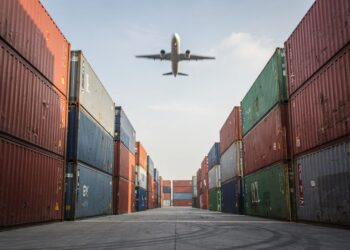
According to www.aircargonews.net, Iranian missile and drone attacks on the UAE on 4 May 2026 have reversed recent recovery momentum in global air cargo, triggering a 12–16% global air cargo capacity shortfall.
Immediate Airspace Closures and Operational Halts
SEKO Logistics reported that civilian airspace across much of the Middle East is now closed or heavily restricted. Airspace in Iran, Iraq, Kuwait, and Syria is fully closed. Israel is largely closed but accepting limited pre-approved cargo. Partial or restricted closures are in place in Qatar, Bahrain, Jordan, Saudi Arabia, Pakistan, and the UAE — including Dubai, Abu Dhabi, and Sharjah. Prior to the 4 May attacks, UAE hubs had rebounded to 70–90% of pre-disruption operations following their 2 May reopening, which saw over 1,000 daily departures at peak. Now, those hubs face temporary operational halts, delays, and renewed backlogs — especially for time-sensitive cargo.
Carrier-Level Impacts and Network Restorations
Middle East carriers support 25–30% of global air cargo volume annually, and had been recovering from initial disruption beginning at the end of February 2026. However, SEKO confirmed the 4 May escalation caused ongoing suspensions or heavy cancellations to affected hubs. Emirates SkyCargo has not issued specific operational commentary, but stated on 4 May 2026 it was “marking a near-full return to operations, with 96% of its global network now restored.” Qatar Airways Cargo confirmed on 2 May 2026 it had resumed freighter and belly operations to and from Doha.
Trade Lane Disruptions and Cost Impacts
The Asia-Europe trade lane has been most severely affected, with rerouted flights driving “high rate spikes,” according to SEKO. Asia-Africa routes face significant ongoing disruption. Meanwhile, Asia-Americas, Europe-Americas, and US lanes are under indirect pressure, with freight rates increased by 15–35% and added delays expected post-4 May. Rerouting also adds 2–5 hours per flight and increases fuel burn by 30–50%, directly cutting payload and cargo volume per flight.
Broader Supply Chain Context
Ocean shipping remains disrupted due to the closure of the Strait of Hormuz since 2 March 2026. Just days before the 4 May attacks, data provider Xeneta noted airfreight rates had increased by more than 30% year-on-year in April 2026, though it suggested they may have peaked. This follows earlier reporting that full airfreight recovery after the US-Iran ceasefire could take months (Xeneta, 9 April 2026). Cathay Cargo, facing capacity limitations, is seeking mid-point stops on Asia-Europe routes and warning customers of fuel surcharge increases (2 April 2026). Separately, Dimerco reported on 1 May 2026 that rising AI and semiconductor demand is further pressuring airfreight capacity amid reduced bellyhold availability.
Source: Air Cargo News
Compiled from international media by the SCI.AI editorial team.