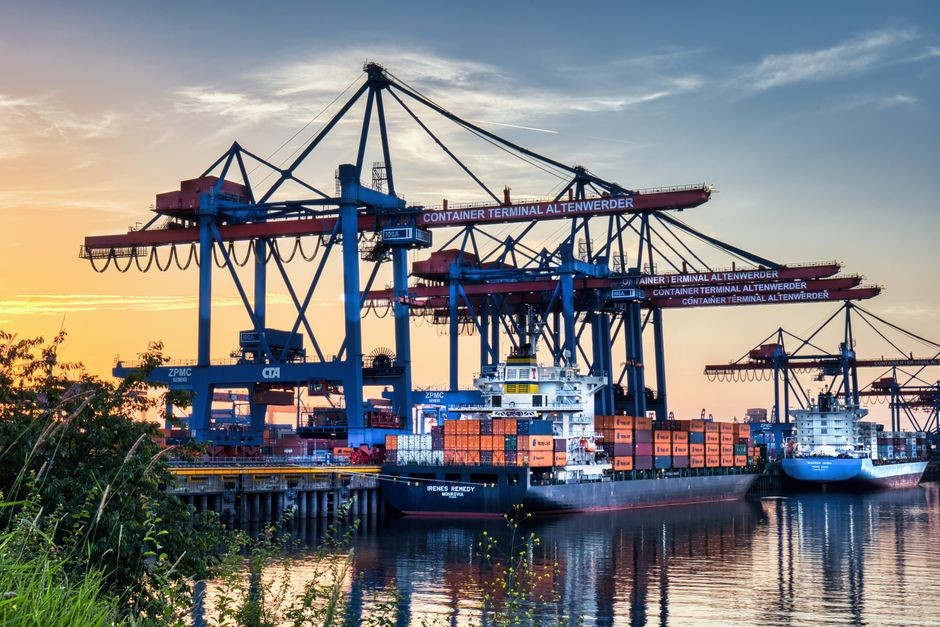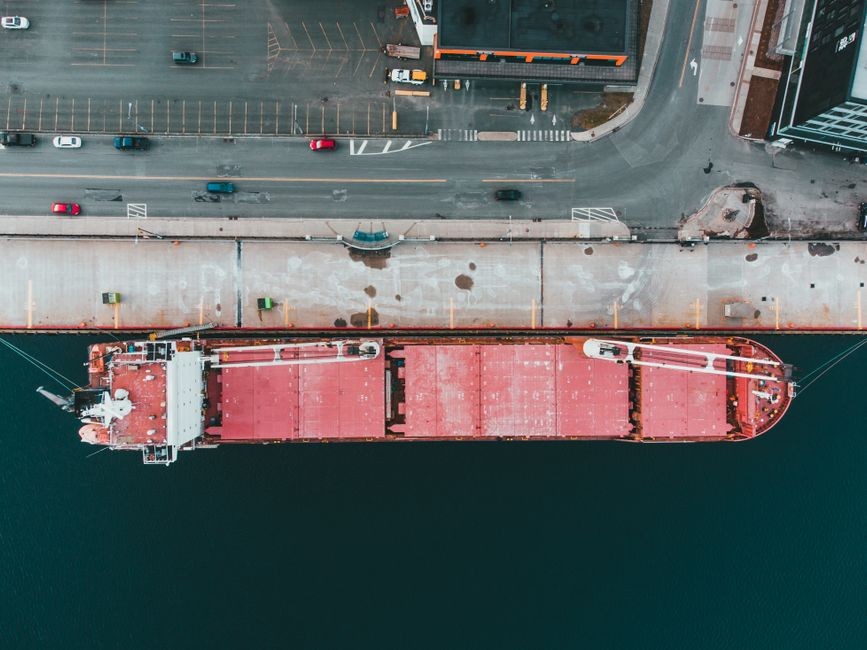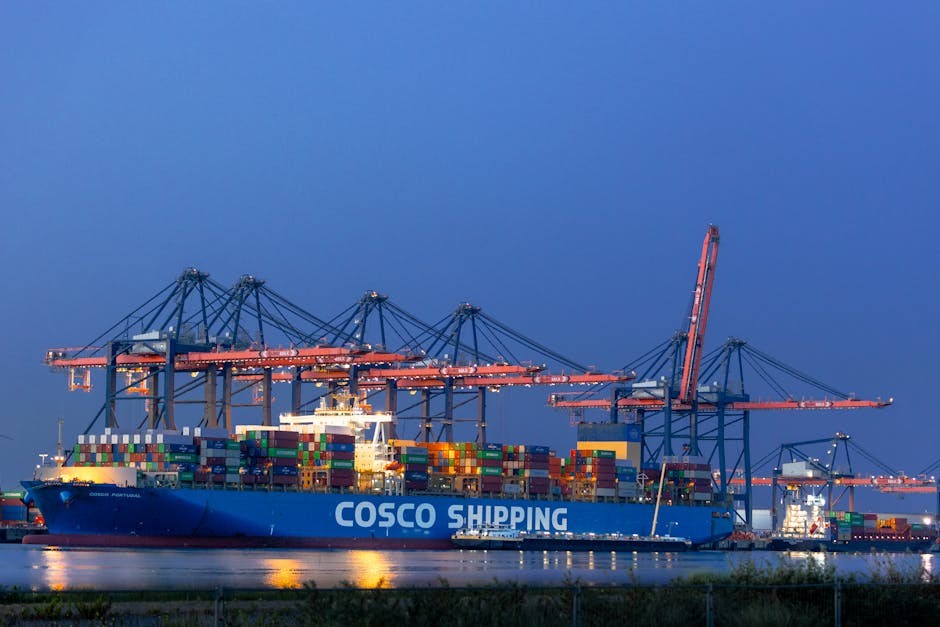
Container shipping stands at a pivotal inflection point—not defined by sudden crisis, but by the slow, deliberate accumulation of capacity that has transformed prudence into paradox. By 2026, an unprecedented ten million TEU of new vessel capacity—equivalent to one-third of the current active global fleet—will have entered service, triggering what industry analysts now describe as the most structurally complex downcycle in modern maritime history. This is not a cyclical correction driven by temporary demand softness; it is the culmination of overlapping strategic decisions made across three distinct phases: pandemic-era capital accumulation, post-crisis risk recalibration, and long-term fleet modernization under decarbonization mandates. Unlike previous downturns where overcapacity emerged from misaligned forecasts or speculative ordering, today’s imbalance is intentionally sustained—older vessels are being retained not for economic efficiency, but as operational insurance against geopolitical volatility, while newbuilds advance not to chase volume, but to lock in fuel efficiency, regulatory compliance, and network control. The result is a market where supply elasticity has fundamentally eroded: carriers can no longer rapidly withdraw tonnage without sacrificing service reliability, schedule integrity, or contractual obligations to major shippers—making traditional capacity management tools less effective and more costly.
An Oversupplied Market: The Mechanics of Fleet Inflation
The scale and velocity of fleet expansion since 2021 defy historical precedent. Between Q1 2021 and Q4 2025, global container ship orderbooks surged to 10.2 million TEU, according to S&P Global Maritime Intelligence—a figure that dwarfs the combined newbuild volume of the prior decade. Crucially, this expansion was not evenly distributed: over 68% of ordered capacity consists of ultra-large container vessels (ULCVs) exceeding 15,000 TEU, with 32% classified as ‘mega-ships’ over 24,000 TEU. These vessels are not simply larger—they are engineered for specific trade lanes, port infrastructures, and alliance routing strategies, embedding rigidity into the very architecture of global supply chains. While spot rates on the transpacific corridor (FBX01) plunged below $1,000/FEU in March 2023—a level unseen since before 2019—the subsequent Red Sea crisis temporarily masked overcapacity by absorbing excess tonnage through route elongation and repositioning. Yet even as Houthi attacks extended Asia–Europe voyage times by 10–14 days, the underlying supply-demand imbalance deepened: East–West long-haul rates fell 45% year-on-year by October 2025, with transpacific averages settling at $1,400/FEU—still 62% below the $3,700/FEU peak of 2022. This divergence reveals a critical truth: short-term disruptions no longer provide structural relief when fleet growth outpaces both nominal GDP expansion and containerized trade volume growth, which the World Trade Organization projects at just 2.3% annually through 2027.
What makes this overcapacity uniquely intractable is its dual-layered nature—both quantitative and qualitative. Quantitatively, the active fleet grew 12.7% between 2022 and 2025, while containerized trade volumes expanded only 3.1% over the same period, creating a widening gap that cannot be closed by seasonal demand fluctuations alone. Qualitatively, the newbuild wave is accelerating technological stratification: vessels delivered after 2024 feature 22–28% lower carbon intensity per TEU-km than pre-2020 ships, enabling carriers to comply with the IMO’s Carbon Intensity Indicator (CII) regulations while simultaneously lowering operating costs. As a result, older vessels—even those economically obsolete—are being retained not because they’re profitable, but because scrapping them would eliminate valuable redundancy during crises like the Red Sea conflict or Panama Canal droughts. This creates a ‘fleet floor’ effect: carriers maintain a minimum operational buffer regardless of market conditions, effectively raising the baseline supply level and compressing the range within which traditional blank sailing or slow-steaming levers can meaningfully influence rates.
Driving a Downcycle: Why Capacity Management Is Losing Its Bite
Historically, container shipping downturns were moderated by rapid, coordinated capacity discipline—blank sailings, vessel idling, and accelerated scrapping. Today, those mechanisms face systemic constraints. As of Q3 2025, the global idle fleet stood at just 1.8% of total capacity, compared to 7.4% during the 2016–2017 downturn and 11.2% during the 2009 global financial crisis. Similarly, scrapping activity remains near historic lows: only 220,000 TEU of capacity was dismantled in 2024, versus 890,000 TEU in 2016. This inertia reflects profound shifts in carrier economics and governance. First, pandemic-era profits enabled carriers to reduce vessel debt by an average of 37% across the top 10 operators, eliminating the financial pressure to scrap aging tonnage to meet loan covenants. Second, alliances—now controlling 85% of all East–West capacity—operate under rigid slot-sharing agreements that discourage unilateral capacity withdrawal, as doing so risks destabilizing shared services and violating commercial commitments to major retailers and manufacturers. Third, digital freight platforms and long-term contracts now anchor over 65% of global container volume to fixed-rate structures, reducing carriers’ ability to leverage spot-market scarcity for rate recovery.
The implications extend beyond pricing volatility into core business model sustainability. With average operating margins for top-tier carriers falling from 32.1% in 2022 to 14.8% in 2025, the traditional ‘boom-bust’ cycle is being replaced by a prolonged ‘low-margin equilibrium’—a state where profitability hinges less on market timing and more on vertical integration, ancillary revenue streams, and data-driven logistics orchestration. Carriers like Maersk and MSC are investing $4.2 billion collectively in inland logistics infrastructure and digital platforms such as Twill and TIS, signaling a strategic pivot away from pure ocean transport toward end-to-end supply chain solutions. This shift, however, does not resolve the immediate overcapacity challenge; rather, it reframes it as a competitive differentiator: carriers with superior network visibility, predictive analytics, and multimodal flexibility can absorb lower ocean rates by capturing value upstream and downstream—while smaller, asset-heavy operators face existential margin compression. The downcycle is thus not merely about too many ships—it is about a fundamental reconfiguration of value capture across the logistics stack.
Why No Scrapping? The ‘Known Unknown’ Doctrine in Practice
The persistence of older vessels—many built before 2010 and operating well beyond their original 25-year design life—is not an oversight but a deliberate risk-mitigation doctrine rooted in recent trauma. Carriers refer to this as managing the ‘known unknowns’: events whose probability cannot be quantified but whose impact is empirically proven—such as the 18-month global port congestion cascade triggered by COVID-19 lockdowns or the 14-month Red Sea disruption that forced rerouting of 22% of Asia–Europe traffic. In both cases, surplus capacity—especially older, flexible feeder and regional vessels—proved indispensable in maintaining service continuity, avoiding cascading delays, and preserving customer trust. Parash Jain, Managing Director and Global Head of Transport & Logistics Research at HSBC, underscores this calculus:
“This seemingly counterintuitive strategy reflects carrier lessons learned from recent disruptions and longer-term strategic positioning, at the cost of rate and revenue challenges for carriers in the coming years.” — Parash Jain, Managing Director, Global Head of Transport & Logistics Research, HSBC
What appears irrational on a quarterly earnings basis becomes strategically rational over a multi-year horizon: retaining a 12,000-TEU vessel built in 2008 may cost $18,000/day in fuel and maintenance, but its availability during a Suez Canal closure or U.S. West Coast labor dispute delivers $2.3 million in incremental revenue per voyage by preventing cargo rollovers and contract penalties.
This doctrine has reshaped fleet renewal economics. Rather than adhering to linear depreciation schedules, carriers now apply scenario-weighted lifetime valuation models—assigning non-zero probabilities to low-frequency, high-impact events and calculating net present value accordingly. For example, Hapag-Lloyd’s 2025 fleet plan allocates 28% of its capital expenditure budget to mid-life vessel upgrades (scrubbers, hull coatings, engine retrofits) instead of newbuilds, extending the viability of vessels aged 15–20 years. Similarly, CMA CGM’s acquisition of 11 older 13,000-TEU vessels in 2024—at an average price of $48 million each—was explicitly framed as ‘strategic optionality’ for volatile corridors. The consequence is a bifurcated fleet: one tier of technologically advanced ULCVs optimized for efficiency and emissions compliance, and another tier of rugged, operationally versatile older ships serving as shock absorbers. This duality ensures resilience—but at the expense of market fluidity, as the pool of ‘disposable’ capacity shrinks and the marginal cost of withdrawing tonnage rises steeply.
The Newbuild Paradox: Capital Discipline vs. Competitive Necessity
Despite clear signals of overcapacity—including freight rates trading 34% below five-year averages and carrier stock valuations declining 22% since Q2 2024—the orderbook continues expanding, with 1.9 million TEU of new vessels ordered in Q1 2025 alone. This apparent contradiction stems from three interlocking imperatives: regulatory compliance, alliance dynamics, and shareholder expectations. First, the IMO’s revised GHG Strategy mandates a 20% reduction in carbon intensity by 2030 and net-zero emissions by 2050; retrofitting older vessels to meet CII ratings is increasingly uneconomical, making newbuilds with methanol-ready or ammonia-capable engines a regulatory necessity, not a luxury. Second, alliance membership requires fleet standardization: joining or maintaining a position in the Ocean Alliance or THE Alliance demands vessels capable of meeting strict slot-sharing, scheduling, and digital interoperability protocols—standards older ships cannot satisfy. Third, institutional investors now evaluate carriers on ESG metrics and long-term asset quality, pressuring management to replace aging tonnage even at the expense of short-term ROIC. As one senior analyst at Clarkson Platou observed,
“You don’t get penalized for ordering a ship in 2025—you get penalized for not having a methanol-fueled vessel on order by 2026. The market rewards forward-looking capital allocation, not reactive cost-cutting.” — Senior Analyst, Clarkson Platou Securities
This dynamic creates a self-reinforcing loop: as carriers place orders to comply with regulation and retain alliance standing, the resulting delivery schedule locks in future capacity, compelling competitors to follow suit to avoid relative disadvantage. The result is a collective action problem where rational individual decisions produce suboptimal aggregate outcomes. Consider that 73% of all newbuild orders placed since 2023 specify alternative fuels, yet green ammonia bunkering infrastructure exists at only four ports globally, and green methanol supply remains less than 12% of projected 2027 demand. Carriers are betting on infrastructure catching up—not because the bet is certain, but because the cost of losing alliance slots or failing CII audits is higher than the risk of stranded assets. This explains why newbuild orders persist despite weak rates: they are not bets on near-term profitability, but defensive maneuvers in a multi-decade transition where fleet composition determines strategic relevance far more than quarterly earnings.
Long-Term Resilience vs. Short-Term Fragility: The Dual Trajectory Ahead
The container shipping industry is diverging along two parallel, contradictory trajectories—one defined by fragility in the near term, the other by structural resilience over the medium term. In the next 24–36 months, the market faces acute vulnerability: with 2.4 million TEU of new capacity scheduled for delivery in 2026 alone, and demand growth constrained by slowing global manufacturing output and inventory normalization, freight rates could fall to $850/FEU on key transpacific lanes—a level that would push 14 of the world’s top 30 carriers into negative EBITDA territory. Yet this same overcapacity, if managed deliberately, lays the foundation for unprecedented system-wide resilience. Larger fleets, when coupled with AI-driven predictive routing, real-time port congestion analytics, and integrated intermodal networks, enable carriers to dynamically allocate capacity across geographies and modes—shifting vessels from oversupplied East–West routes to underserved intra-Asia or Latin America corridors within weeks, not months. Maersk’s deployment of AI-powered voyage optimization across 300+ vessels reduced average fuel consumption by 9.3% in 2025, proving that scale, when digitally augmented, yields efficiency gains that offset rate compression.
This duality manifests in divergent carrier strategies. The first cohort—comprising MSC, Maersk, and CMA CGM—is pursuing ‘integrated resilience’: building proprietary inland networks, acquiring warehousing assets, and developing digital twins of global port operations to anticipate bottlenecks before they occur. The second cohort—regional players and independent operators—faces increasing marginalization unless they specialize in niche markets (e.g., refrigerated, hazardous, or project cargo) where service differentiation outweighs rate sensitivity. Critically, the long-term resilience scenario depends entirely on disciplined capacity stewardship: activating dormant tonnage only during verified disruptions, avoiding predatory rate wars, and coordinating alliance-level service rationalization. Should carriers succumb to short-term liquidity pressures and engage in aggressive blank sailing or rate undercutting, the downcycle could deepen into a structural crisis—eroding investor confidence, delaying decarbonization investments, and triggering consolidation that undermines service diversity. The path forward demands recognizing that resilience is not the absence of volatility, but the capacity to absorb shocks without sacrificing strategic coherence.
- Key drivers of the 2026 downcycle: 10.2 million TEU newbuild pipeline, 45% YoY rate decline on East–West lanes, idle fleet at just 1.8%, and scrapping at historic lows (220,000 TEU in 2024)
- Strategic retention rationale: Older vessels serve as insurance against Red Sea-style disruptions, Panama Canal droughts, and port labor actions, delivering $2.3M+ per avoided cargo rollover
- Regulatory catalysts for continued newbuilding: IMO’s 2030 CII targets, 2050 net-zero mandate, and alliance requirements for digital interoperability
- Emerging resilience enablers: AI-driven voyage optimization (9.3% fuel savings), integrated intermodal networks, and real-time port congestion analytics
Conclusion: Three Strategies to Navigate the Downcycle
The 2026 container shipping downcycle is not a crisis to survive—it is a restructuring opportunity to exploit. Three distinct player classes will define the outcome: carriers must choose between becoming true end-to-end integrators or niche specialists; shippers must abandon pure cost-based procurement in favor of total-cost-of-ownership models that internalize resilience; and technology vendors must deliver predictive, intervention-grade intelligence rather than passive dashboards. Those who master this triad will not merely endure the downcycle—they will emerge as the architects of the next generation of global logistics.
Source: www.freightos.com
This article was AI-assisted and reviewed by our editorial team.