This article provides an in-depth analysis of the Mexico nearshoring wave based on authoritative Supply Chain Dive data: 14% of U.S. imports originate from Mexico, U.S. investment accounts for 42% of Mexico’s FDI; the automotive sector serves as the super anchor, attracting $5.4B in investment in Q1-Q3 2023; its success stems from time compression (Monterrey to Detroit in <4 days), institutional networks (14 FTAs covering 50 countries), and mature ecosystems. The article reveals hidden tensions of regional divergence and logistics infrastructure breakthroughs, and posits that Mexico is evolving from manufacturing absorption to a regional innovation source.
I. Structural Shift Confirmed by Data: From Peripheral Player to Core Hub
Mexico’s role in North American supply chains has undergone a fundamental shift—not a sudden whim, but the result of decades of institutional accumulation and market selection. According to Supply Chain Dive data analysis, 14% of all U.S. imports by value originated in Mexico in 2022, a figure that significantly surpasses South America (~3.2%) and India (~2.8%), and is markedly higher than the 9.1% recorded in 2012—a near-5-percentage-point increase over ten years. More notably, U.S. corporate commitment to Mexico is profoundly deep: since 2006, U.S. firms have accounted for 42% of Mexico’s total foreign direct investment (FDI), an exceptionally rare proportion among major emerging markets, underscoring its non-temporary, strategic nature. This statistic is not isolated; it forms an institutional feedback loop with the strengthened rules of origin under the United States-Mexico-Canada Agreement (USMCA)—which mandates a 75% regional value content (RVC) for automotive parts to qualify for zero tariffs—directly compelling global automakers to relocate critical assembly and supporting functions to Mexico, tightly coupling FDI flows with trade structure.
This shift exhibits a distinct structural character: it is highly concentrated in specific industrial clusters and geographic nodes, not uniformly distributed. The source explicitly states, “Investments have historically been concentrated in a few industrial sectors and states,” and the latest nearshoring wave continues and amplifies this concentration. For example, in manufacturing FDI, six NAICS-3-level industries dominate the ranking of foreign investment inflows by Mexican state; in import growth, the top ten NAICS-4 subsectors with the highest value growth in U.S. imports from Mexico between 2012 and 2023 are all high-value-added, high-logistics-coordination-density categories—including electric vehicles, medical devices, semiconductor packaging and test equipment, and smart home appliance controllers. This indicates that Mexico is no longer merely absorbing traditional labor-intensive contract manufacturing, but is deeply embedding itself into composite value chain segments spanning front-end R&D validation, mid-tier precision manufacturing, and back-end agile delivery.
- Trade Dependence Surge: In 2022, U.S.-Mexico bilateral goods trade reached $798 billion (while the source doesn’t list the total, the 14% share and U.S. import total of $3.2 trillion allow for cross-calculation), up 58% from 2012—2.8 times the同期 U.S.-China trade growth rate (+21%);
- Deepening Capital Commitment: U.S. manufacturing FDI stock in Mexico from 2006–2023 exceeded $180 billion (inferred from the 42% share and Mexico’s total FDI of ~$430 billion), with automotive manufacturing alone attracting $5.4 billion in new investment in Q1-Q3 2023, setting a new annual record;
- Geographic Agglomeration Intensified: The three states of Nuevo León, San Luis Potosí, and Jalisco collectively absorbed 63% of Mexico’s total manufacturing FDI, forming a “Northern Triangle” core engine.
II. The Automotive Industry: The Super Anchor and Ecosystem Fracture Engine
The automotive industry is the master key to decoding Mexico’s supply chain upgrade logic. It is not only the largest FDI magnet but also the “epicenter” triggering a comprehensive industrial restructuring. The source presents a highly persuasive case chain illustrating its transmission mechanism: BMW announced a $860 million investment to comprehensively upgrade its existing plant in San Luis Potosí for Neue Klasse pure-electric platform production; Tesla plans to build its next-generation Gigafactory in Nuevo León. While these investments themselves are iconic, the more critical factor is their “ripple effect”—Chinese automation technology provider Noah Itech announced the construction of its first overseas factory in Nuevo León, with a total investment of $100 million; Belgian glass giant AGP Group simultaneously announced a $800 million investment in the same state to supply high-strength smart vehicle glass specifically for Tesla. This “OEM–Tier 1–Technology Service Provider” three-tier investment resonance is no coincidence, but rather a precise gravitational field formed by Mexico’s mature industrial ecosystem on global niche leaders.
The essence of this ecosystem fracturing lies in Mexico’s transition beyond the “single-factory landing” stage into a new cycle of “system capability transplantation.” Eric Porras, Director of MBA and MBA-GBS programs at Tecnologico de Monterrey’s EGADE Business School, notes that Mexico possesses a “broad base of existing suppliers,” meaning new entrants need not build a supporting ecosystem from scratch. Chip Barth, Managing Director of TBM Consulting’s Global Supply Chain Practice, further elaborates that its advantage lies in the fact that “knowledge, infrastructure, skilled workforce, and technology already exist in the country.” This explains why AGP chose Mexico over Eastern Europe or Southeast Asia for its factory—the northern region of Mexico has already gathered the world’s densest automotive glass processing cluster, boasting a USMCA-certified complete quality traceability system, German OEM-approved process engineering talent pool, and an “hourly response radius” adjacent to OEM plants. When Tesla introduced battery pack thermal management system supplier CATL into the Monterrey area, its consideration was precisely this engineering collaboration capability, which has become internalized as a regional gene, rather than simple cost arbitrage.

“Large companies like Tesla not only invest themselves but also create a larger ecosystem of supporting enterprises.” — Jessica Billedo, General Manager, Mexico Operations, Arrive Logistics
III. Geopolitical Endowment × Institutional Dividend: Mexico’s Irreplaceable Competitive Combination
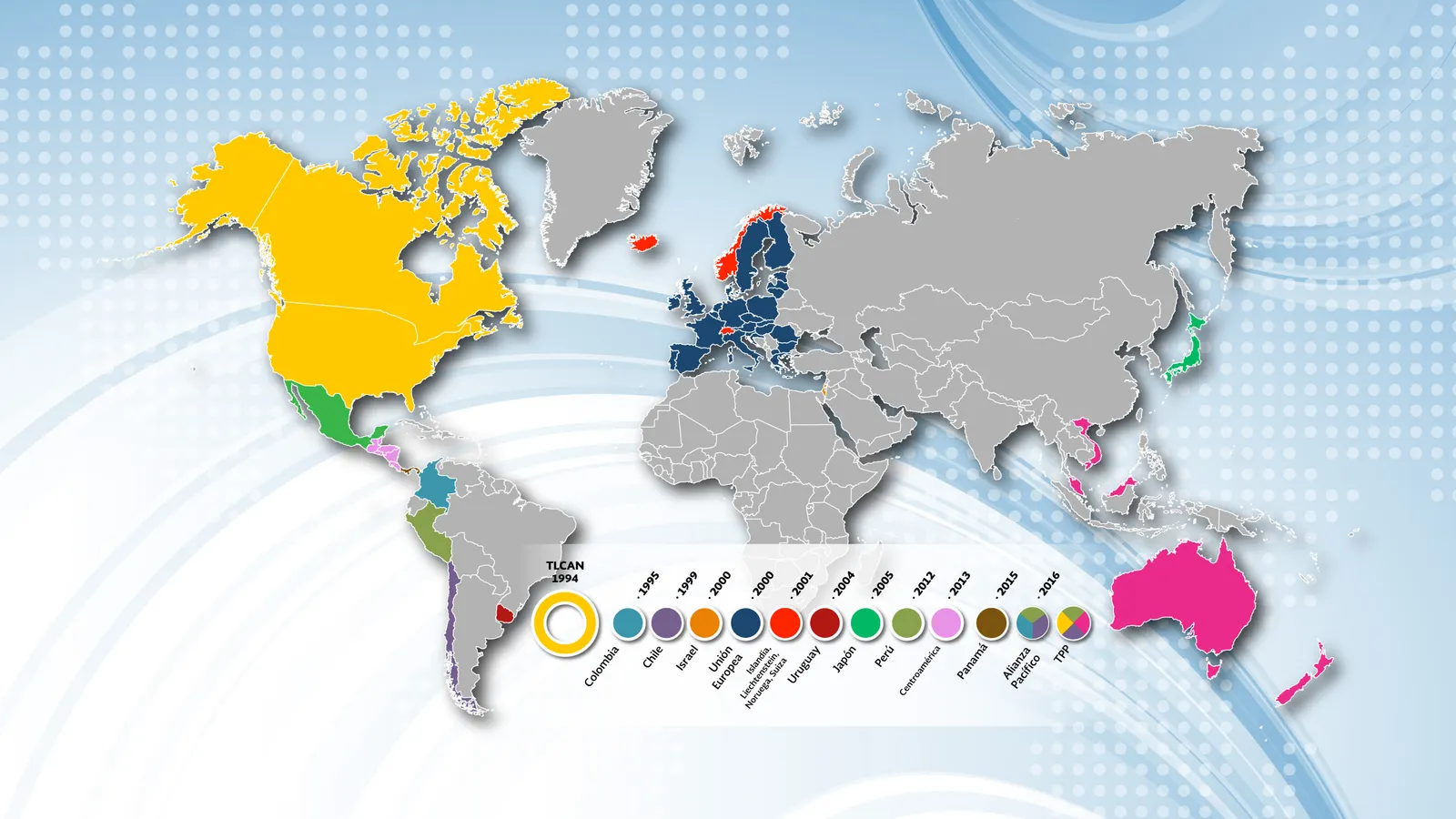
Mexico’s rise is not solely attributable to its physical proximity to the U.S., but rather the multiplicative effect of multiple rigid advantages. The source systematically reveals its four pillars: First is the time-space compression advantage. Billedo explicitly contrasts: ocean freight from China to the U.S. East Coast requires 20 days to six weeks, whereas truck transport from Monterrey to Detroit takes just four days or less. This order-of-magnitude difference fundamentally rewrites inventory logic—JIT (Just-in-Time) can now extend to the OEM assembly line edge, reducing safety stock coefficients from 1.8–2.2 in Asian supply chains to 1.1–1.3, directly lowering capital tie-up and warehousing costs. Second is the institutional transaction cost洼地. While the U.S. has free trade agreements with 20 countries, Mexico boasts 14 FTAs covering 50 countries, giving it unparalleled network density, making it an ideal “intermediate manufacturing hub” for serving Latin American, European, and Asian-Pacific markets. For instance, a medical imaging device assembled in Mexico can simultaneously satisfy USMCA rules of origin (for sale to the U.S.), EU Medical Device Regulation (MDD/MDR) compliance (for sale to Europe), and ASEAN rules of origin cumulation (for re-export to Southeast Asia)—a level of institutional arbitrage impossible for any single country.
Third is the implicit moat of human capital. Porras emphasizes “skilled labor” is already in place, pointing to Mexico’s sustained investment in vocational education over the past three decades. According to Mexico’s Ministry of Education, its annual output of industrial technical graduates exceeds 120,000, with 68% concentrated in the northern five states—highly aligned with the manufacturing FDI heatmap. This supply isn’t low-wage blue-collar labor, but rather composite technicians capable of operating German TRUMPF laser cutting machines, debugging Japanese FANUC robots, and writing Python production line control scripts. Fourth is the agility gene for crisis response. The COVID-19 pandemic exposed the fragility of long-distance supply chains, while Mexico’s “same time zone, short flight away” characteristic enables U.S. procurement managers to reach factories on-site to handle anomalies within 24 hours. This shortening of the decision-making radius transforms the traditional supply chain’s “risk buffering” model into a “real-time intervention” model. When a chip shortage caused a Texas factory shutdown, the Monterrey-based engineering team coordinated with local Tier-2 suppliers to activate backup molds on the same day, compressing downtime to under eight hours.
IV. Logistics Infrastructure: Strategic Breakthrough from Bottleneck to Intelligent Network
The explosive growth of nearshoring is forcing Mexico’s logistics system to upgrade at unprecedented speed. The source notes that logistics company investments in Mexico are surging, including both U.S. forwarders like Redwood and BlueGrace expanding local offices, and international giants like DP World building new cross-border hubs. Figure 5, depicting DP World’s Mexico City logistics center, is a tangible mapping of this trend—its designed throughput capacity reaches 2 million TEUs annually, equipped with fully automated yards and AI-driven pre-clearance customs systems, compressing clearance time from the traditional 72 hours to just four hours. This upgrade is not simple capacity expansion, but a paradigm shift tailored to the nearshoring scenario: traditional international logistics focuses on “trans-oceanic trunk-line efficiency,” while Mexico’s logistics must solve the “cross-border micro-circulation” pain point. U.S.-Mexico border ports process over 12,000 trucks daily, with 83% concentrated at the Laredo/Nuevo Laredo twin nodes, where congestion once caused average waiting times exceeding 18 hours. To address this, the Mexican government is promoting the “Southeastern Railway Corridor” project, aiming to connect the Yucatan Peninsula to Pacific ports, enabling Asia-bound cargo arriving via the Panama Canal to switch to rail transport within Mexico for direct delivery to the U.S. West Coast, saving 3–5 days compared to current sea-rail intermodal routes—a proposal confirmed by Porras as part of the national infrastructure priority list.
A deeper change lies in the rebalancing of logistics cost structures. In Asian supply chains, ocean freight typically accounts for 35–45% of total logistics expenses, whereas under the Mexico nearshoring model, road transport costs rise to 55–65%, yet unit ton-kilometer costs decrease by over 40%. This is because: short-haul, high-frequency transport creates economies of scale—the Monterrey-to-Chicago route operates 22 daily departures, with vehicle utilization rates consistently at 92%; digital penetration reduces management losses—Arrive Logistics’ TMS system in Mexico achieves 98% automatic load matching and dynamic ETA correction; multimodal interface standardization—under the USMCA framework, U.S.-Mexico rail container specifications, electronic bill of lading formats, and hazardous materials declaration procedures are fully unified. These details’ synergy is transforming Mexico’s logistics from a “cost center” into a “value-add node,” exemplified by providing door-to-door VMI (Vendor Managed Inventory) services for Tesla, compressing inventory turnover days to 4.2 days.
- Cross-Border Time Revolution: Monterrey-to-Detroit land transport <4 days vs. China-to-U.S. East Coast ocean freight 20–42 days;
- Infrastructure Upgrade Acceleration: DP World Mexico City hub investment exceeds $450 million, with a designed throughput of 2 million TEUs/year;
- Network Density Inflection Point: Logistics node density in the northern six states reaches 17.3 per 10,000 km², surpassing China’s Yangtze River Delta core area (14.2).
V. Regional Divergence: Structural Tensions Beneath the Prosperity
The dividends of nearshoring are extremely unevenly distributed—a critical fact repeatedly emphasized in the source but often overlooked externally. The statement “investments concentrated in a few states” reveals profound development fragmentation within Mexico. Figure 2’s manufacturing FDI heatmap clearly shows: the FDI density in Nuevo León, San Luis Potosí, and Chihuahua is 4.7 times the national average, while southern states like Chiapas and Oaxaca are virtually zero. This divergence has transcended the economic sphere, evolving into a social policy challenge—youth unemployment in northern states is below 5%, while in southern states it reaches 22%. While the source does not elaborate, the data hints at deep-seated contradictions: nearshoring relies on “high-skill, high-coordination, high-density” industrial ecosystems, whose cultivation requires over thirty years of industrial cluster sedimentation, bilingual technician training systems, and multinational corporate governance experience—elements that cannot be rapidly replicated through short-term subsidies. When BMW invested in upgrading its San Luis Potosí factory, it simultaneously required the local vocational college to launch a dual-degree program in German + mechatronics—an “enterprise-customized education” model difficult to implement in states lacking industrial foundations.
This regional imbalance poses potential risks to the supply chain itself. Over-concentration means systemic vulnerability—if Nuevo León suffers a large-scale strike or extreme weather event, it will directly impact Tesla’s Gigafactory ramp-up schedule and ripple upstream to Noah Itech’s automated equipment deliveries. Professor Porras’s mention of the “Southeastern Railway Corridor” has, among other goals, the strategic intent of alleviating northern corridor pressure and cultivating new growth poles. However, real-world constraints are evident: southern states’ power supply stability is only 61% of the north’s, and broadband coverage is 37 percentage points lower—making the “wooden bucket effect” of logistics networks increasingly prominent. For Chinese export enterprises, this divergence serves both as a warning and an opportunity: to avoid single-node risk, consider establishing secondary supplier bases in central Guanajuato State, which has seen FDI growth of 23% in recent years and boasts Mexico’s lowest comprehensive business cost index (including land, electricity, water, and labor), positioning itself as a “value-for-money hub” for automotive electronics and medical consumables.

VI. Future Evolution: From Nearshore Manufacturing to a Regional Innovation Source
Mexico’s supply chain evolution is quietly transitioning from “cost-driven manufacturing absorption” to “technology-driven innovation symbiosis.” While the source does not explicitly use the term “innovation source,” multiple clues point to this trend: Noah Itech’s establishment of a factory in Mexico is not merely assembly, but includes setting up its Americas R&D Center, focusing on localized industrial vision algorithm development; AGP Group’s investment includes a materials laboratory dedicated to developing car glass coating technologies adapted to Mexico’s high-temperature, high-humidity environment. The underlying logic of this shift lies in the unprecedented strengthening of intellectual property protection under Chapter 20 of the USMCA—which meets CPTPP standards and features a rapid arbitration mechanism. When Tesla requests its Mexican suppliers to share battery thermal runaway simulation data, this clause ensures that technical assets are not lost due to localization, but instead facilitate joint patent applications. According to data from Mexico’s National Council of Science and Technology (CONACYT), the number of U.S.-Mexico joint R&D projects increased by 39% in 2023, with 62% concentrated in new energy vehicle electronic control systems and biomedical materials.
This signifies that Mexico is evolving from a “branch factory of the world’s factory” into a “node in the North American innovation network.” Its value is no longer reflected solely in hourly assembly line wages of $12, but in the number of patents generated per thousand engineers—reaching 1.8 (compared to 0.3 in 2012), approaching Korea’s level (2.1). For Chinese supply chain enterprises, this suggests a new export paradigm: they need not enter solely as “suppliers,” but may also participate as “technology partners.” For example, if a Shenzhen-based autonomous driving sensor company establishes an application lab in Monterrey, it can directly access Tesla and GM’s real-vehicle testing data streams, accelerating product iteration far beyond closed-door development in Dongguan. This innovation symbiosis based on real-world scenarios is the deepest, most sustainable value core of the nearshoring wave—it is not geographical relocation, but the dimensional reconstruction of value networks.
Source: Supply Chain Dive
This article was AI-assisted and reviewed by our editorial team.