Skip to content

Ocean · Road & Rail · Supply Chain · Warehousing & Transport

Global Shipping Stocks Fall as Dockworkers Suspend Strike: Market Reaction Analysis in the Transportation Industry

Global Shipping Stocks Plunge as US Dockworkers Halt Strike After Just Three Days, Sparking Predictions of Lower Sea Freight Costs

Original source: Source information pending

Global Shipping Stocks Fall as Dockworkers Suspend Strike: Market Reaction Analysis in the Transportation Industry

Ask SCI.AI about this story

📋 本文要点

Global Shipping Stocks Plunge as US Dockworkers Halt Strike After Just Three Days, Sparking Predictions of Lower Sea Freight Costs

# Global Shipping Stocks Fall After Longshore Workers Temporarily End Strike

Freight rates are expected to return to normal.

![Long Beach](https://www.ttnews.com/sites/default/files/styles/article_full_width_image/public/2024-10/PORT-LB-bb-1200.jpg)

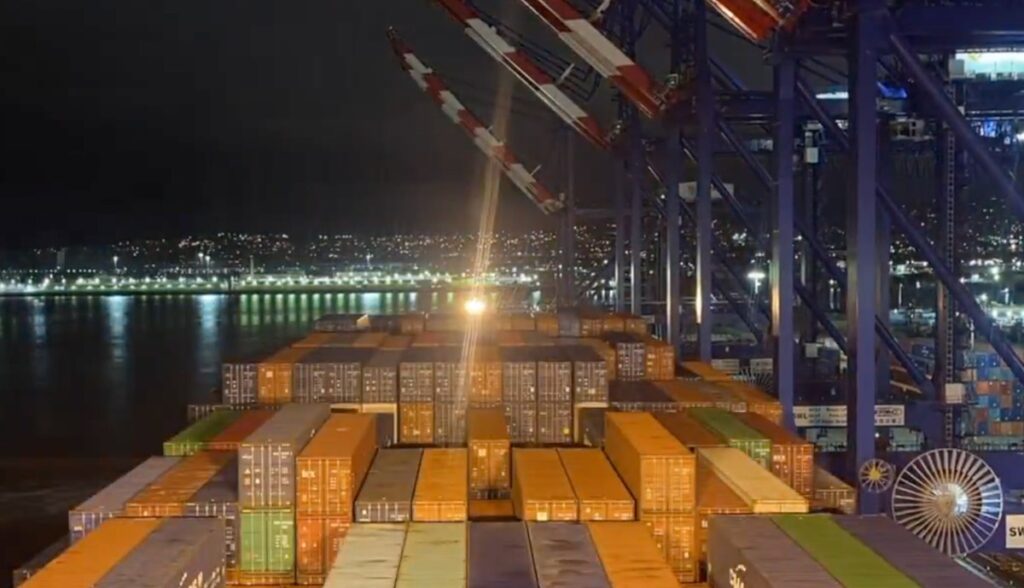
On October 3, 2023, container ships were docked along the coast of Long Beach, New York. (Victor J. Blue/Bloomberg)

Global shipping stocks fell after a three-day strike by U.S. longshore workers was suspended, prompting forecasts that ocean freight prices would decline.

AP Moller-Maersk A/S in Copenhagen saw its shares drop as much as 8.6%, marking the largest fall in eight months, while German peer Hapag-Lloyd AG plunged 14%. Asian stocks also experienced significant declines, including Cosco Shipping Holdings Co., Ltd. and Kawasaki Kisen Kaisha, Ltd., with ZIM Integrated Shipping Services Ltd. sliding in pre-market trading in New York.

In the list of [world’s largest logistics companies](https://www.ttnews.com/globalfreight/rankings/2023) published by Transport Topics, Maersk ranks 5th, Hapag-Lloyd 13th, Cosco Shipping 8th, and ZIM 33rd.

Analysts at JPMorgan Chase & Co. noted that the swift resumption of operations at East Coast and Gulf Coast ports would put pressure on an already oversupplied market.

“Now that the strike lasted only 72 hours, we believe the ripple effect is limited, and expect freight rates to continue normalizing,” wrote Alexia Dogani and colleagues in a report.

The union representing workers stated in a press release that U.S. longshoremen had agreed to resume cargo operations while continuing collective bargaining with employers over new contracts. Since October 1 when the contract expired, container ports from Houston to Miami to Boston have been closed.

With news of the strike suspension, Asian shipping stocks fell, reversing gains made due to the looming union action.

Kawasaki Kisen Kaisha listed in Tokyo ended down 9.7%, while South Korea’s Pan Ocean Co. dropped 5.4%, and Hong Kong-listed Cosco Shipping declined by 7.3%.

“Short-term traders are pulling back their bets,” said Tsuyoshi Hori, an analyst at Mito Securities Co.

_Authors: Joe Easton, Haruka Iwai, Yasutaka Tamura_

—

Source: Transport Topics
Ask SCI.AI Finished reading? Continue with SCI.AI. Explore the related policy, route, company and historical context. Continue asking
Stay ahead of supply chain shifts

One email a week: the stories that matter and new risk events — in English, free.

Prefer RSS? Articles Risk events

Xeneta: Asia-US West Coast spot rates jump 343% on Iran war
Warehousing & Transport

Xeneta: Asia-US West Coast spot rates jump 343% on Iran war

Asia-U.S. West Coast container spot rates were 343% above their February 28 level in October, just 14% below the pandemic-era record, according to freight-rate intelligence provider Xeneta. The company forecasts a 5% decline in long-term contract rates for 2027, with the global container fleet expected to grow 6.8% while demand rises between 2.5% and 4%. Xeneta chief analyst Peter Sand traces the volatility to the Red Sea conflict in 2024, U.S. tariffs in 2025 and the Strait of Hormuz closure in 2026, and warns that fuel costs and route disruptions could still upend the outlook.

AI hardware demand lifts air cargo rates 30% year over year
Warehousing & Transport

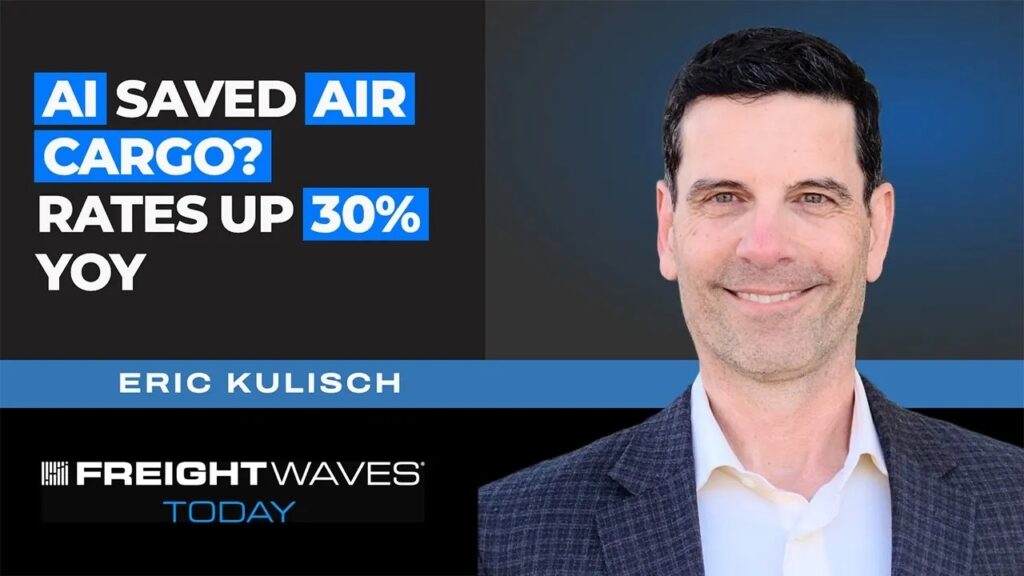
AI hardware demand lifts air cargo rates 30% year over year

Air cargo rates are up 30% year over year and volumes have grown about 6%, according to FreightWaves, as surging AI equipment demand offsets slower e-commerce and automotive flows. The strength has defied forecasts of a 2025 softening after a down 2024. Meanwhile, Walmart is deploying Wing and Zipline drones across nearly 300 stores; Zipline raised $1.5 billion and Wing plans a $125 million Texas factory ahead of anticipated FAA beyond-line-of-sight rules.

Truckload rejections hold at 12.8% as peak season stalls
Risk & Resilience

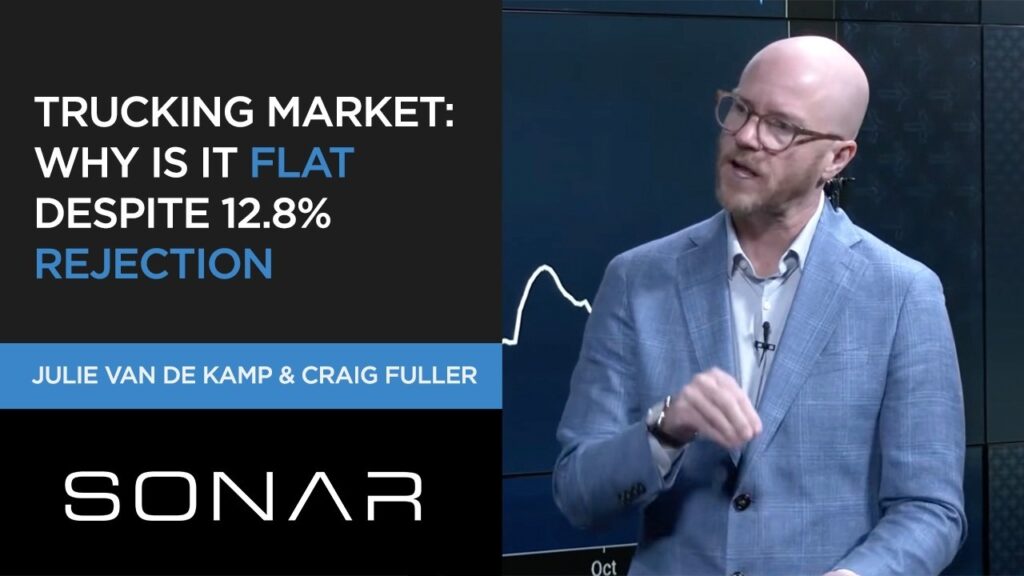
Truckload rejections hold at 12.8% as peak season stalls

Truckload tender rejections are holding near 12.8%, roughly double the 6% recorded a year earlier, yet FreightWaves analysts Julie Van de Kamp and Craig Fuller say the market shows little of the tightening momentum normally seen ahead of peak season. The rejection index has slipped only about one percentage point in 20 days, even as November's Outbound Tender Volume Index averages 11,434, up 12% year over year and 3% from October. Refrigerated freight is the exception, with reefer rejections at 21% versus 12.6% last year, and a super El Niño could add further pressure on reefer capacity this winter.

Welcome Back!

Login to your account below

Create New Account!

Fill the forms below to register

Retrieve your password

Please enter your username or email address to reset your password.

Scan to share via WeChat

Open WeChat and scan the QR code to share

QR Code

Add New Playlist