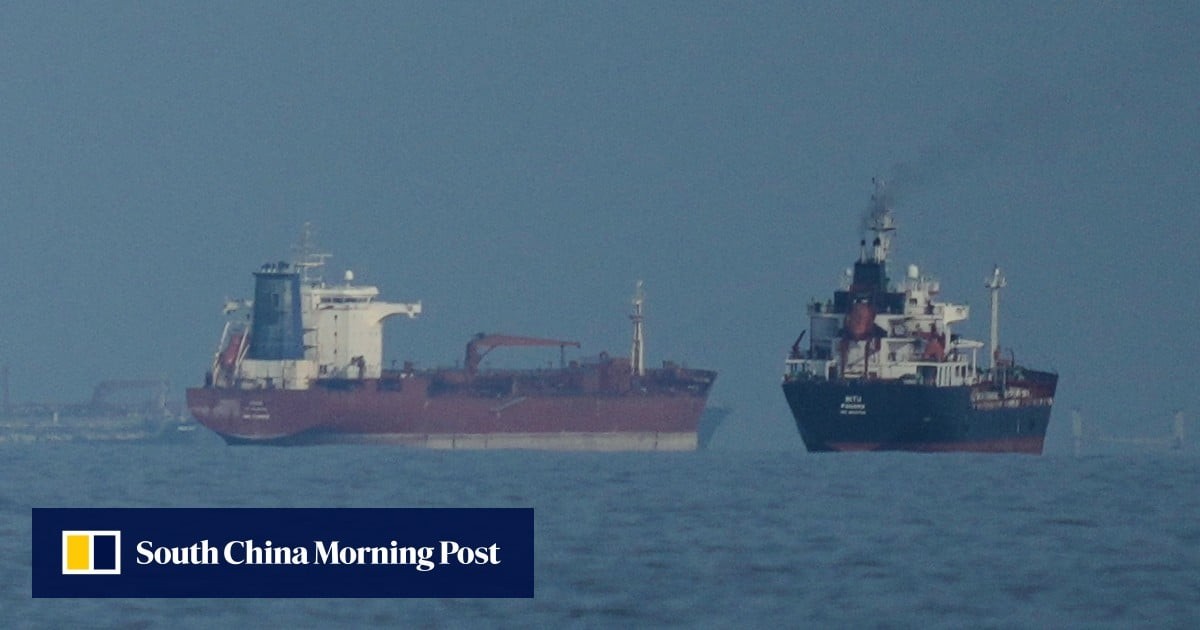
According to www.scmp.com, the U.S. State Department announced sanctions on Friday, 2 May 2026, targeting Qingdao Haiye Oil Terminal Co., Ltd — a China-based oil terminal operator — along with several other entities and individuals allegedly involved in trading Iranian petroleum.
Sanctioned Entities and Scope
The sanctions apply to Qingdao Haiye Oil Terminal Co., Ltd, which the State Department stated “imported tens of millions of barrels of sanctioned Iranian crude oil”. Also designated are Li Xinchun, a Chinese national who serves as president of a China-based oil terminal; a Hong Kong-based vessel management company; and a British-based commercial manager.
Under the sanctions, all U.S.-held assets of the designated parties are frozen, and U.S. persons are prohibited from engaging in transactions with them.
U.S. Policy Rationale
The State Department framed the action as part of an intensified effort to curtail Iran’s primary revenue source. According to the report, Iranian oil revenues fund activities the U.S. characterizes as terrorism and regional destabilization.
“The United States is taking decisive action to disrupt Iran’s illicit oil trade, the Iranian regime’s primary revenue streams that fund terrorism and regional destabilisation.” — U.S. State Department statement
“So long as Iran attempts to generate oil revenues to fund its destabilising activities, the United States will hold both Iran and all its sanctions-evading partners accountable.” — U.S. State Department statement
Implications for Global Supply Chain Professionals
For supply chain professionals managing energy logistics, maritime transport, or cross-border commodity flows, this action underscores heightened enforcement risk in third-country facilitation of sanctioned trade. Qingdao Haiye’s designation highlights how infrastructure operators — not just traders or shippers — can become focal points of regulatory scrutiny when handling high-risk cargoes. The inclusion of a Hong Kong-based vessel manager and a UK-based commercial manager reflects the multi-jurisdictional nature of modern oil logistics networks and signals that compliance obligations extend beyond direct exporters and importers.
Industry context shows this is not an isolated event: since 2023, the U.S. Treasury and State Department have issued over 40 designations tied to Iran’s petroleum exports, including vessels, shell companies, and intermediaries registered in the UAE, Singapore, and Armenia. Similar enforcement actions against Chinese port operators were reported in 2024 involving Dalian-based terminals linked to shadow fleet activity. Practitioners must now treat due diligence on terminal operators, vessel managers, and commercial agents with the same rigor applied to cargo owners and flag states — especially where shipments originate from or transit through the Strait of Hormuz.
Source: South China Morning Post
Compiled from international media by the SCI.AI editorial team.