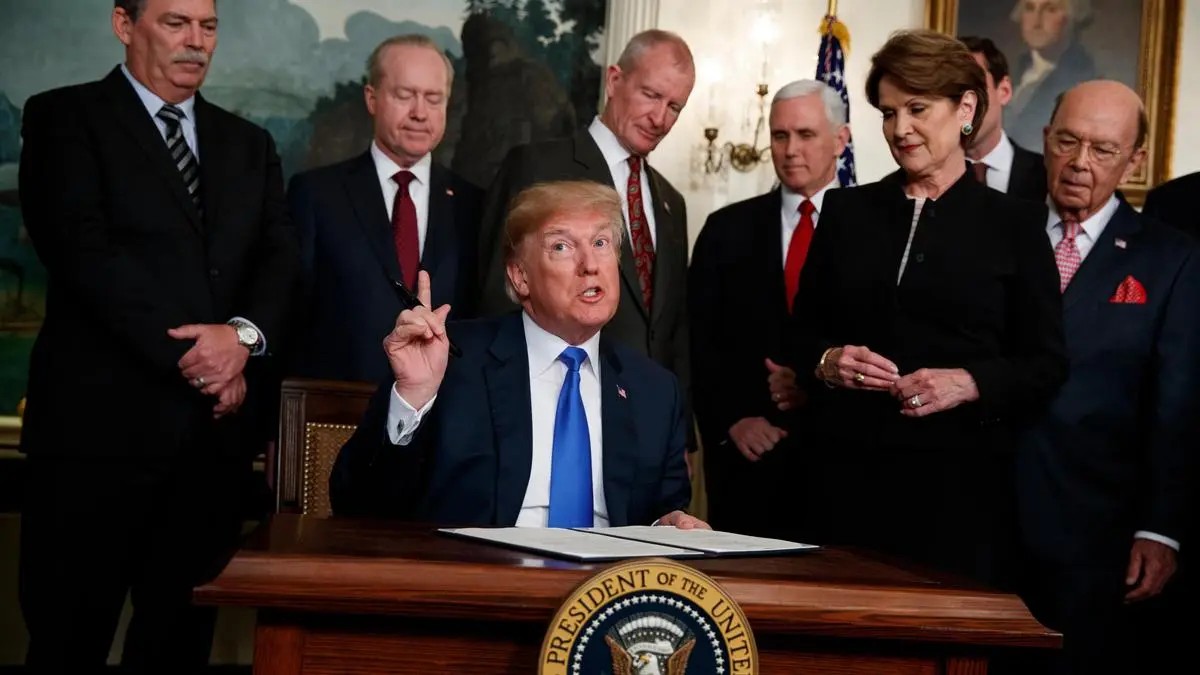
According to www.thehindubusinessline.com, former U.S. President Donald Trump announced on May 2, 2026, that he would impose a 25% tariff on cars and trucks from the European Union starting the following week — a move described as potentially jolting the world economy at a fragile moment.
Legal and Diplomatic Context
The proposed tariff escalation targets the Turnberry Agreement, a bilateral trade framework signed in July 2025 between Trump and European Commission President Ursula von der Leyen. The agreement established a 15% tariff ceiling on most goods. However, the U.S. Supreme Court ruled earlier in 2026 that Trump lacked legal authority to declare an economic emergency and levy tariffs under that basis. As a result, the administration has been operating under a 10% tariff while conducting investigations into trade imbalances and national security concerns — seeking new statutory grounds for higher duties.
Economic Scale and Stakes
The EU and U.S. traded 1.7 trillion euros ($2 trillion) in goods and services in 2024, or an average of 4.6 billion euros per day, according to Eurostat. The EU estimated the Turnberry Agreement would save European automakers 500 million to 600 million euros ($585 million to $700 million) monthly. Trump claimed the EU was “not complying with our fully agreed to Trade Deal,” though he did not specify violations. When asked by reporters, he added the higher tariffs would “force them to move their factory production much faster” to the U.S.
Broader Market Pressures
This development coincides with severe external shocks: the Iran war has disrupted energy markets, contributing to the effective closure of the Strait of Hormuz after U.S.- and Israel-led strikes began at the end of February 2026. Oil and natural gas prices have risen sharply, fueling expectations of slower global growth and higher inflation. In the U.S., annual inflation reached 3.3% in March 2026, exceeding the rate Trump inherited — intensifying political pressure ahead of the November midterm elections. Just 30% of U.S. adults approved of Trump’s handling of the economy, per the latest Associated Press-NORC Center for Public Affairs poll.
EU Response and Compliance Stance
The European Commission reiterated its position in February: “A deal is a deal.” It emphasized that, as the U.S.’s largest trading partner, the EU expects full adherence to commitments outlined in the Joint Statement — and that EU products must continue to receive “the most competitive treatment, with no increases in tariffs beyond the clear and all-inclusive ceiling previously agreed.” European Commissioner for Trade and Economic Security Maroš Šefcovic stated last week that U.S.-EU relations had become “more positive over the past year,” even as the legal status of the agreement remains uncertain.
“A deal is a deal,” the European Commission said in February after the Supreme Court ruling. “As the United States’ largest trading partner, the EU expects the US to honour its commitments set out in the Joint Statement — just as the EU stands by its commitments.”
Source: www.thehindubusinessline.com
Compiled from international media by the SCI.AI editorial team.