Skip to content

Inventory & Fulfillment · Logistics & Transport · Supply Chain

Central Retail Vietnam Cuts Stock-Outs by 20% via Supply Chain Revamp

Central Retail Vietnam cut stock-outs by about 20% by replacing its direct-to-store delivery model with a centralised distribution system. The shift reduced backroom congestion, improved on-shelf availability, and streamlined replenishment. The company consolidated logistics partners from over 20 to five core providers and prioritised process standardisation and staff training over rapid digitisation. Chief Supply Chain Officer Mike Reid emphasized that 'before you digitise, you must standardise' — reflecting a pragmatic, people-and-process-first approach to supply chain resilience in complex emerging markets.

Original source: Source information pending

Central Retail Vietnam Cuts Stock-Outs by 20% via Supply Chain Revamp

According to retailasia.com, Central Retail Vietnam has overhauled its supply chain to reduce stock-outs by about 20%, shifting from a fragmented direct-to-store delivery model to a centralised distribution system.

A Shift from Fragmentation to Centralisation

Under the previous model, suppliers delivered directly to individual stores — causing congestion, inconsistent delivery times, and heavy administrative workloads that diverted staff from customer-facing tasks. As Mike Reid, chief supply chain officer at Central Retail Vietnam (a unit of Thailand’s Central Retail Corp. Public Co. Ltd.), explained:

“It created fragmentation, variable service levels, and limited visibility.” — Mike Reid, chief supply chain officer at Central Retail Vietnam

The new approach consolidates supplier deliveries at distribution centres, where volumes are pooled, forecasting is refined, and store replenishment is scheduled with demand-driven precision.

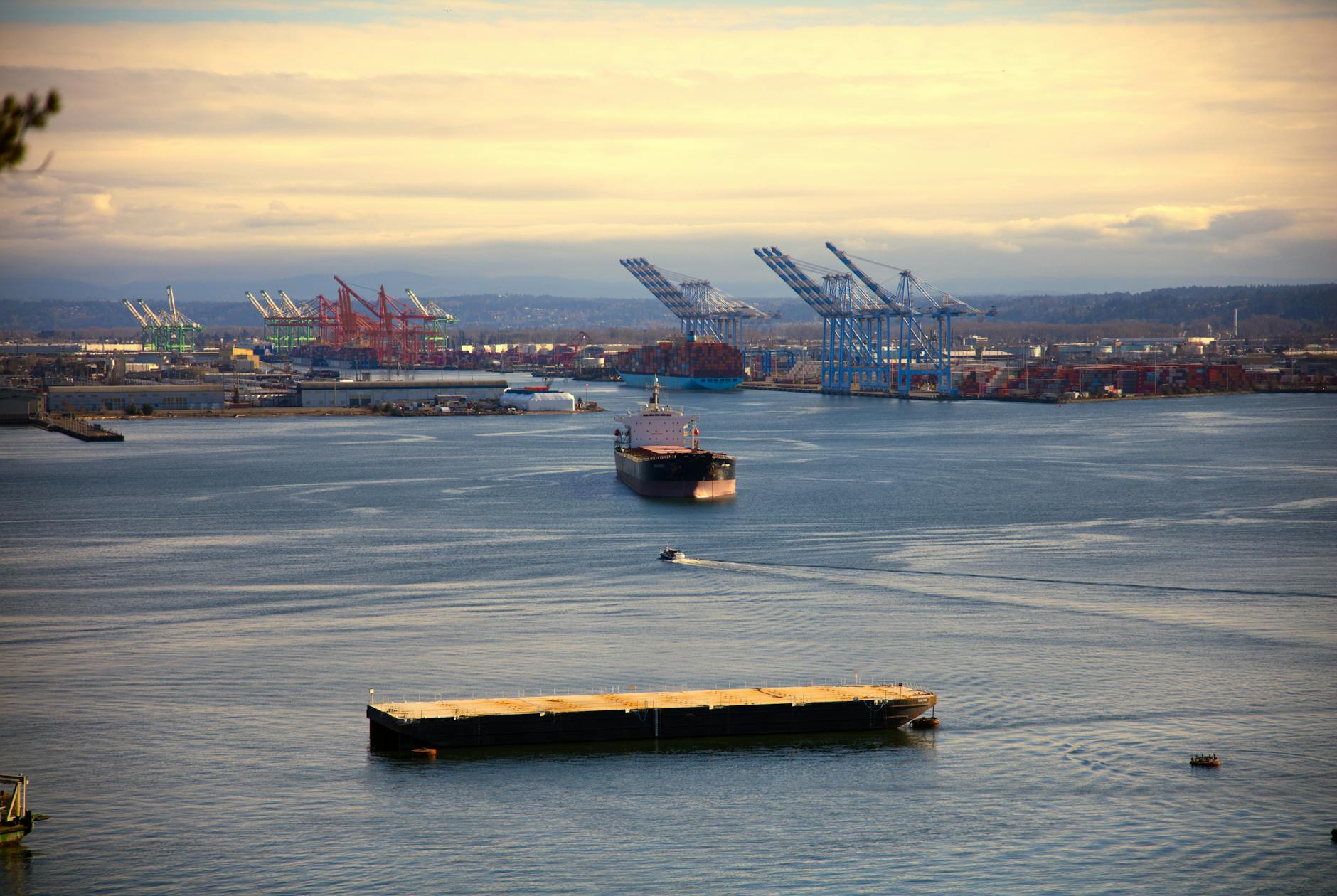
Supply chain industry image

Operational Improvements and People-Centric Execution

The company prioritises process standardisation and workforce capability over rapid digitisation. As Reid stated:

“Before you digitise, you must standardise.” — Mike Reid, chief supply chain officer at Central Retail Vietnam

Staff training through the Supply Chain Academy covers problem-solving, transport planning, and demand forecasting. Process enhancements include standardised replenishment cycles, inventory governance frameworks, and performance measurement systems. Core enterprise resource planning (ERP) upgrades now integrate with logistics partners’ warehouse management systems — improving end-to-end supply chain visibility.

PDD profit sinks 12% in 2025 despite strong revenue

Strategic Logistics Partnership Rationalisation

Central Retail Vietnam reduced its logistics provider network from more than 20 to just five core partners. These selected providers must demonstrate scalability, willingness to co-invest, and adherence to strict performance benchmarks. This consolidation supports route optimisation, increased drop density, and better navigation of Vietnam’s complex urban logistics environment — characterised by fragmented trucking, limited inter-firm collaboration, and restrictive delivery windows in major cities like Ho Chi Minh City and Hanoi.

Travel rebound propels luggage market to $183b

Practitioner Implications for Global Supply Chain Professionals

For supply chain professionals operating in emerging markets, Central Retail Vietnam’s experience underscores three practical imperatives: First, centralisation can yield measurable availability gains even without cutting-edge automation — particularly when paired with disciplined process design. Second, partner rationalisation is not merely cost-driven; it enables deeper collaboration, shared KPIs, and joint investment in capacity and technology. Third, workforce upskilling — especially in foundational competencies like demand sensing and transport planning — remains critical where infrastructure constraints limit technological leverage. Notably, Central Retail Vietnam’s approach mirrors broader regional trends: A 2024 Gartner survey found 68% of APAC retailers prioritised supply chain standardisation before AI adoption, and Thai-based CP All (7-Eleven Thailand) reported similar stock-out reductions after consolidating its 3PL network in 2023.

Source: retailasia.com

Compiled from international media by the SCI.AI editorial team.

Ask SCI.AI Finished reading? Continue with SCI.AI. Explore the related policy, route, company and historical context. Continue asking
FBI hunts ‘No Name Given Kamal’ in transnational crime probe
AI & Automation

FBI hunts ‘No Name Given Kamal’ in transnational crime probe

The FBI is pursuing an individual known only as “No Name Given Kamal” amid a transnational crime investigation revealing deep ties to the U.S. trucking industry. Authorities linked at least 17 illicit cargo incidents to terminals in Texas, Arizona, and California between March 2024 and July 2026. Three carriers lost operating authority after audits found discrepancies on 29 load manifests from Q2 2025 to Q3 2026. An August 15, 2026 indictment in San Diego named eight defendants, including dispatch supervisors and owner-operators active across 12 states.

Criminal Groups Pressure Mexican Freight Networks
AI & Automation

Criminal Groups Pressure Mexican Freight Networks

Criminal groups are intensifying pressure on Mexican freight networks, disrupting five major corridors and raising tender rejection rates by 23% year-over-year in Q2 2026. Extortion payments average $1,200 per incident, while border dwell times have increased 42% since early 2025. Mexican over-the-road freight volumes are projected to contract 1.8% in fiscal year 2026. Shippers are rerouting up to 30% of truckload volume to mitigate risk.

Port of Los Angeles expects 5% cargo bump amid Red Sea, Panama Canal risks
AI & Automation

Port of Los Angeles expects 5% cargo bump amid Red Sea, Panama Canal risks

The Port of Los Angeles anticipates a 5% cargo volume increase in response to shipping disruptions in the Red Sea and Panama Canal. The port is coordinating with terminal operators to expand gate hours, adjust labor schedules, and allocate extra chassis and yard space ahead of the September peak season. Shippers are actively diverting cargo to the U.S. West Coast and renegotiating service contracts to address transit-time uncertainty and fuel surcharge triggers. The preparations follow assessments completed in August 2026, as regional instability continues to reshape global maritime logistics decisions.

Welcome Back!

Login to your account below

Create New Account!

Fill the forms below to register

Retrieve your password

Please enter your username or email address to reset your password.

Scan to share via WeChat

Open WeChat and scan the QR code to share

QR Code

Add New Playlist