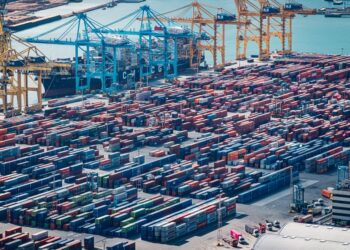
The Strait of Hormuz — a 34-mile-wide maritime chokepoint through which 21 million barrels per day of oil and condensates flowed in 2025, representing 30% of all seaborne-traded crude — is no longer functioning as a predictable conduit. Instead, it has become the epicenter of a cascading supply chain emergency that extends far beyond energy markets into electronics, automotive, pharmaceuticals, and packaging industries across Asia. What began as geopolitical escalation between the U.S. and Iran has metastasized into an operational infarction for regional manufacturing ecosystems, with executives from Taiwan, Thailand, China, and South Korea now sounding alarms not about hypothetical risk but about imminent, irreversible production curtailments. This is not a cyclical inventory shortage; it is a structural rupture in the foundational logistics layer upon which Asia’s $12.4 trillion industrial output depends. The implications extend well past petrochemical feedstock scarcity — they expose decades of just-in-time optimization as dangerously brittle when confronted with asymmetric maritime disruption, and they force a fundamental re-evaluation of what constitutes ‘strategic resilience’ in an era where war no longer observes traditional boundaries of battlefield geography.
The Naphtha Nexus: Why One Feedstock Is Paralyzing Asia’s Industrial Core
Naphtha is not merely another hydrocarbon derivative — it is the biochemical linchpin of modern material science in Asia. Derived predominantly from Gulf crude refining, naphtha serves as the primary cracking feedstock for steam crackers that produce ethylene, propylene, and butadiene — the molecular building blocks for over 70% of all synthetic polymers manufactured in East Asia. According to data from the Asian Petrochemical Industry Confederation (APIC), 86% of naphtha consumed by Asian refiners originates from Saudi Arabia, Kuwait, Qatar, and the UAE, with 92% of those shipments transiting the Strait of Hormuz. Unlike crude oil, which can be partially rerouted via pipelines (e.g., the 5 million bpd Saudi East–West Pipeline) or stored in strategic reserves, naphtha lacks both infrastructure alternatives and regulatory stockpile mandates. As Keh-Yen Lin, president of Formosa Petrochemical, emphasized:
“There has never been such an incident in the past. The Strait of Hormuz has never faced a real blockade previously. It’s not only about crude oil. Naphtha, the key feedstock for making many petrochemicals, also largely comes from the Gulf States. We don’t see any viable alternatives to bypass this route.” — Keh-Yen Lin, President, Formosa Petrochemical
This absence of substitution pathways renders naphtha uniquely vulnerable — and its vulnerability is systemic. Ethylene plants operate on razor-thin margins and cannot idle for more than 72 hours without risking furnace tube damage, yet Formosa’s notice explicitly states that all alkenes facilities will run at minimum capacity starting March 9, signaling not temporary delay but structural de-rating of production capability.
The consequences ripple outward with alarming velocity. A single ton of naphtha yields approximately 0.32 tons of ethylene, which then feeds into polyethylene (PE), polypropylene (PP), ethylene glycol (EG), and acrylonitrile — materials embedded in everything from semiconductor wafer carriers and medical IV bags to electric vehicle battery casings and 5G antenna housings. When Wanhua Chemical in China and Siam Cement Group in Thailand simultaneously announced production scaling back, they did so not due to demand collapse but because their average naphtha inventory cover stood at just 11 days — down from a pre-crisis norm of 28 days. This reflects broader industry discipline: petrochemical firms have spent the last decade optimizing working capital, reducing average raw material stockpiles by 43% since 2019 amid weak macroeconomic conditions and overcapacity in downstream derivatives. Crucially, naphtha is not classified as a strategic commodity under any national stockpiling law in Japan, South Korea, Taiwan, or ASEAN — meaning there is zero policy-mandated buffer against precisely this kind of eventuality. That legal vacuum, combined with financial engineering priorities, has converted a logistical bottleneck into an industrial seizure.
Force Majeure as Systemic Symptom: From Contract Clause to Market Signal
Force majeure declarations are not new in global trade — but their simultaneous activation across multiple sovereign jurisdictions and industrial sectors signals something far more consequential than isolated contractual relief. In the first two weeks of March 2026, at least 17 major Asian petrochemical producers issued formal FM notices, including Formosa Petrochemical, Formosa Plastics, Nanya Plastics, Wanhua Chemical, Siam Cement Group, LG Chem, and Lotte Chemical. What distinguishes this wave is its scope: these are not limited to spot cargoes delayed by piracy or port congestion, but rather apply to contractually committed volumes across multi-year agreements spanning ethylene, propylene, styrene, and PVC resins. Critically, these notices cite not just shipping delays but “uncertainty of arrival times” — a phrase that reflects the breakdown of predictive logistics. When vessels carrying naphtha from Jubail or Ruwais cannot provide reliable ETAs due to military escort requirements, rerouting through Cape Agulhas (adding 14–18 days), or mandatory inspections in Oman or India, contractual delivery windows collapse. The result is not merely commercial renegotiation — it is the de facto suspension of forward planning for downstream converters who rely on weekly or biweekly deliveries to maintain continuous extrusion, injection molding, or film blowing operations.
This FM cascade reveals deeper fissures in Asia’s contract governance architecture. Unlike European or U.S. frameworks, most Asian petrochemical supply contracts contain narrow FM clauses that do not explicitly cover “geopolitical blockades” or “maritime sovereignty disruptions,” focusing instead on natural disasters or labor strikes. Consequently, companies like Formosa are invoking FM on grounds of “impossibility of performance” — a common law doctrine rarely tested at scale in Asian courts. Yet the market treats these notices as binding economic facts: spot ethylene prices in Northeast Asia surged 68% in 12 days, while PVC resin futures on the Shanghai Futures Exchange hit limit-up thrice in one week. More revealingly, buyers are no longer demanding price adjustments — they are refusing to place new orders altogether. As Wu Chia-Chau, chairman of Nanya Plastics, stated:
“The price of oil and upstream materials can rise one day and suddenly drop the next. As a result, we have to temporarily suspend quoting price for any new orders.” — Wu Chia-Chau, Chairman, Nanya Plastics
This pricing paralysis indicates a loss of reference points — a condition where neither cost-plus nor market-based pricing models function because volatility exceeds hedging instrument tenors and counterparty credit risk eclipses margin calculations.
The institutional response has been telling. The Japan Chemical Industry Association convened an emergency task force on March 12, mandating members to report naphtha inventory levels daily — a move unprecedented in its 62-year history. Meanwhile, Singapore’s Maritime and Port Authority activated its Strategic Reserves Coordination Protocol for the first time since its 2021 inception, authorizing emergency bunkering waivers and priority berthing for vessels carrying critical feedstocks. Yet even these measures are palliative: Singapore holds no naphtha reserves, and its port handles only 12% of regional naphtha transshipments. The real bottleneck remains upstream — and the FM notices confirm that Asian industry has exhausted its operational contingency toolkit. What follows is not recovery but recalibration: suppliers are now demanding minimum 90-day forward commitments before accepting orders, and buyers are being required to pre-finance 70% of contract value — shifts that fundamentally alter cash flow dynamics and accelerate consolidation among mid-tier converters unable to meet such terms.
Electronics and Automotive: The Hidden Transmission of Petrochemical Shock
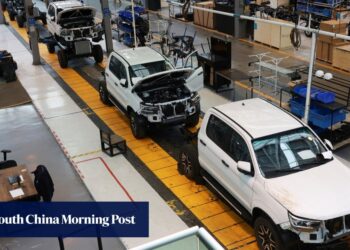
While headlines focus on ethylene shortages, the most severe second-order impacts are unfolding in sectors that rarely appear in energy reports: consumer electronics and electric vehicles. Consider that one flagship smartphone contains over 42 grams of polymer-derived components, including polycarbonate camera lenses, ABS housing, PET film for OLED encapsulation, and polyimide flex circuits — all ultimately traceable to Gulf-sourced naphtha. Similarly, a modern EV battery pack requires 18.7 kg of engineered plastics, from flame-retardant PP battery trays to ETFE-insulated busbars and PVDF binders for cathodes. When Formosa Plastics Group — which supplies materials to Apple, Tesla, Samsung SDI, and BYD — declares force majeure on key resins, it does not merely constrain output; it introduces unquantifiable latency into product launch timelines. For example, Apple’s Q3 2026 iPhone refresh relies on new biopolymer casings whose feedstock allocation was predicated on naphtha deliveries scheduled between March 15–22. With those shipments stranded in the Arabian Sea, Apple’s Tier-1 suppliers now face binary choices: absorb 22% cost increases from alternative feedstocks (e.g., bio-naphtha at $1,420/ton vs. $580/ton Gulf naphtha) or defer launch — a decision with $3.2 billion in quarterly revenue exposure.
This transmission mechanism operates with dangerous efficiency because Asian electronics supply chains are vertically integrated to an extreme degree. Unlike Western counterparts that source polymers from diversified global suppliers, 83% of high-performance engineering plastics used in Japanese and Korean electronics originate from just four Taiwanese and Korean producers — all of whom depend on Gulf naphtha. When those producers throttle output, there is no regional fallback: Japan’s largest engineering plastic maker, Mitsubishi Chemical, imports 97% of its naphtha from the Middle East and maintains only 9 days of inventory. The automotive sector faces parallel constraints: Toyota’s new solid-state battery production line in Shimane Prefecture requires polyether ether ketone (PEEK) insulators made from ethylene oxide derived from Gulf ethylene — a molecule now subject to 14-day shipping delays and 400% freight premium surcharges. These are not marginal cost pressures; they represent architectural failures in supply chain mapping. Most OEMs’ tier-2 and tier-3 supplier audits stop at component-level compliance, never tracing polymer chemistry back to steam cracker feedstock origin — a blind spot now costing billions in lost production days and R&D delays.
Strategic Stockpiling Failure: Why Asia’s ‘Just-in-Time’ Doctrine Has No Geopolitical Buffer
The current crisis lays bare a foundational contradiction in Asia’s industrial strategy: the region built the world’s most efficient manufacturing machine on a foundation of geopolitical naivety. For decades, policymakers prioritized cost arbitrage, speed-to-market, and inventory turnover over redundancy — a philosophy epitomized by Toyota’s legendary kanban system. But kanban assumes stable, predictable logistics corridors — not contested waterways patrolled by naval coalitions. Today, Asia holds less than 0.8% of global strategic petroleum reserves, compared to the IEA-mandated 90-day minimum for member nations. More critically, zero Asian economies maintain legally mandated naphtha reserves, despite its irreplaceable role in producing >200 million tons of annual plastics output. This omission is not accidental but ideological: regulators viewed naphtha as a ‘commercial commodity,’ not a ‘critical enabler.’ The result? When the Hormuz blockade began, regional naphtha inventories stood at 14.3 million tons — just 22 days of consumption, versus 47 days for crude oil. Worse, 68% of those stocks are held by refiners, not end-users, meaning conversion capacity remains idle even if some physical material exists.
This failure stems from three interlocking assumptions that now appear dangerously obsolete. First, the belief that maritime chokepoints are ‘low-probability, high-impact’ events — a statistical abstraction divorced from contemporary hybrid warfare tactics. Second, the assumption that diversification means sourcing from multiple countries (e.g., buying naphtha from Saudi Arabia and Kuwait) rather than multiple routes (which remain hormuz-dependent). Third, the conviction that financial instruments — futures, swaps, options — could hedge physical risk. Yet when physical delivery fails, derivatives become irrelevant: ICE naphtha futures trading volume collapsed by 79% in March as counterparties refused to honor physical settlement obligations. The consequence is a stark policy reckoning: Japan’s METI has drafted emergency legislation requiring minimum 30-day naphtha reserves for all domestic ethylene producers, while Taiwan’s Ministry of Economic Affairs is fast-tracking legislation to classify naphtha as a ‘strategic material’ — moves that would have been politically unthinkable six months ago. But legislation takes time; the current crisis is measured in days, not years.
Resilience Redefined: Toward Multi-Vector Sourcing and Regional Cracking Capacity
Recovery from the Hormuz disruption will not mean returning to pre-war norms — it will require reinventing Asia’s industrial geography. The immediate tactical response involves accelerating three structural shifts already underway but previously deprioritized: multi-vector maritime routing, regional feedstock diversification, and distributed cracking capacity. On routing, shippers are now testing the India–Myanmar–Thailand overland corridor for naphtha tankers offloaded at Sittwe Port — a route adding 8–10 days but avoiding Hormuz entirely. Meanwhile, Vietnam’s Dung Quat Refinery is expanding naphtha export capacity by 35% by Q4 2026, leveraging its access to Russian and Kazakh crude that bypasses Gulf transit. These are not stopgap measures but permanent infrastructure investments: five new naphtha-compatible terminals are under construction across Southeast Asia, funded by consortia including Mitsui OSK Lines, COSCO Shipping, and the Asian Development Bank.
More transformative is the push toward regional cracking independence. Historically, Asia relied on Gulf ethylene because it was cheaper than domestic production — but that calculus evaporated when insurance premiums spiked 320% and war-risk surcharges reached $2.1 million per voyage. Now, Indonesia’s state-owned Pertamina is fast-tracking a $4.8 billion ethylene cracker in Tuban, designed to use domestic condensate feedstock; Malaysia’s PETRONAS is converting its Pengerang refinery to produce 1.2 million tons/year of naphtha from local gas condensates; and India’s Reliance Industries is commissioning Asia’s first bio-naphtha pilot plant using sugarcane bagasse. Collectively, these projects aim to reduce Gulf naphtha dependency from 92% to below 65% by 2030. Crucially, they represent a paradigm shift: resilience is no longer about holding more inventory but about owning more conversion nodes — because localized cracking capacity transforms volatile feedstock logistics into controllable process engineering. As one Singapore-based supply chain strategist observed:
“The era of monolithic, Gulf-fed petrochemical hubs is ending. What replaces it won’t be ‘more of the same’ — it will be a federated network of smaller, agile crackers fed by diversified, geopolitically insulated feedstocks. That’s not just resilience — it’s industrial sovereignty.” — Dr. Lena Tan, Director, ASEAN Supply Chain Institute
This transition will reshape capital allocation, trade flows, and even diplomatic alignments — turning energy security into the central organizing principle of Asian industrial policy.
- Key Vulnerabilities Exposed by Hormuz Blockade:
- Naphtha lacks strategic stockpile mandates across all major Asian economies
- 92% of Asian naphtha shipments transit the Strait of Hormuz — no viable maritime alternative exists
- Average naphtha inventory cover fell to 11 days in March 2026, down from 28 days in 2022
- Immediate Industry Responses Observed:
- 17+ major Asian petrochemical producers issued force majeure notices in March 2026
- Ethylene prices in Northeast Asia surged 68% in 12 days
- Apple, Tesla, and Samsung SDI delayed component qualification cycles by 4–6 weeks
Source: kr-asia.com
This article was AI-assisted and reviewed by our editorial team.