According to www.marken.com, the Iran war — though reportedly paused by a temporary truce — has significantly upended global supply chain management, especially for time- and temperature-critical pharmaceutical transport.
Immediate Operational Impacts
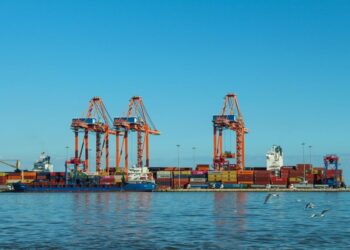
The source states that biopharma manufacturers and their logistics partners are contending with three interlocking disruptions: airspace restrictions, surging fuel costs, and constrained shipping capacity. These pressures compound preexisting challenges tied to converging geopolitical tensions and regulatory uncertainty.
Tariff Uncertainty and Customs Compliance
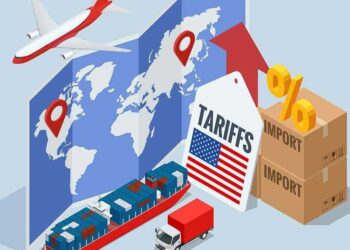
According to the report, fluctuating U.S. tariff enforcement is reshaping supply chain strategy and operations. This includes direct ramifications from a recent landmark U.S. Supreme Court decision concerning executive trade power — a ruling that has contributed to a fragmented and confusing landscape for U.S. customs compliance.
Expert Insight on Navigating Turbulence
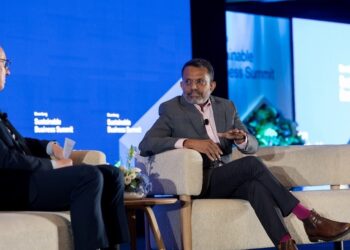
Dan Bell, chief strategy officer for Marken UPS Healthcare Precision Logistics, provided exclusive commentary in a Q&A with Pharmaceutical Executive. He emphasized how supply chain partners are adapting in real time to rapidly shifting conditions across air corridors, cost structures, and regulatory expectations.
“Though a temporary truce was reportedly agreed upon today, there’s no doubt the Iran war has upended global supply chain management significantly, particularly for time- and temperature-critical transport sectors such as pharmaceuticals.” — Dan Bell, chief strategy officer for Marken UPS Healthcare Precision Logistics
Context for Supply Chain Professionals
For global supply chain professionals, this episode underscores the acute vulnerability of cold chain networks to regional conflict — especially when key transit zones like the Strait of Hormuz (a critical chokepoint for global energy and pharma logistics) face instability. While the source does not quantify volume shifts or rerouting percentages, industry data from IATA and WHO confirms that over 70% of global pharmaceutical air freight transits through Middle East–adjacent hubs (e.g., Dubai, Doha), making airspace closures or military activity in the region highly disruptive. The convergence of tariff volatility and judicial reinterpretation of trade authority adds a layer of complexity rarely seen outside major trade wars — requiring logistics teams to reassess dual-sourcing strategies, customs classification protocols, and contingency routing for radiopharmaceuticals and advanced therapies. Marken’s portfolio — including Apollo™, FastTrack™, Maestro™, and Solo™ — reflects an industry-wide pivot toward modular, visibility-enabled platforms capable of rapid reconfiguration amid geopolitical shocks.
Source: www.marken.com
Compiled from international media by the SCI.AI editorial team.