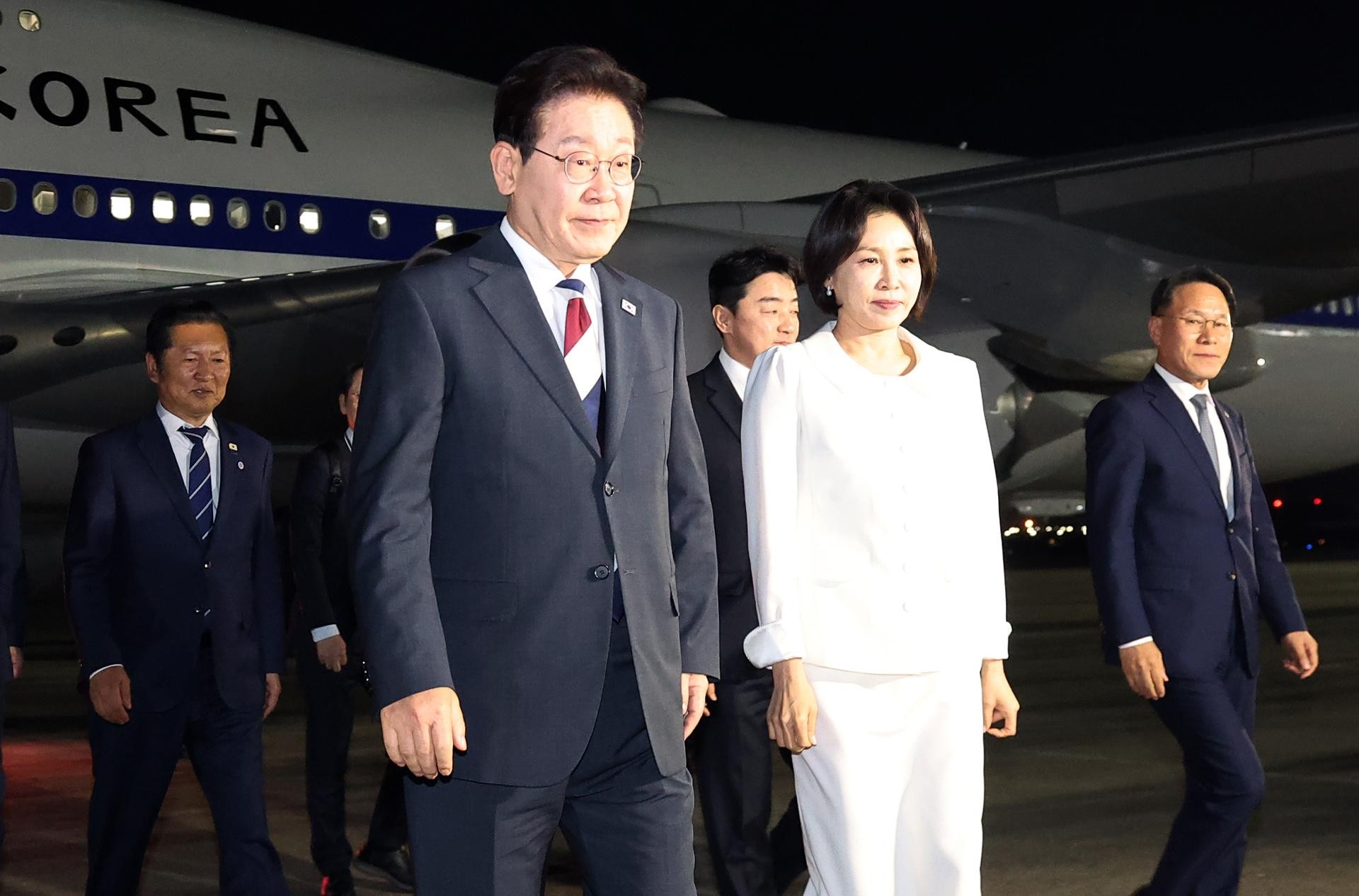
According to www.koreatimes.co.kr, South Korean President Lee Jae Myung returned to Seoul on Friday, April 24, 2026, after a six-day state visit to India and Vietnam focused explicitly on strengthening economic and supply chain cooperation amid global uncertainties—including those arising from the Middle East conflict.
Bilateral Summits and Strategic Agreements
In New Delhi on Monday, President Lee held a bilateral summit with Indian Prime Minister Narendra Modi. The two leaders agreed to expand collaboration in critical minerals, energy, artificial intelligence, finance, and shipbuilding. They also pledged to accelerate negotiations to upgrade their Comprehensive Economic Partnership Agreement, with the shared goal of doubling bilateral trade to US$50 billion by 2030—up from the current $25 billion.
In Hanoi on Wednesday, President Lee met with Vietnam’s top leader To Lam and committed to deepening ties in energy, infrastructure, and technology, as well as enhancing coordination for resilient supply chains. The following day, he held back-to-back meetings with Vietnamese Prime Minister Le Minh Hung and National Assembly Chairman Tran Thanh Man to further discuss avenues for advancing bilateral cooperation.
Practitioner Implications for Global Supply Chains
For supply chain professionals, this diplomatic initiative signals concrete, government-backed momentum toward diversification beyond traditional hubs—and away from overconcentration risks. India and Vietnam are already key nodes in regional manufacturing realignment: Vietnam hosts over 1,200 Korean enterprises, including Samsung and LG Electronics, while India has seen Korean FDI surge to $8.7 billion since 2014 (per Korea Eximbank data). The emphasis on critical minerals aligns with global efforts to secure inputs for batteries and semiconductors—sectors where both countries are scaling upstream investment. Coordination on energy and infrastructure also implies future alignment on port modernization, cross-border power grids, and green hydrogen logistics—areas directly affecting lead times, customs efficiency, and carbon-intensity reporting under frameworks like Scope 3.
The push to upgrade trade agreements reflects broader industry trends: RCEP members—including Vietnam and South Korea—have reduced average applied tariffs on intra-regional goods to under 2.5%, while India’s recent accession talks with the EU and UK underscore its growing role in multi-sourcing strategies. For procurement and logistics planners, these developments suggest increased feasibility for dual-sourcing across South and Southeast Asia—especially when supported by aligned regulatory timelines, mutual recognition of standards, and joint investment in multimodal corridors.
Source: www.koreatimes.co.kr
Compiled from international media by the SCI.AI editorial team.