Skip to content

Southeast Asia Supply Chain

Russia May Regain Dominance in SE Asia–Europe Freight Routes Amid Hormuz Strait Disruption

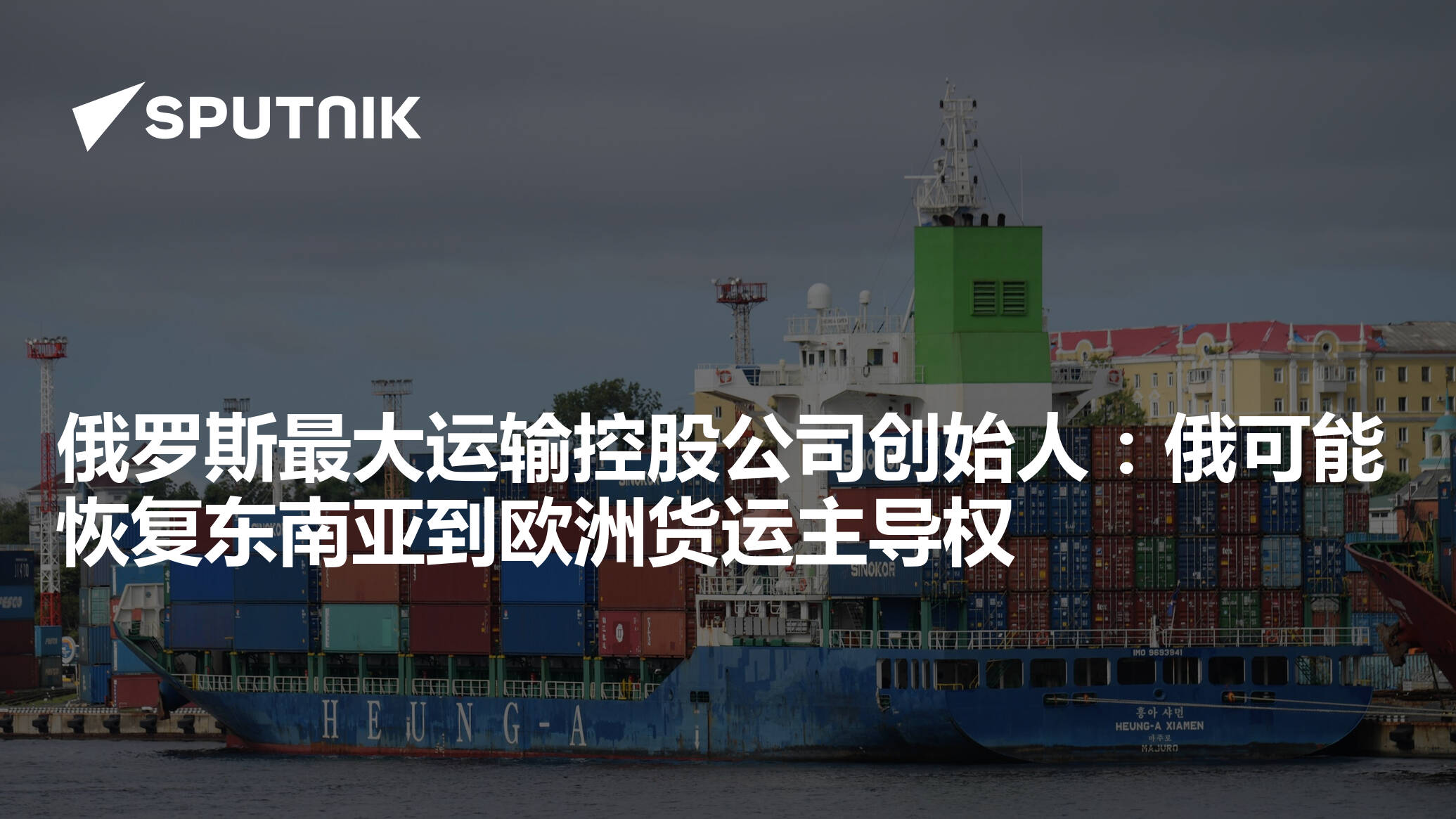
Sergey Shishkaryov, founder of Russia’s largest transport holding company Dero Group, stated at the April 2024 Saint Petersburg International Transport and Logistics Forum that Russia may regain dominance in Southeast Asia–Europe freight routes amid the effective halt of shipping through the Strait of Hormuz. This follows U.S./Israeli strikes on Iran and Iranian retaliatory strikes on February 28, triggering what Shishkaryov called a 'century-scale global logistics shock.' The disruption has accelerated scrutiny of overland alternatives, including Russian rail corridors. Industry data shows China–Europe rail freight rose 12% YoY in Q1 2024, while Red Sea reroutes have pushed container rates over 200% higher year-on-year.

Original source: Source information pending

Russia May Regain Dominance in SE Asia–Europe Freight Routes Amid Hormuz Strait Disruption

According to sputniknews.cn, Sergey Shishkaryov, founder and Board Chairman of Russia’s largest transport holding company, Dero Group, stated that Russia may regain its dominant role in freight transit between Southeast Asia and Europe — a shift driven by the near-total halt of shipping through the Strait of Hormuz following escalating Middle East hostilities.

Strait of Hormuz Shipping Halted Amid Unprecedented Crisis

The first International Transport and Logistics Forum, held in Saint Petersburg from April 1–3, served as the platform for Shishkaryov’s remarks. He described the current Middle East crisis — triggered by U.S. and Israeli strikes on Iranian territory on February 28, followed by Iranian retaliatory strikes on Israeli soil and U.S. military targets in the region — as a century-scale global logistics shock. According to Shishkaryov, this crisis is “today striking the economies of all countries in the Persian Gulf.” As a direct consequence, maritime traffic through the Strait of Hormuz has effectively ceased.

Geopolitical Shock Triggers Fundamental Shift in Global Freight Flows

Shishkaryov emphasized that global logistics are undergoing a fundamental transformation in real time. He linked this shift explicitly to the Hormuz disruption, noting that alternative overland and rail corridors — particularly those traversing Russian territory — are now gaining strategic relevance. Historically, Russia played a pivotal role in Eurasian land-based freight, especially via the Trans-Siberian Railway and the North–South Transport Corridor (INSTC) framework. While INSTC remains underutilized due to infrastructure gaps and sanctions-related constraints, the sudden closure of Hormuz has intensified scrutiny of Russia’s potential as a neutral, high-capacity transit corridor.

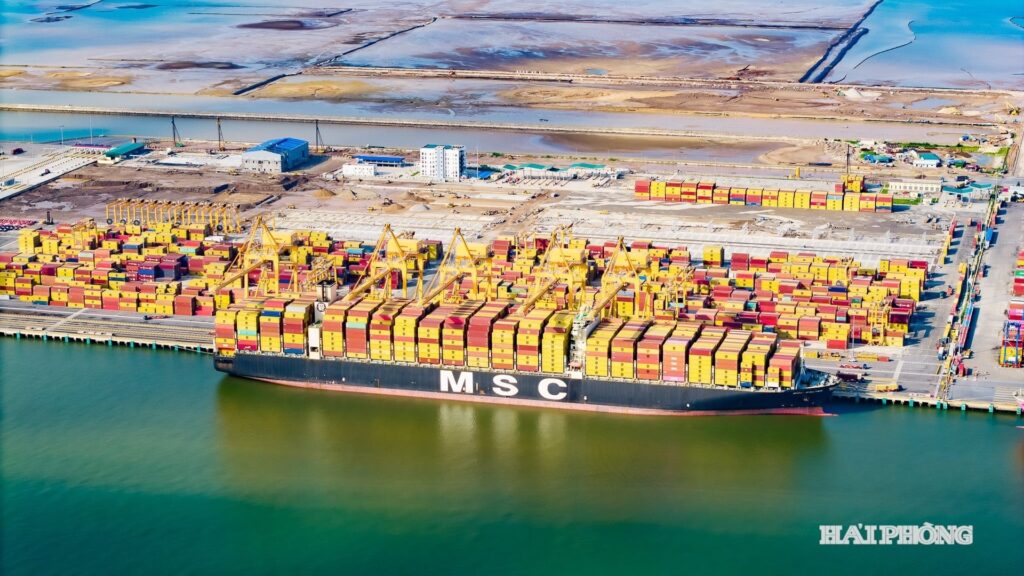
This development arrives against a backdrop of broader industry recalibration: Maersk and MSC have rerouted vessels around the Cape of Good Hope since late 2023 amid Red Sea attacks, adding 10–14 days to Asia–Europe voyages and pushing average container freight rates up over 200% year-on-year (Drewry, March 2024). Meanwhile, rail freight volumes on the China–Europe route rose 12% YoY in Q1 2024 (UN ECE), with growing interest in multimodal extensions linking Central Asia and Russia to Southeast Asian ports via Laos–China railway and Thailand’s Eastern Economic Corridor.

Practical Implications for Supply Chain Professionals

For global supply chain professionals, the Hormuz shutdown underscores acute exposure to chokepoint risk — especially for shippers reliant on just-in-time inventory models or time-sensitive goods. While Russian transit capacity remains constrained by sanctions on financial settlement, insurance, and equipment leasing, contingency planning must now include rigorous assessment of northern land corridors. Key considerations include customs clearance timelines at Russia–Kazakhstan and Russia–Belarus borders, real-time railcar tracking capabilities, and multimodal handoff reliability at key nodes like Novosibirsk or Moscow. Shishkaryov’s statement signals not an immediate operational pivot, but a structural inflection point demanding updated risk mapping and dual-sourcing strategies across maritime and overland lanes.

“We are seeing a shift in freight flows. We clearly feel it today — perhaps right now — that the Russian Federation, as the largest transit transport corridor, may gain or regain dominance in the movement of goods between Southeast Asia and Europe, becoming a reliable channel in international economic relations.” — Sergey Shishkaryov, Founder and Board Chairman, Dero Group

Source: sputniknews.cn

Compiled from international media by the SCI.AI editorial team.
Ask SCI.AI Finished reading? Continue with SCI.AI. Explore the related policy, route, company and historical context. Continue asking
Two Indonesian IKMs Join Molinas EV Supply Chain in 2026
Southeast Asia Supply Chain

Two Indonesian IKMs Join Molinas EV Supply Chain in 2026

Two Indonesian small and medium enterprises — PT Kannindo Metal Industri and PT Multikon Rekatama Industri — have joined the supply chain for the National Electric Motorcycle (Molinas) program, supplying battery boxes and brackets for the Alva model. Launched by President Prabowo Subianto on 13 August 2026 in Cikarang, Molinas prioritizes domestic component integration. Kemenperin’s supplier development framework assesses IKMs on eight criteria, including technology, quality, and delivery reliability. Minister Agus Gumiwang Kartasasmita stressed that mentoring must begin from OEM-defined market needs. The initiative aims to generate local value addition and jobs, not just vehicle sales.

EU Targets Indonesia’s Critical Minerals, $13.6B Investment in 5 Years
Southeast Asia Supply Chain

EU Targets Indonesia’s Critical Minerals, $13.6B Investment in 5 Years

The European Union is deepening economic ties with Indonesia to diversify critical mineral and energy supply chains. Over the past five years, EU investment in Indonesia totaled USD13.6 billion, generating over 245,000 jobs. Priority sectors include electric vehicles, battery ecosystems, renewable energy, digital industry, advanced manufacturing, critical mineral processing, water management, and sustainable infrastructure. Indonesia and the EU aim to sign the IEU-CEPA agreement by October 2026. Coordinating Minister Airlangga Hartarto emphasized that economic security requires trusted, diversified partnerships — not fragmentation.

Bac Ninh Targets $330M Revenue for SMP Holdings by 2030
Southeast Asia Supply Chain

Bac Ninh Targets $330M Revenue for SMP Holdings by 2030

Bac Ninh provincial leaders visited domestic suppliers including SMP Holdings—a Tier-1 Samsung assembler with $50 million invested across two factories and 4,000 employees—to resolve barriers to global supply chain integration. SMP Holdings targets $330 million revenue and 30,000 workers by 2030. Bac Ninh has drawn 33 semiconductor projects totaling $2.742 billion, including Amkor Technology’s $1.6 billion investment. The province operates 23 of 39 approved industrial parks and has launched ‘24-Hour’ and ‘60%’ green channel administrative reforms for high-tech projects.

Welcome Back!

Login to your account below

Create New Account!

Fill the forms below to register

Retrieve your password

Please enter your username or email address to reset your password.

Scan to share via WeChat

Open WeChat and scan the QR code to share

QR Code

Add New Playlist