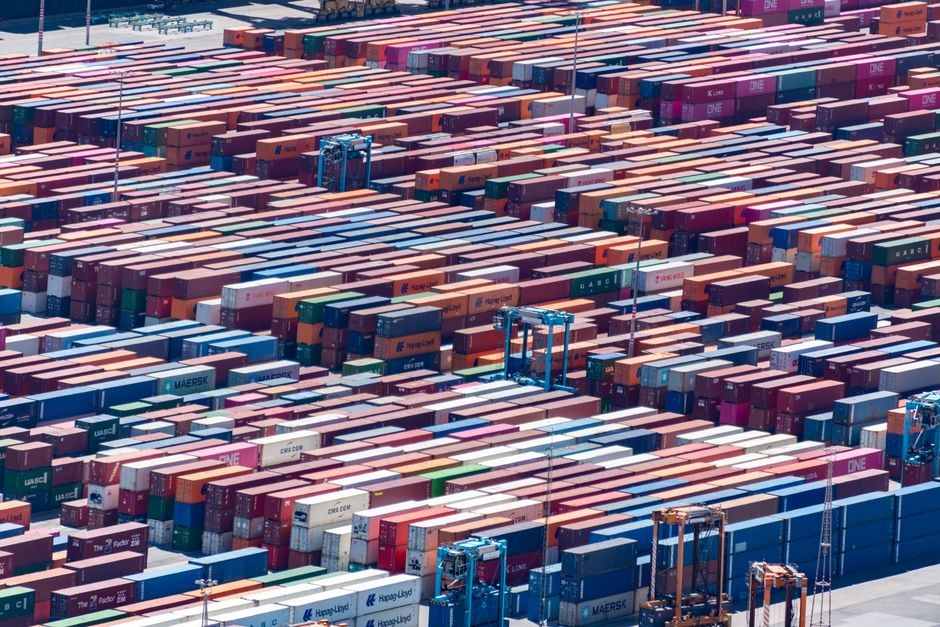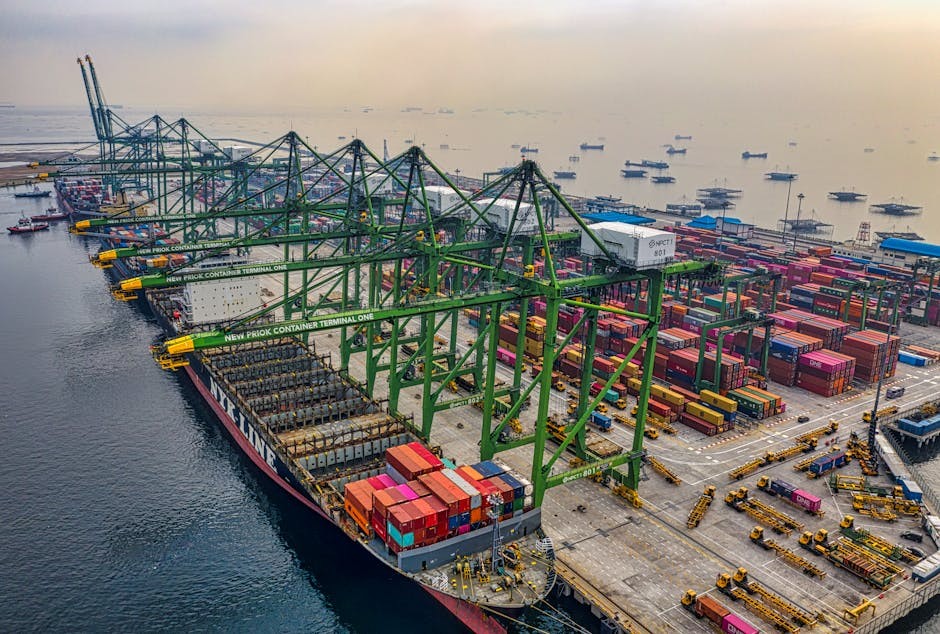
Cargo flows across Asia remain strong as supply chains shift toward ASEAN: China’s US exports fell ~30% last year, while ASEAN’s rose 23%. MTTSL MD Ooi Lean Hin notes the full impact will unfold over 18–24 months as factories relocate. Malaysian ports face no major congestion despite West Asia tensions. Freight rates surged for Gulf routes, with war risk premiums now standard for Red Sea–adjacent destinations. Feeder vessel supply is constrained — newbuilds cover just 38% of retirements through 2030 — underscoring critical capacity gaps for regional transshipment.
According to theleaders-online.com, cargo volumes across Asia remain robust amid global geopolitical tensions, driven by China’s market diversification and ongoing supply chain realignment toward South-east Asia — a trend expected to sustain near-term growth despite production ramp-up lags of 18 to 24 months.
Trade Flow Realignment: Data-Driven Shifts
MTT Shipping and Logistics Bhd (MTTSL) Managing Director Ooi Lean Hin cited concrete trade data reflecting structural change: China’s exports to the United States fell by about 30 per cent last year, while South-east Asia’s exports to the US rose 23 per cent. This divergence underscores a deliberate, large-scale reconfiguration of manufacturing footprints and export logistics.
Ooi emphasized that much of this redirected cargo will arrive over the next 18–24 months, as factories relocate and scale output — a lagged but material inflection point for regional ports and feeder networks. The cargo is predominantly destined for Western markets and flows through key hub ports along the Strait of Malacca, including Port Klang, Port of Tanjung Pelepas, and Port of Singapore.
Geopolitical Impact: Limited Disruption in Malaysia
Regarding West Asia conflict impacts, Ooi confirmed shipping disruptions are largely confined to the Gulf region. Malaysian ports — including Westports — have not experienced significant congestion, enabling uninterrupted operations. He stressed Malaysia’s readiness to absorb rising cargo volumes across short-, medium-, and long-term horizons, backed by strong intra-Asia trade and resilient regional economies.
Freight Rates and Routing Pressures
Freight rates spiked immediately after the West Asia conflict escalated — especially for Gulf-bound shipments. For example, costs to Jeddah now include both elevated base rates and war risk premiums due to Red Sea security threats.
Although the Strait of Hormuz disruption has minimal impact on containerised Asia–Europe cargo (most transits via Suez Canal), some vessels are rerouting via the Cape of Good Hope and alternative ports in Oman, Turkiye, and the Red Sea. These detours add approximately two weeks per leg — up to a month for full round voyages, increasing fuel use, reducing vessel availability, and sustaining upward pressure on freight rates.
Charter and Feeder Vessel Market Dynamics
Charter rates remain firm amid persistently tight global vessel supply — exacerbated by geopolitical volatility. MTTSL has two vessels coming off charter, with renewal discussions indicating slightly higher rates.
In the feeder segment (vessels below 2,000 TEUs and those between 2,000–4,000 TEUs), newbuilding orders through 2030 represent only 38 per cent of vessels due for retirement. This structural supply deficit is compounded by the International Maritime Organisation’s decarbonisation requirements, which are expected to further constrain capacity.
Ooi noted strong demand for feeders, supported by growing intra-Asia trade and services to major transshipment hubs. He added:
“Large 20,000 TEU ships are unsuitable for these regional routes, reinforcing the importance of smaller vessels in our fleet.” — Ooi Lean Hin, Managing Director, MTTSL
MTTSL Fleet and IPO Context
MTTSL operates a fleet of 26 vessels, including 24 owned ships, with a total nominal capacity of 29,149 TEUs. Of these, 15 container ships are operated directly under its service network, while 11 are chartered out to major liner partners. The company also manages six sets of tugs and barges (with a seventh acquired in January 2026), owns 18,026 containers, and leases another 5,977 units.
The company is scheduled to list on the Main Market of Bursa Malaysia on April 26. CIMB Investment Bank Bhd serves as principal adviser, joint global coordinator, joint bookrunner, managing underwriter, and joint underwriter. CLSA Ltd and CLSA Securities Malaysia Sdn Bhd are joint global coordinators and joint bookrunners; Affin Hwang Investment Bank Bhd is joint bookrunner and joint underwriter.
Source: theleaders-online.com
Compiled from international media by the SCI.AI editorial team.