Explore

  • Trending
  • Latest
  • Tools
  • Browse
  • Subscription Feed

Logistics

  • Ocean
  • Air Cargo
  • Road & Rail
  • Warehousing
  • Last Mile

Regions

  • Southeast Asia
  • South Asia
  • Central Asia
  • Japan & Korea
  • Middle East
  • Europe
  • Russia
  • Africa
  • North America
  • Latin America
  • Australia
SCI.AI
  • Supply Chain
    • Strategy & Planning
    • Logistics & Transport
    • Manufacturing
    • Inventory & Fulfillment
  • Procurement
    • Strategic Sourcing
    • Supplier Management
    • Supply Chain Finance
  • Technology
    • AI & Automation
    • Robotics
    • Digital Platforms
  • Risk & Resilience
  • Sustainability
  • Research
  • Expert Columns
  • English
    • Chinese
    • English
No Result
View All Result
  • Login
  • Register
SCI.AI
No Result
View All Result
Home Technology Robotics

7 Warehouse Automation Trends Reshaping Supply Chains in 2026

2026/03/29
in Robotics, Technology
0 0
7 Warehouse Automation Trends Reshaping Supply Chains in 2026

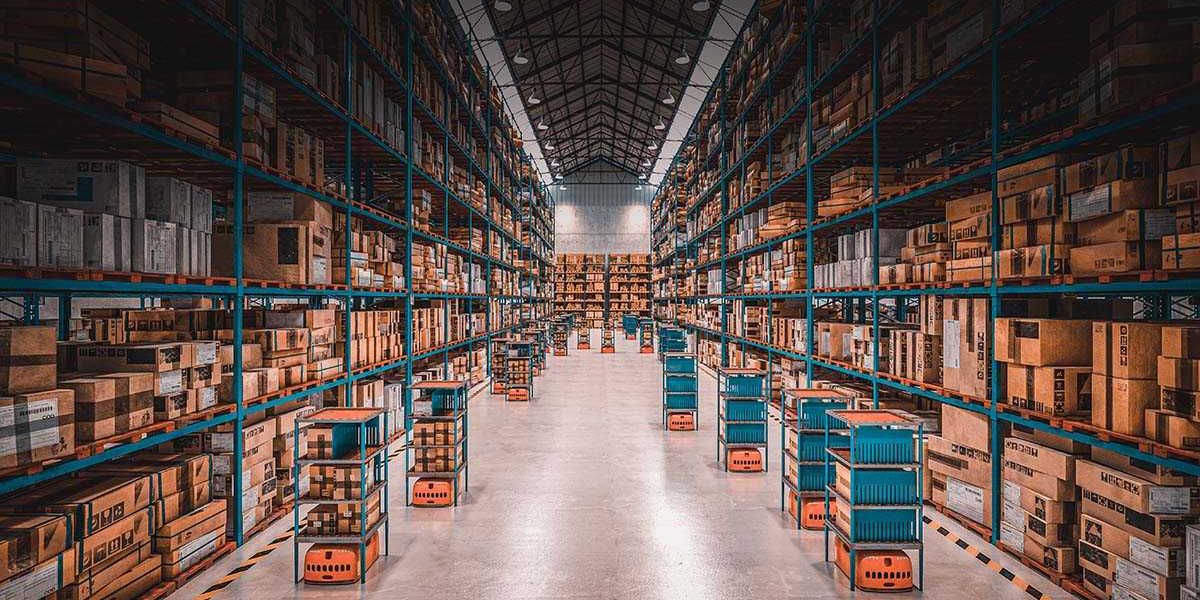
According to www.thescxchange.com, Hy-Tek Intralogistics’ 2026 Warehouse Automation Trends report identifies seven pivotal shifts transforming warehouse operations globally — with inbound automation, robots-as-a-service (RaaS), and software-centric orchestration emerging as top priorities for supply chain professionals.

Attention Turns to Inbound Automation

Historically, warehouse automation initiatives prioritized outbound fulfillment. Now, companies are shifting focus to inbound processes — receiving, putaway, and pallet handling — to eliminate bottlenecks and improve throughput. Where warehouses once manually unpacked inbound cases to fit legacy storage equipment, new load exchangers and case handlers now enable robotic case placement directly onto trays or shelving without intermediate unpacking. The report highlights growing investment in robotic depalletizing and pallet-building systems; AI-enabled vision inspection for real-time product and barcode identification; and autonomous mobile robots (AMRs) dedicated to case and pallet transport on the inbound side.

Rent, Don’t Buy: The Rise of RaaS

Capital expenditure is no longer a prerequisite for automation adoption. Flexible subscription models — known as robots-as-a-service (RaaS) — allow organizations to deploy and scale robotic fleets without large upfront investments. Providers manage updates, maintenance, and scalability, freeing operations teams to concentrate on order fulfillment rather than equipment servicing. While RaaS is most established for AMRs, the model is expanding to computer vision startups and drone providers.

Software Becomes the Central Nervous System

Hardware remains essential, but software is now the primary driver of operational advancement. Warehouse execution systems (WES), orchestration platforms, and low-code/no-code integration tools unify previously siloed systems — including ERP, WMS, robotics, and IoT devices — into a single data-driven ecosystem. This integration enables dynamic decision-making across the facility and simplifies configuration and system interoperability.

Robotic Programming Gets Easier

Programming robotic arms no longer requires specialized engineering talent. Low-code interfaces and digital twins empower frontline operators to configure tasks using visual tools — such as drop-down menus — or via “teach-by-demonstration,” where they physically guide the arm through motions. As a result, robots can rapidly switch between tasks like decartoning, kitting, and inspection — reducing downtime and lowering engineering costs.

Smarter Imagers Powered by Neural Processing

Vision technology has advanced significantly. Modern imagers equipped with neural processing units (NPUs) can identify, classify, and track products in real time — unlike traditional template-based systems that struggle with SKU scalability. Neural-network models trained on broad product classes enable rapid deployment; one use case cited is pairing such vision systems with robotic arms to achieve reliable picking after only a short training period.

Dynamic Storage Replaces Static Infrastructure

Fixed pick modules and static racking are giving way to robotic automated storage and retrieval systems (AS/RS) that dynamically optimize storage density and retrieval paths. These systems reduce travel time, increase picking accuracy, and adapt in real time to fluctuations in order volume, SKU mix, or service-level requirements. Crucially, their modular design allows reconfiguration — a stark contrast to hardwired conveyor layouts or fixed racking that cannot evolve with operational needs.

Source: www.thescxchange.com

Compiled from international media by the SCI.AI editorial team.
More on This Topic

  • STG Logistics Reorganization Approved — 90% Debt Cut (May 20, 2026)
  • Mecalux Unveils AI Agents — Logistics Business (May 20, 2026)
  • Locus Robotics收购Nexera Robotics — Logistics Business (May 20, 2026)
  • Savannah Port Volumes Down 14% — gCaptain (May 20, 2026)
  • AI Boom vs Helium Crisis: 5% of Air Cargo at Risk — The Loadstar (May 20, 2026)
ShareTweet

Related Posts

STG Logistics Reorganization Approved — 90% Debt Cut
AI & Automation

STG Logistics Reorganization Approved — 90% Debt Cut

May 20, 2026
2
Mecalux Unveils AI Agents — Logistics Business
AI & Automation

Mecalux Unveils AI Agents — Logistics Business

May 20, 2026
3
Locus Robotics收购Nexera Robotics — Logistics Business
AI & Automation

Locus Robotics收购Nexera Robotics — Logistics Business

May 20, 2026
1
Savannah Port Volumes Down 14% — gCaptain
AI & Automation

Savannah Port Volumes Down 14% — gCaptain

May 20, 2026
2
AI Boom vs Helium Crisis: 5% of Air Cargo at Risk — The Loadstar
AI & Automation

AI Boom vs Helium Crisis: 5% of Air Cargo at Risk — The Loadstar

May 20, 2026
2
AI Boosts DC Labor Productivity by 30%
AI & Automation

AI Boosts DC Labor Productivity by 30%

May 20, 2026
2

Leave a Reply Cancel reply

Your email address will not be published. Required fields are marked *

Recommended

AI in Supply Chain Risk: 7 Real-World Interventions

AI in Supply Chain Risk: 7 Real-World Interventions

9 Views
March 28, 2026
爆炸式寻呼机传递供应链警报

Explosive Pager Transmits Supply Chain Alerts

11 Views
February 16, 2026
AI-Driven Supply Chain Finance: $7.75T Data Center Capex by 2030

AI-Driven Supply Chain Finance: $7.75T Data Center Capex by 2030

11 Views
May 3, 2026
Digital Twin Blood Bank Logistics Market to Hit $3.13B by 2030

Digital Twin Blood Bank Logistics Market to Hit $3.13B by 2030

11 Views
April 21, 2026
Show More

SCI.AI

Global Supply Chain Intelligence. Delivering real-time news, analysis, and insights for supply chain professionals worldwide.

Categories

  • Supply Chain Management
  • Procurement
  • Technology


  • Risk & Resilience
  • Sustainability
  • Research

© 2026 SCI.AI. All rights reserved.

Powered by SCI.AI Intelligence Platform

Welcome Back!

Sign In with Facebook
Sign In with Google
Sign In with Linked In
OR

Login to your account below

Forgotten Password? Sign Up

Create New Account!

Sign Up with Facebook
Sign Up with Google
Sign Up with Linked In
OR

Fill the forms below to register

All fields are required. Log In

Retrieve your password

Please enter your username or email address to reset your password.

Log In

Scan to share via WeChat

Open WeChat and scan the QR code to share

QR Code

Add New Playlist

No Result
View All Result
  • Supply Chain
    • Strategy & Planning
    • Logistics & Transport
    • Manufacturing
    • Inventory & Fulfillment
  • Procurement
    • Strategic Sourcing
    • Supplier Management
    • Supply Chain Finance
  • Technology
    • AI & Automation
    • Robotics
    • Digital Platforms
  • Risk & Resilience
  • Sustainability
  • Research
  • Expert Columns
  • English
    • Chinese
    • English
  • Login
  • Sign Up

© 2026 SCI.AI