Effective Inventory Management in Multi-Level Systems for Supply Chain and Logistics
Transforming Supply Chain Management: The Impact of AI and Data Science
Vivek Anand
- Posted on September 9, 2024 at 11:29 AM
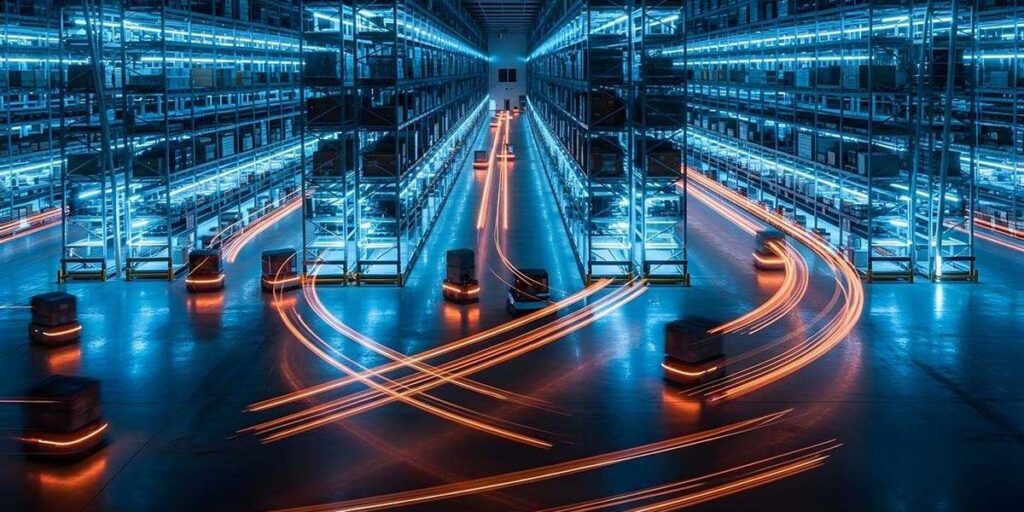
In the supply chain and logistics sectors, effective inventory management is crucial for maintaining smooth operations and ensuring customer satisfaction. Inventory management becomes even more complex in multi-echelon systems, which maintain multiple levels of inventory across different stages of the supply chain. The term “multi-echelon” refers to managing inventories at various levels within a supply chain, such as manufacturers, distribution centers, and retailers, where inventory decisions at one level impact the overall performance of the system.
Vulnerability of Global Supply Chains
The COVID-19 pandemic fundamentally altered the landscape of global supply chain management, revealing vulnerabilities in global supply chains and highlighting the need for more resilient inventory management practices. Disruptions caused by the pandemic led to severe shortages of critical goods such as infant formula and diapers due to lockdowns, factory closures, and transportation bottlenecks.
The shortage of infant formula and diapers during the pandemic highlighted the limitations of traditional inventory management systems, which struggled to cope with surges in demand and supply chain disruptions. Panic buying and hoarding exacerbated this situation, leaving retailers unable to meet consumer needs.
Another recent event that underscored the vulnerability of global supply chains was the blockage of the Suez Canal in March 2021 when the giant container ship Ever Given became stuck, causing about 12% of global trade to halt for several days. This incident caused widespread disruptions, delaying critical goods and leading to shortages and production delays across various industries.
These events have driven a shift towards more robust inventory management practices among retailers, making multi-echelon inventory optimization systems essential in building supply chains that are better equipped to predict demand, optimize inventory levels, and dynamically respond to unexpected disruptions.
Multiechelon Inventory Management (MEIM) involves addressing challenges related to replenishment and allocation of inventories at different echelons to minimize total costs while ensuring high service levels. In classic models, inventory is typically managed using traditional mathematical methods such as Economic Order Quantity (EOQ), base-stock models, or safety stock formulas. However, with the globalization and complexity of businesses, these classical models often fall short in handling dynamic market conditions, irregular demand patterns, and unpredictable supply chain disruptions.
This is where data science and artificial intelligence (AI) come into play. With AI-driven algorithms, machine learning, and predictive analytics, companies can enhance their traditional inventory models to be more resilient, responsive, and flexible, better suited for today’s dynamic business environment.
What is Multiechelon Inventory Management?
In essence, multiechelon inventory management involves optimizing inventory levels across multiple tiers of the supply chain. Each tier can include:
- Manufacturers: Where raw materials or components are transformed into finished products.
- Distribution Centers: Warehouses that store inventory for regional markets.
- Retailers: The final nodes of the supply chain where products are made available to end customers.
Managing inventories in such a multilevel system presents unique challenges. The goal is to ensure each tier holds an optimal amount of inventory to minimize stockouts (losses due to unavailable goods) and excess inventory (which ties up capital and incurs holding costs).
To achieve this, businesses rely on classic inventory models like Economic Order Quantity (EOQ) and reorder point formulas, which work well for simpler systems. However, these methods assume stable demand and fixed lead times—assumptions that often do not hold in today’s volatile markets.
Conclusion
Multiechelon inventory management is a complex yet critical task in today’s global supply chains. While classical models provide foundational insights, they are often insufficient to handle the intricacies of modern supply chains. By integrating data science and AI, companies can enhance their inventory systems’ resilience and flexibility, making them more responsive to dynamic market conditions.
Advanced demand forecasting, reinforcement learning, and real-time optimization can transform MEIM from a reactive, isolated process into an active, data-driven function that ensures high service levels, minimizes costs, and improves overall supply chain efficiency. The future of multiechelon inventory management lies in combining classical models with cutting-edge AI technologies to address the complexities of today’s fast-changing, interconnected world.
Source: Data Science Central