Explore

  • Trending
  • Latest
  • Tools
  • Browse
  • Subscription Feed

Logistics

  • Ocean
  • Air Cargo
  • Road & Rail
  • Warehousing
  • Last Mile

Regions

  • Southeast Asia
  • South Asia
  • Central Asia
  • Japan & Korea
  • Middle East
  • Europe
  • Russia
  • Africa
  • North America
  • Latin America
  • Australia
SCI.AI
  • Supply Chain
    • Strategy & Planning
    • Logistics & Transport
    • Manufacturing
    • Inventory & Fulfillment
  • Procurement
    • Strategic Sourcing
    • Supplier Management
    • Supply Chain Finance
  • Technology
    • AI & Automation
    • Robotics
    • Digital Platforms
  • Risk & Resilience
  • Sustainability
  • Research
  • Expert Columns
  • English
    • Chinese
    • English
No Result
View All Result
  • Login
  • Register
SCI.AI
No Result
View All Result
Home Southeast Asia Supply Chain

China Emerges as Asia’s Primary Supply Chain Hub: AMRO Report

2026/04/14
in Southeast Asia Supply Chain
0 0
China Emerges as Asia’s Primary Supply Chain Hub: AMRO Report

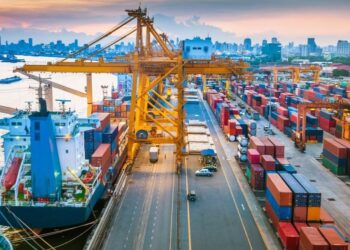
According to en.people.cn, a report released on Monday by the ASEAN+3 Macroeconomic Research Office (AMRO) states that over the past two decades, China has become the primary hub of supply chains within the Asia region.

Structural Shift from Japan-Centered to China-Anchored Networks

The AMRO report notes that ASEAN+3’s economic linkages have undergone a fundamental transformation compared with two decades ago. Regional production networks have evolved from a Japan-centered hub into a denser, more interconnected architecture anchored by China. The report explicitly attributes China’s hub status to its expanding manufacturing capacity, logistics infrastructure, and central position in intermediate goods trade.

Technological Upgrading and Industrial Resilience

China’s manufacturing sector is transitioning toward technological sophistication. Through initiatives promoting the high-quality development of key industrial chains and rebuilding the industrial base, China has achieved breakthroughs in core technologies such as integrated circuits, industrial machine tools, and new-energy vehicles. The reliability of its industrial chains has steadily improved, providing stable supplies for the regional production network.

Multidirectional Interdependence, Not Unidirectional Dependence

The AMRO report describes the region’s supply linkages as “interdependence rather than unidirectional dependence on China.” China is not only a provider of intermediate goods but also a huge source of demand for end consumer goods. Agricultural products and electronics from ASEAN countries, as well as core components and high-end materials from South Korea, are exported to China in large volumes. Simultaneously, Chinese consumer demand for imported automobiles, cosmetics, and chips creates significant market space for regional partners.

Hub-and-Node Development Across ASEAN+3

This complementary relationship has enabled neighboring countries to move up the value chain:

  • Vietnam’s rise in electronic assembly
  • Thailand’s emergence as a major automotive manufacturing center
  • Malaysia’s growth in semiconductor packaging and testing

China provides large-scale manufacturing capacity and a complete supporting ecosystem, while neighboring countries leverage their comparative advantages to undertake specific links.

Institutional Enablers: RCEP and Trade Expansion

Regional institutional arrangements reinforce this dynamic. Mechanisms such as the Regional Comprehensive Economic Partnership (RCEP) and the China–ASEAN Free Trade Area have significantly lowered transaction costs and facilitated industrial chain integration. In 2025, total trade between China and ASEAN exceeded $1 trillion for the first time, up 7.4 percent year on year. In the four years since RCEP took effect, the region’s share of global foreign direct investment has surpassed 30 percent.

Market Scale and Strategic Sectors Driving Integration

Asia’s vast market — home to more than 4 billion people, with a relatively high proportion of young people — provides structural resilience. Coupled with digital and green transitions, this domestic market guides industrial chains toward higher value-added segments through consumption upgrading. China has built leading advantages in emerging fields including photovoltaics, lithium batteries, new-energy vehicles, 5G communications, and artificial intelligence.

“Supply-chain links have always been two-way… This pattern reflects rational choices made by all sides based on their comparative advantages.” — Source: en.people.cn

Source: en.people.cn

Compiled from international media by the SCI.AI editorial team.

More on This Topic

  • Vietnam’s 15 Active FTAs: Key Trade Agreements for Supply Chains (Apr 15, 2026)
  • Volkswagen’s ASEAN Logistics Strategy: 3 Pillars for Supply Chain Resilience (Apr 13, 2026)
  • ASEAN 11-Nation Bloc: 683M People, $4.167T GDP (Apr 12, 2026)
  • ASEAN’s Supply Chain Rebalancing Role (2026) (Apr 9, 2026)
  • Russia May Regain Dominance in SE Asia–Europe Freight Routes Amid Hormuz Strait Disruption (Apr 6, 2026)
ShareTweet

Related Posts

Vietnam’s 15 Active FTAs: Key Trade Agreements for Supply Chains
Southeast Asia Supply Chain

Vietnam’s 15 Active FTAs: Key Trade Agreements for Supply Chains

April 15, 2026
3
Volkswagen’s ASEAN Logistics Strategy: 3 Pillars for Supply Chain Resilience
Southeast Asia Supply Chain

Volkswagen’s ASEAN Logistics Strategy: 3 Pillars for Supply Chain Resilience

April 13, 2026
7
Southeast Asia Supply Chain

ASEAN 11-Nation Bloc: 683M People, $4.167T GDP

April 12, 2026
9
ASEAN’s Supply Chain Rebalancing Role (2026)
Southeast Asia Supply Chain

ASEAN’s Supply Chain Rebalancing Role (2026)

April 9, 2026
12
Russia May Regain Dominance in SE Asia–Europe Freight Routes Amid Hormuz Strait Disruption
Southeast Asia Supply Chain

Russia May Regain Dominance in SE Asia–Europe Freight Routes Amid Hormuz Strait Disruption

April 6, 2026
10

Leave a Reply Cancel reply

Your email address will not be published. Required fields are marked *

Recommended

Latin America’s Port Surge: How DP World’s 2025 Record Throughput Reveals a Fundamental Supply Chain Realignment

Latin America’s Port Surge: How DP World’s 2025 Record Throughput Reveals a Fundamental Supply Chain Realignment

3 Views
March 17, 2026
Beyond Decarbonization: How Nine Converging Innovations Are Rewiring Global Supply Chains for Resilience and Regeneration

Beyond Decarbonization: How Nine Converging Innovations Are Rewiring Global Supply Chains for Resilience and Regeneration

27 Views
March 1, 2026
观点 | 港口工人试图阻止自动化发展,但注定会失败。

Opinion | Port Workers Try to Halt Automation Advances, But Failure Is Inevitable.

11 Views
February 15, 2026
AI Blind Spots Are Fracturing Supply Chain Resilience: Why Legacy Vendor Risk Frameworks Are Obsolete — Razorpay CISO Exposes Critical Supply Chain Security Gap

AI Blind Spots Are Fracturing Supply Chain Resilience: Why Legacy Vendor Risk Frameworks Are Obsolete — Razorpay CISO Exposes Critical Supply Chain Security Gap

10 Views
March 18, 2026
Show More

SCI.AI

Global Supply Chain Intelligence. Delivering real-time news, analysis, and insights for supply chain professionals worldwide.

Categories

  • Supply Chain Management
  • Procurement
  • Technology


  • Risk & Resilience
  • Sustainability
  • Research

© 2026 SCI.AI. All rights reserved.

Powered by SCI.AI Intelligence Platform

Welcome Back!

Sign In with Facebook
Sign In with Google
Sign In with Linked In
OR

Login to your account below

Forgotten Password? Sign Up

Create New Account!

Sign Up with Facebook
Sign Up with Google
Sign Up with Linked In
OR

Fill the forms below to register

All fields are required. Log In

Retrieve your password

Please enter your username or email address to reset your password.

Log In

Scan to share via WeChat

Open WeChat and scan the QR code to share

QR Code

Add New Playlist

No Result
View All Result
  • Supply Chain
    • Strategy & Planning
    • Logistics & Transport
    • Manufacturing
    • Inventory & Fulfillment
  • Procurement
    • Strategic Sourcing
    • Supplier Management
    • Supply Chain Finance
  • Technology
    • AI & Automation
    • Robotics
    • Digital Platforms
  • Risk & Resilience
  • Sustainability
  • Research
  • Expert Columns
  • English
    • Chinese
    • English
  • Login
  • Sign Up

© 2026 SCI.AI