The Geopolitical Pivot: From AGOA Dependence to Dual-Market Sovereignty
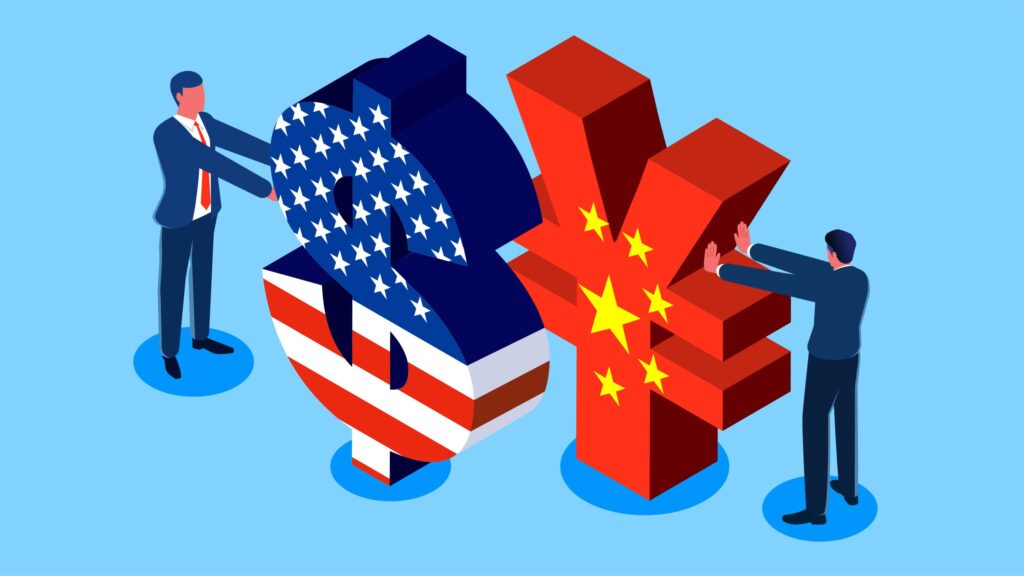
Africa’s export architecture has long been anchored in asymmetrical trade frameworks—most notably the African Growth and Opportunity Act (AGOA), which since 2000 granted select sub-Saharan nations duty-free access to the U.S. market for over 6,000 products. Yet the recent 12-month extension of AGOA—set to expire on December 31, 2026—does not signal continuity but rather the culmination of a structural crisis in transatlantic trade governance. Washington’s decision to withhold a multi-year renewal, coupled with increasingly conditional eligibility criteria—including stringent labor, environmental, and governance benchmarks—has exposed the fragility of Africa’s unilateral reliance on American market access. This is no longer merely a tariff negotiation; it is a sovereignty recalibration. As South Africa’s trade ministry explicitly acknowledged in February 2026, its pursuit of the Framework Agreement on Economic Partnership for Shared Prosperity with China was accelerated not by ideological affinity, but by acute exposure to U.S. tariff volatility—particularly in agricultural commodities such as citrus, wine, and macadamia nuts, where retaliatory duties surged by up to 32% following disputes over phytosanitary protocols. The deeper implication lies in supply chain resilience: AGOA’s ‘single-window’ model created path dependency in logistics corridors, port infrastructure investment, and customs digitization—all calibrated for Miami, New York, and Los Angeles gateways. Now, African exporters must simultaneously reconfigure inland transport networks to accommodate rail links to LAPSSET (Lamu Port-South Sudan-Ethiopia Transport Corridor) and the Trans-Asian Railway, while upgrading cold-chain capacity for perishables destined for Shanghai or Shenzhen instead of Newark. This dual-market pivot demands more than policy agility—it requires capital reallocation, workforce upskilling in ISO 22000 and GB/T certification standards, and a fundamental rethinking of origin tracing systems to satisfy both U.S. CBP’s Importer Security Filing (ISF) and China’s Customs Risk Management Platform (CRMP). The 26% surge in South African exports to $161 million in 2025—attributed by AgriSA to a ‘temporary pause’ in U.S. tariffs—is thus a statistical mirage masking systemic vulnerability. Without parallel investments in multimodal interoperability, digital trade facilitation, and harmonized product classification, Africa risks becoming a geopolitical arbitrage zone rather than an integrated node in global supply chains.
What makes this pivot historically unprecedented is its simultaneity—not sequential alignment, but concurrent engagement across diametrically opposed regulatory ecosystems. While the U.S. emphasizes rule-based trade with embedded conditionality on human rights and climate commitments, China’s zero-tariff offer for 53 African countries operates through a state-led, project-finance lens: market access is bundled with infrastructure loans, technology transfer agreements, and data localization requirements under China’s Digital Silk Road framework. Kenya’s Early Harvest Arrangement—granting 98% of Kenyan exports duty-free access to China—comes with binding clauses on traceability via China’s Blockchain-based Food Safety Traceability System (BFSTS), mandating integration with Kenya’s National Agricultural Information System (NAIS) by Q3 2026. This is not mere tariff elimination; it is infrastructural assimilation. Similarly, South Africa’s ‘early harvest agreement’ expected by March 2026 includes joint development of a Cross-Border E-Commerce Hub in Durban, co-funded by China’s Ministry of Commerce and the Industrial Development Corporation of South Africa (IDC), with mandatory use of Alipay+ and WeBank’s SME lending APIs for Kenyan and South African exporters. Such technical entanglements mean that even if political winds shift, disentangling from China’s digital trade stack will be exponentially harder than reversing tariff concessions. The consequence? African supply chain managers are now forced to maintain dual compliance teams—one fluent in U.S. FDA’s Foreign Supplier Verification Program (FSVP) and another certified in China’s General Administration of Customs (GACC) Registration System for Overseas Food Producers. This bifurcation inflates operational costs by an estimated 18–22% per export lane, according to the African Union’s Logistics Performance Index 2025 update—a burden disproportionately borne by SMEs that constitute 87% of Africa’s formal exporters. Without targeted technical assistance and blended finance mechanisms, the ‘dual-market sovereignty’ narrative risks collapsing into a new form of technical dependency.
Zero-Tariff Ambition vs. Structural Reality: The Limits of Beijing’s Market Access Offer
Beijing’s announcement to eliminate tariffs on all products from 53 African countries—with diplomatic ties—represents a quantum leap beyond its previous preferential treatment for just 33 least-developed countries (LDCs) under the Duty-Free Quota-Free (DFQF) scheme. On paper, this expansion appears transformative: it extends zero-tariff coverage to middle-income economies like South Africa, Kenya, Egypt, and Nigeria—countries previously excluded due to World Trade Organization (WTO) rules prohibiting non-reciprocal preferences among non-LDCs. However, the operational reality reveals a chasm between diplomatic signaling and logistical execution. First, China’s tariff elimination applies only to the Most-Favoured-Nation (MFN) rate, not the applied rate—which may already be zero for many African exports due to existing bilateral or regional agreements. More critically, China’s customs valuation system imposes de facto non-tariff barriers far more restrictive than MFN schedules: the GACC’s ‘transaction value plus’ methodology routinely adds 12–18% to declared invoice values for agricultural commodities based on benchmark price databases updated biweekly, effectively neutralizing tariff savings. A case in point is Kenya’s avocado exports: though granted zero MFN duty under the Early Harvest Arrangement, Kenyan exporters reported an average 15.7% increase in landed cost in Q1 2026 due to GACC’s application of ‘market-adjusted value’ rules tied to Chilean and Mexican avocado price indices—neither of which reflect East African production costs or seasonality. This is not protectionism in disguise; it is algorithmic trade governance designed to prioritize domestic food security objectives over export liberalization rhetoric.
Second, the zero-tariff promise ignores China’s labyrinthine import licensing regime, particularly for sensitive sectors. Under China’s 2024 Revised Catalogue of Imported Goods Subject to Licensing Control, over 217 African-origin products—including fresh horticulture, processed dairy, and leather goods—require pre-shipment inspection certificates issued exclusively by Chinese-designated agencies such as CCIC (China Certification & Inspection Group) or SGS China. These inspections carry fees averaging $1,200–$3,800 per shipment, payable in RMB and subject to 72-hour processing windows—conditions that render them functionally prohibitive for SMEs lacking forward currency hedging capacity. Moreover, China’s newly implemented ‘Green Channel’ certification for sustainable sourcing mandates blockchain-verified carbon footprint tracking for all agro-exports entering Shanghai’s Yangshan Free Trade Port—a requirement for which fewer than 4% of Kenyan tea cooperatives possess compliant ERP systems. Thus, while Beijing touts ‘rapid market access scheduled for early May,’ the actual implementation timeline hinges not on diplomatic calendars but on Africa’s ability to retrofit legacy ERP platforms with China’s national blockchain ID system (eID), integrate with the China International Trade Single Window (CITSW), and achieve GACC-recognized third-party certification. The irony is profound: China’s offer of tariff-free access presupposes a level of digital maturity and institutional coherence that most African customs administrations lack—even after a decade of World Bank-funded ASYCUDA modernization programs. Without parallel investment in human capital—such as training 5,000 African customs officers on GACC’s AI-powered risk profiling algorithms—the zero-tariff pledge remains a theoretical construct rather than an operational pathway.