According to www.idnfinancials.com, Indonesia is transforming its transmigration program into an integrated economic strategy aimed at capturing global supply chain opportunities — beginning with the US$7.5 billion annual durian market in China.
Strategic Shift in Transmigration Policy
Economist and University of Glasgow professor Soner Bakaya emphasized that Indonesia’s geopolitical neutrality, strategic maritime trade routes, and critical natural resources — particularly nickel — position it advantageously amid global supply chain realignment. “
Indonesia’s current position is highly advantageous, with relatively neutral political stance, strategic trade routes, and vital natural resources such as nickel — essential for future industries.
” he stated in a written statement cited by Antaranews.
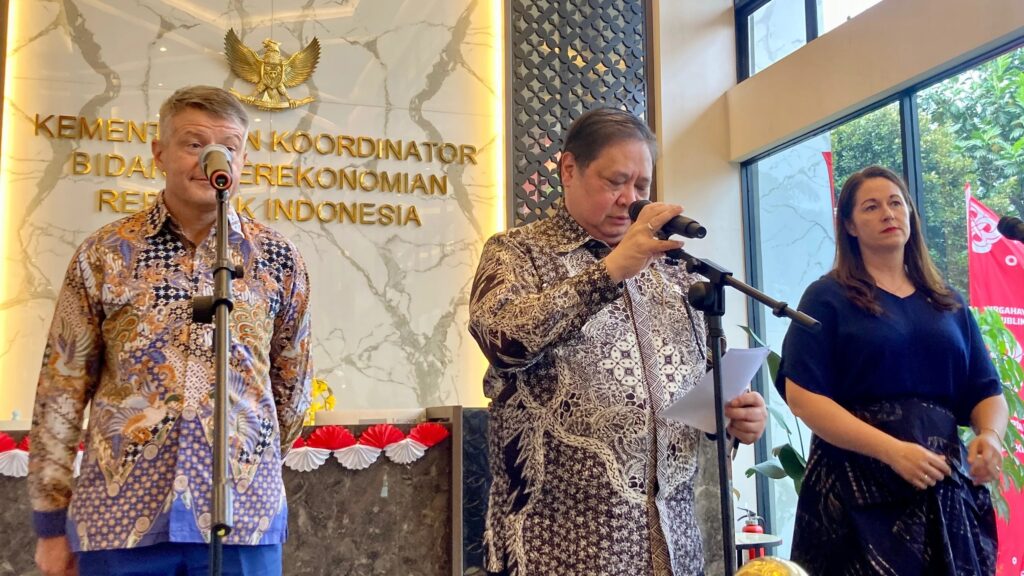
Bakaya delivered these remarks at the Transmigration Executive Dialogue (TED) in Jakarta on Monday, arguing that transmigration must evolve beyond resettlement into a driver of productive employment, skills development, local enterprise strengthening, and inclusive market access. He stressed the need for agricultural processing centers, modern logistics networks, financing mechanisms, and innovation ecosystems to ensure value addition within transmigration zones.
This paradigm shift aligns with the Ministry of Transmigration’s new approach: generating economic activity and jobs *before* population relocation. Minister Muhammad Iftitah Sulaiman Suryanagara affirmed, “The future of transmigration is not merely moving people with the hope that economic opportunity will follow. We must first create economic opportunities, prepare decent jobs and livelihoods, and then allow population mobility to occur voluntarily, safely, and with future certainty.”
From Raw Export to Integrated Value Chains
A key focal point is the Chinese durian market, where annual consumption is estimated at US$7.5 billion. To capitalize on this, Indonesia aims to build a full upstream-to-downstream durian industry — spanning research, seedling development, cultivation, processing, packaging, logistics, and marketing — rather than exporting only raw fruit.
The ministry plans to develop transmigration zones as interconnected economic ecosystems linking communities, land, science, technology, investment, industry, and markets. This includes enabling micro, small, and medium enterprises (UMKM) and farmers to access technology, finance, business partners, and broader markets.
To operationalize this vision, the Ministry of Transmigration has launched five flagship programs: Trans Tuntas (land tenure security), Trans Lokal (local community empowerment), Trans Patriot (human capital and technology enhancement), Trans Karya Nusantara (investment and job creation), and Trans Gotong Royong (multi-stakeholder collaboration).
2026 Deployment of Expert Teams Across 53 Zones
In 2026, the ministry will deploy 1,476 participants from the Tim Ekspedisi Patriot (TEP) across 53 transmigration zones. These include 41 national priority zones, 2 ministry-priority zones, and 10 locations in Papua.
The TEP cohort comprises 39 professors, 158 doctors, 263 master’s graduates, and 1,016 bachelor’s degree holders — reflecting a deliberate emphasis on deploying high-caliber human capital to catalyze local economic transformation.
Source: idnfinancials.com
Compiled from international media by the SCI.AI editorial team.