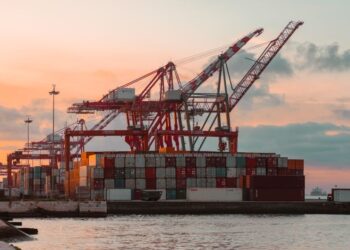
According to theloadstar.com, the Trump administration will impose a 25% tariff on selected Brazilian imports, effective 22 July 2026.
Tariff Targets and Exemptions
The new tariff measure follows a year-long investigation by the Office of the US Trade Representative (USTR), which concluded that Brazil engaged in
“unfair trade practices”
, including weak anti-corruption enforcement and what USTR described as unreasonable tariff policies. The tariffs apply only to certain Brazilian goods — those deemed substitutable with domestic US production — while explicitly exempting key commodities vital to US supply chains. Excluded items include coffee, beef, oranges and orange juice, select oil and gas energy products, and aerospace parts and components.
The decision comes amid heightened legal scrutiny of US trade authority: earlier in 2026, the Supreme Court struck down the International Emergency Economic Powers Act (IEEPA) tariff regime, prompting the administration to pivot toward statutory and investigative pathways for new duties.
New Trade Agreements Offset Tariff Pressures
As shippers brace for the 25% Brazilian tariff, several new bilateral agreements are entering force to ease cross-border cost pressures. Courtney Oskin, global customs director at Flexport, confirmed during a webinar this week that the EU-US trade agreement quietly entered into force this month after negotiations initiated following “Liberation Day” in April 2026. The agreement runs until the end of 2029 and includes three tiers of market access: immediate duty-free treatment for US-origin chemicals, pharmaceuticals, metals, and machinery; partial tariff relief on select fruit and vegetable products; and tariff-rate quotas for meat, dairy, and seafood.
Oskin emphasized strict origin compliance:
“The goods need to be wholly obtained in the US or to have had a substantial transformation”
— a requirement demanding rigorous documentation from importers to claim preferential treatment.
UK-India Deal Enters Force Amid Broader Shift
Also effective this week is the UK-India Comprehensive Economic and Trade Agreement, projected to become the UK’s largest bilateral trade pact since Brexit. It covers apparel, jewellery, seafood, and vehicles, with scheduled tariff reductions expected to deliver measurable commercial benefits across affected sectors. Oskin advised importers to act immediately:
“Just ensure that you are working with a broker that can help support all your documentation, understands the complexity of this, and can help you navigate any of these requirements that are out there”
.
This multilateral alignment coincides with other recent developments: the EU’s planned €3 fee on low-value e-commerce shipments launched on 1 July 2026, and US plans to impose new tariffs on the EU, UK, and Australia over perceived inaction on forced labour — cited in a 3 June 2026 USTR notice.
Operational Implications for Supply Chain Professionals
For logistics practitioners, the convergence of new tariffs and new agreements demands granular attention to rules of origin, classification accuracy, and broker capability. Flexport’s guidance underscores that tariff mitigation is not automatic — it requires proactive verification of product eligibility, robust recordkeeping, and validated supplier declarations. With the 22 July 2026 deadline approaching, shippers sourcing from Brazil must assess whether alternative suppliers or tariff engineering strategies (e.g., assembly or processing in third countries) offer viable paths to avoid the 25% levy. Meanwhile, companies exporting to the EU or UK now face dual imperatives: leveraging newly opened markets while navigating tightening regulatory scrutiny on due diligence and sustainability claims.
Source: The Loadstar
Compiled from international media by the SCI.AI editorial team.