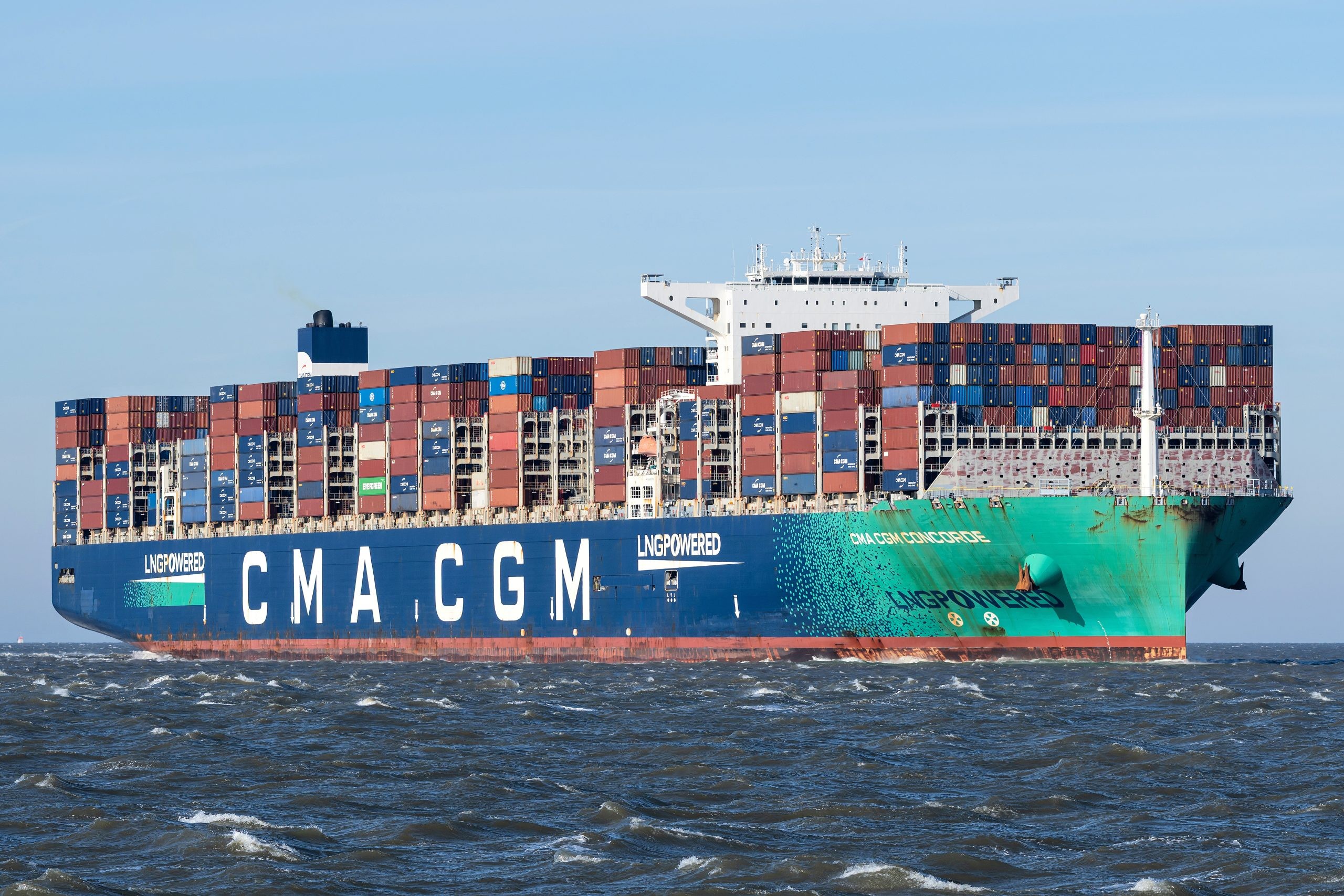
According to tlimagazine.com, French container shipping giant CMA CGM reported a 78% year-on-year decline in net profit for the first quarter of 2026, dropping to $250 million from $1.12 billion in Q1 2025. The sharp contraction occurred as regional hostilities involving Iran intensified security risks across the Strait of Hormuz, a critical maritime chokepoint handling over 20 million barrels of oil per day and significant containerized trade.
Geopolitical disruption drives operational cost surge
The conflict directly impacted CMA CGM’s operations: one of its container vessels was attacked while transiting the Strait of Hormuz in April 2026, resulting in injured crew members and physical damage to the ship; a second vessel exited the Gulf entirely amid escalating instability. These incidents triggered immediate operational recalibrations. Marine insurance premiums for vessels operating near the Gulf rose by an estimated 40–60% since early 2026, according to maritime underwriters cited in the report. Fuel costs increased due to mandatory rerouting — vessels now travel up to 1,200 nautical miles farther on some Gulf-bound services — while schedule reliability deteriorated, with average port-to-port transit times rising by 3.2 days on affected lanes.
Profitability erodes despite flat revenue
CMA CGM’s total revenue remained broadly stable at $13.23 billion, but this masked divergent performance across business units. Core shipping revenue fell 8.5%, while logistics revenue grew 6.6%. EBITDA dropped to $2.11 billion, down from $3.09 billion a year earlier. The company attributed the margin pressure to simultaneous headwinds: rising marine insurance, elevated bunker costs, security expenditures, and reduced pricing power. Notably, the pandemic-era dynamic — where geopolitical shocks reliably boosted freight rates — no longer holds: global container demand has softened, with import volumes in the EU down 4.1% year-on-year and Asian manufacturing PMIs averaging 49.3 in Q1 2026 (below the 50 expansion threshold).
Logistics diversification offsets ocean volatility
The earnings report confirmed a structural industry pivot. While ocean freight remains highly cyclical, integrated logistics services now serve as a financial buffer. CMA CGM’s logistics segment — encompassing warehousing, air cargo, customs brokerage, and end-to-end supply chain management — accounted for 31% of total revenue in Q1 2026, up from 27% in Q1 2025. This mirrors parallel moves by peers: Maersk acquired Kuehne + Nagel’s contract logistics division in late 2025, and MSC expanded its Medlog logistics arm into 12 new countries between January and March 2026. According to the report, carriers are shifting from pure ocean transport operators to “integrated logistics providers capable of generating more stable earnings across economic cycles.”
Industry braces for persistent uncertainty
CMA CGM’s leadership warned that visibility remains limited due to ongoing geopolitical instability and market volatility — a sentiment echoed across the sector. Oil prices fluctuated between $78 and $92 per barrel in Q1 2026 as markets priced in escalation risk. Global container fleet capacity grew by 5.8% year-on-year, driven by deliveries of 127 new mega-vessels (>15,000 TEU) ordered during the 2021–2023 boom. With freight rates on the Asia–Europe lane averaging $1,840 per 40-foot container in April 2026 — down 62% from the $4,820 peak in May 2022 — carriers face mounting pressure to absorb rising conflict-related costs without passing them fully to shippers. As one industry analyst noted: “Ocean freight is no longer a profit engine — it’s a connectivity utility. Resilience now lives in logistics integration, not vessel count.”
Source: tlimagazine.com
Compiled from international media by the SCI.AI editorial team.