Explore

  • Trending
  • Latest
  • Tools
  • Browse
  • AI Assistant
  • Subscription Feed

Logistics

  • Ocean
  • Air Cargo
  • Road & Rail
  • Warehousing
  • Last Mile

Regions

  • Southeast Asia
  • South Asia
  • Central Asia
  • Japan & Korea
  • Middle East
  • Europe
  • Russia
  • Africa
  • North America
  • Latin America
  • Australia
SCI.AI
  • Supply Chain
    • Strategy & Planning
    • Logistics & Transport
    • Manufacturing
    • Inventory & Fulfillment
  • Procurement
    • Strategic Sourcing
    • Supplier Management
    • Supply Chain Finance
  • Technology
    • AI & Automation
    • Robotics
    • Digital Platforms
  • Risk & Resilience
  • Sustainability
  • Research
  • Expert Columns
  • English
    • Chinese
    • English
No Result
View All Result
  • Login
  • Register
SCI.AI
No Result
View All Result
Home Sustainability ESG & Regulation

Iran’s Economy Suffers $270B War Damage Amid Ceasefire Talks

2026/06/30
in ESG & Regulation, Green Supply Chain, Sustainability
0 0
Iran’s Economy Suffers $270B War Damage Amid Ceasefire Talks

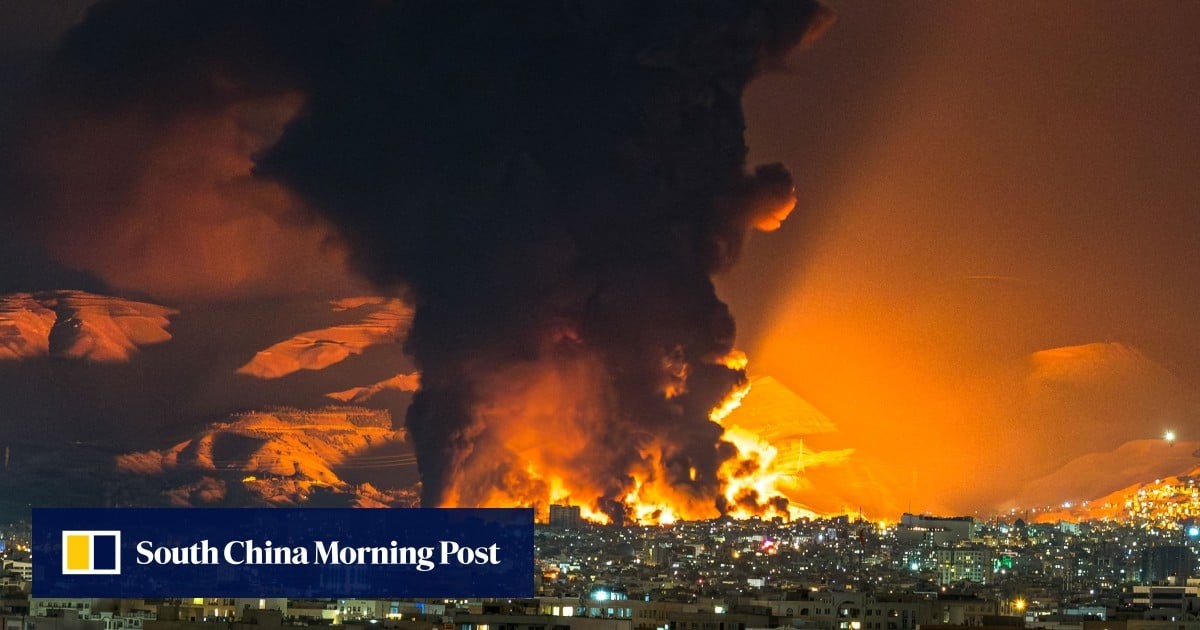
According to www.scmp.com, three months of warfare between Iran and the United States and Israel have inflicted an estimated US$270 billion in economic damage — nearly 73% of Iran’s US$371 billion gross domestic product for 2025.

Economic Collapse After Intensive Military Campaign

The conflict began with a concentrated 40-day campaign in March and early April, during which U.S. and Israeli forces conducted sustained bombing operations targeting critical infrastructure: energy grids, steel mills, petrochemical plants, ports, and transport corridors. This phase was followed by a two-month U.S. naval blockade that effectively sealed off much of Iran’s remaining maritime trade capacity. According to the report, the cumulative destruction is now assessed as nearly equivalent in scale to Iran’s total losses during its eight-year war with Saddam Hussein’s Iraq in the 1980s — the last major conflict in which the Islamic Republic posed a sustained threat to shipping through the Strait of Hormuz.

Ceasefire and Diplomatic Uncertainty

As of 27 June 2026, a fragile ceasefire remains in place while high-level negotiations continue in Switzerland. U.S. Vice President J.D. Vance addressed the media following talks held there on Monday, though no formal agreement has been announced. The source states that the central question facing diplomats is whether economic ruin — rather than military defeat — will compel structural concessions from Tehran. With 4 million citizens plunged into poverty, the humanitarian and fiscal strain threatens to destabilize institutions long insulated from external pressure.

Supply Chain Implications Across the Middle East

The war’s impact extends far beyond national borders: port closures in Bandar Abbas and Bushehr, combined with the paralysis of rail and road freight corridors linking Iran to Afghanistan, Armenia, and Turkey, have disrupted overland trade routes vital to Central Asian and South Asian supply chains. According to the report, transit times for goods moving between China and Europe via the North-South Transport Corridor increased by up to 70% during the blockade period. Logistics professionals monitoring the Strait of Hormuz — through which 30% of the world’s seaborne oil passes — report persistent volatility in vessel rerouting and insurance premium spikes averaging 220% for tankers transiting the region during active hostilities.

Long-Term Resilience Challenges

Recovery prospects remain dim without foreign investment or sanctions relief. The report notes that Iran’s pre-war industrial base — including its petrochemical sector, which accounted for 17% of non-oil export revenue — suffered targeted strikes at over 122 facilities. Rebuilding even partial capacity would require an estimated $8.4 billion in immediate capital infusion, per World Bank assessments cited in the article. With inflation exceeding 45% annually and foreign exchange reserves depleted by 63% since the start of hostilities, supply chain planners are advised to treat Iranian-sourced components and transit services as functionally unavailable for at least the next 18–24 months.

Source: South China Morning Post

Compiled from international media by the SCI.AI editorial team.
More on This Topic

  • Hyundai Mobis invests $3.7B in R&D, pledges 100% renewable energy by 2040 (Jun 30, 2026)
  • Prime Inc. sues IRS for $11 million reefer diesel tax refund (Jun 29, 2026)
  • 83% of Firms Say Cross-Border Ops More Complex Amid CBAM (Jun 29, 2026)
  • Long Beach Port, Bali Express Launch Zero-Emission Mexico Corridor (Jun 28, 2026)
  • Retailers shift last-mile carriers as 55% ditch UPS/FedEx/USPS (Jun 28, 2026)
ShareTweet

Related Posts

Hyundai Mobis invests $3.7B in R&D, pledges 100% renewable energy by 2040
ESG & Regulation

Hyundai Mobis invests $3.7B in R&D, pledges 100% renewable energy by 2040

June 30, 2026
1
Prime Inc. sues IRS for $11 million reefer diesel tax refund
AI & Automation

Prime Inc. sues IRS for $11 million reefer diesel tax refund

June 29, 2026
4
83% of Firms Say Cross-Border Ops More Complex Amid CBAM
ESG & Regulation

83% of Firms Say Cross-Border Ops More Complex Amid CBAM

June 29, 2026
1
Long Beach Port, Bali Express Launch Zero-Emission Mexico Corridor
AI & Automation

Long Beach Port, Bali Express Launch Zero-Emission Mexico Corridor

June 28, 2026
11
Retailers shift last-mile carriers as 55% ditch UPS/FedEx/USPS
ESG & Regulation

Retailers shift last-mile carriers as 55% ditch UPS/FedEx/USPS

June 28, 2026
8
Armstrong Transport nears $2B revenue after Quad-C investment
AI & Automation

Armstrong Transport nears $2B revenue after Quad-C investment

June 27, 2026
12

Leave a Reply Cancel reply

Your email address will not be published. Required fields are marked *

Recommended

马士基在费利克斯托韦为其最新的双燃料甲醇船命名为“Alexandra Mærsk”

Maersk Names Latest Dual-Fuel Methanol Vessel “Alexandra Mærsk” in Felixstowe

13 Views
February 16, 2026
From 5-Year Plans to 19 Scenarios: How Digital Twins Are Redefining Supply Chain Strategic Planning in 2026

From 5-Year Plans to 19 Scenarios: How Digital Twins Are Redefining Supply Chain Strategic Planning in 2026

19 Views
February 19, 2026

2026 Ocean Freight Outlook: 1–2% Demand Growth, Suez Partial Restart

28 Views
April 12, 2026
“解读工会对供应链的影响:如何塑造企业运营与合作”

Understanding the Impact of Unions on Our Supply Chain: Key Factors and Challenges

20 Views
February 15, 2026
Show More

SCI.AI

Global Supply Chain Intelligence. Delivering real-time news, analysis, and insights for supply chain professionals worldwide.

Categories

  • Supply Chain Management
  • Procurement
  • Technology


  • Risk & Resilience
  • Sustainability
  • Research

© 2026 SCI.AI. All rights reserved.

Powered by SCI.AI Intelligence Platform

Welcome Back!

Sign In with Facebook
Sign In with Google
Sign In with Linked In
OR

Login to your account below

Forgotten Password? Sign Up

Create New Account!

Sign Up with Facebook
Sign Up with Google
Sign Up with Linked In
OR

Fill the forms below to register

All fields are required. Log In

Retrieve your password

Please enter your username or email address to reset your password.

Log In

Scan to share via WeChat

Open WeChat and scan the QR code to share

QR Code

Add New Playlist

No Result
View All Result
  • Supply Chain
    • Strategy & Planning
    • Logistics & Transport
    • Manufacturing
    • Inventory & Fulfillment
  • Procurement
    • Strategic Sourcing
    • Supplier Management
    • Supply Chain Finance
  • Technology
    • AI & Automation
    • Robotics
    • Digital Platforms
  • Risk & Resilience
  • Sustainability
  • Research
  • Expert Columns
  • English
    • Chinese
    • English
  • Login
  • Sign Up

© 2026 SCI.AI