A.P. Moller-Maersk Holds Naming Ceremony for Latest Dual-Fuel Methanol Container Vessel "Alexandra Maersk"
Maersk Names Sixth Methanol-Powered Vessel “Alexandra Mærsk”
==========================================================================================
October 9, 2024
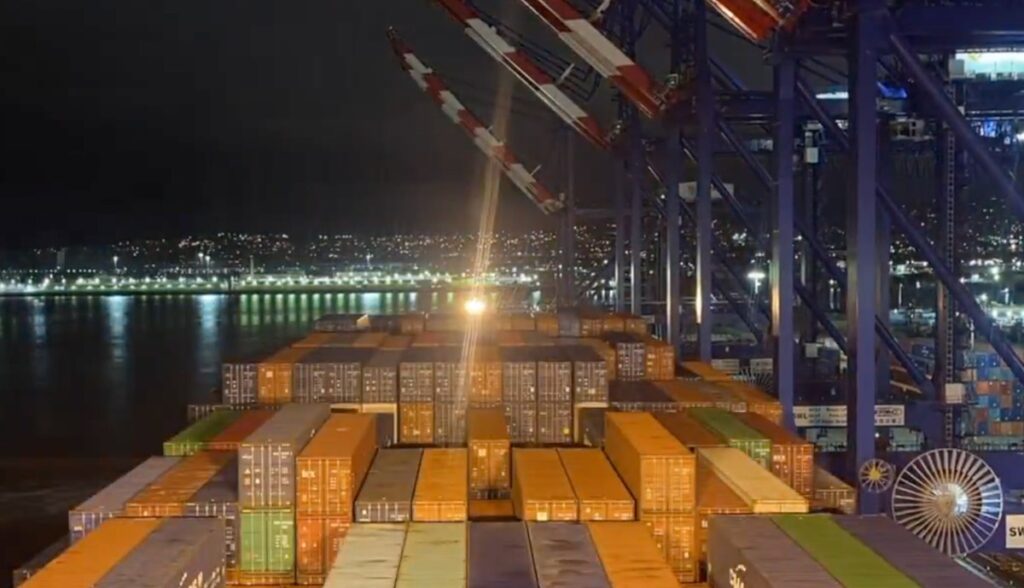
**Felixstowe Port** — Today, A.P. Moller – Maersk held the naming ceremony of its latest dual-fuel methanol-powered container vessel, “Alexandra Mærsk,” at Felixstowe Port in the UK. The event was attended by UK Maritime Minister Mike Kane, representatives from the International Maritime Organization (IMO), customers, and Maersk employees. Elaine Condon, Head of People & Culture at Primark, served as the ship’s godmother, highlighting the close logistics and sustainability partnership between Maersk and its customer Primark.
“Alexandra Mærsk” is the sixth vessel in Maersk’s owned fleet capable of running on methanol for both main and auxiliary engines. It is one of 18 large dual-fuel methanol ships scheduled to be delivered in 2024 and 2025, each with a cargo capacity exceeding 16,000 twenty-foot equivalent units (TEU).
> “It’s an honor to participate in the naming ceremony for ‘Alexandra Mærsk’ — one of the first container ships to use green methanol. This is exactly the kind of innovation we need to achieve a greener and cleaner maritime industry, which benefits both people and the planet. Providing greener transportation is one of our top priorities, and we will achieve this by reducing harmful greenhouse gas emissions and investing in alternative fuels and technologies.”
> “We are committed to minimizing our environmental impact across all operations, including our supply chain. Through our collaboration with Maersk, we have started introducing green fuel alternatives such as biofuels for transporting products. By using Maersk’s ECO Delivery Ocean service and replacing fossil fuels on Maersk vessels with green fuels, we are reducing greenhouse gas (GHG) emissions in ocean freight. For Primark, this is a significant step towards our goal of halving carbon emissions by 2030.”
Maersk’s ECO Delivery Ocean service is based on fuels that reduce GHG emissions, such as biodiesel for Maersk’s fleet. The latest vessels like “Alexandra Mærsk” can now also use green methanol.
> “It’s great to see customers like Primark taking action and working with us towards decarbonizing ocean freight. Real progress in the green transition requires collective effort. To accelerate this transformation, we need support from IMO to narrow the price gap between green fuels and fossil fuels, making green choices the best option for everyone. Last week’s meeting at IMO was a step in the right direction, but there is much more work to be done over the coming months. We remain hopeful and will continue to push hard for the green transition of shipping.”
The new methanol-powered vessels are central to Maersk’s ambitious decarbonization plan as low-emission methanol can reduce GHG emissions by 65% to 90%, compared to traditional fossil fuels like heavy fuel oil (HFO), depending on the feedstock and production process when calculated over a lifecycle basis.
Following the tradition of naming Maersk vessels after members of its founding family, “Alexandra Mærsk” is named after Alexandra Mærsk-Møller (1868-1953), sister to A.P. Møller.
Maersk has set ambitious decarbonization targets for its marine logistics and entire business, aiming for net-zero carbon emissions by 2040. The net-zero emission pathway tested and approved through the Science-Based Targets initiative (SBTi) indicates that reducing GHG emissions with fuels is key to achieving this goal. Actual emission reductions from green methanol depend on production processes as well as how the feedstock and produced methanol are transported. Methanol made from bio-based raw materials can reduce lifecycle GHG emissions by about 65-70% compared to traditional fossil fuels, while synthetically produced green methanol, known as e-methanol, aims for a reduction of up to 90% on a lifecycle basis.
### About Primark
Primark is an international fashion retailer employing over 80,000 people in 17 countries across Europe and the United States. Founded in Ireland under the brand Penneys in 1969, Primark aims to offer affordable choices for everyone, from high-quality everyday essentials to unique styles covering women’s, men’s, and children’s clothing as well as beauty, home products, and accessories. Focused on creating exceptional retail experiences, Primark operates more than 440 stores globally with ongoing expansion.
Primark is making sustainable fashion accessible through its “Primark Cares” strategy. This multi-year plan focuses on extending the life of clothes, protecting Earth’s resources, and supporting those who make Primark clothing. As part of this initiative, Primark has announced nine commitments to achieve by 2030. These include manufacturing all garments from recyclable or more sustainable sources, halving carbon emissions across the entire value chain, and advocating for living wages in its supply chains.
### About Maersk
A.P. Moller – Maersk is an integrated logistics company dedicated to connecting and simplifying customers’ supply chains. As a global leader in logistics services, the company operates in over 130 countries with approximately 100,000 employees. Maersk aims for net-zero emissions across its entire business by 2040 through new technologies, vessels, and low-emission fuels.
—
Source website: