Understanding the Impact of Organized Labor on Supply Chains
=============================================================
_By Don Maier_
This article first appeared on the blog of the Global Supply Chain Institute at the University of Tennessee, Knoxville. Republished with permission. You can read the original article.
Don Maier’s series on ocean shipping elucidates the challenges of transporting goods across international waters and explores alternative global trade routes. It covers the consequences of geopolitical issues affecting trade, what happens when cargo is transshipped, and developing new logistics networks to keep freight moving smoothly.
With the reopening of East Coast ports, the US has avoided another potential disruption in its supply chain. J.P. Morgan estimates that every day a port remains closed costs the U.S. economy around $4 billion—about $12 billion after three days of strikes. However, the threat of longer strikes is not over; it has merely been postponed until at least January 15, 2025.
The US Maritime Alliance (USMX), representing shipping companies, terminals, and some port authorities in negotiations, reached an agreement with the International Longshoremen’s Association (ILA) for a wage increase of 62% over six years, or about 10.3% annually. Other details of the negotiations have not been disclosed, but USMX had proposed tripling the current amount paid to ILA members’ pensions and increasing their health benefits. Currently, USMX contributes 100% to union members’ health benefits.
The larger issue at the negotiating table is the increased use of automation and technology in port and terminal operations. Most people may not realize that this is not a new problem. Since Malcom McLean invented the world-changing container in 1956, the topic has been discussed and negotiated. As an owner and driver for a trucking company serving the New York/New Jersey ports, McLean spent hours waiting for his trailers to be unloaded by unionized dockworkers. He thought, “If they could just lift the trailer directly onto the ship, wouldn’t that save a lot of time?” Thus, he developed the intermodal container, revolutionizing global supply chains and impacting both the ILA and the International Longshore and Warehouse Union (ILWU) on the West Coast.
Longshore workers did not easily accept this “new” technology. In 1964, the ILA went on strike for higher wages, better benefits, and against intermodal containers. During contract negotiations, unions accepted the use of containers in port operations while securing Guaranteed Annual Income (GAI) due to potential job losses from new technologies. By 1966, GAI guaranteed that each ILA member working over 700 hours would be paid for an average of 1,600 hours’ worth of work annually (compared with 2,080 hours representing a standard 52-week year of 40-hour weeks, providing at least 1.3 years’ income to New York/New Jersey longshore workers).
Hailed as a union victory, GAI effectively protected members from job insecurity and wage loss while accepting the use of new technologies.
By 1974, GAI for each member approached six figures, putting significant financial pressure on port authorities and projects. Partially due to subsequent strikes in 1977, along with GAI costs and increasing operational expenses, contract negotiations and payments to ILA shifted from ports to the US Maritime Alliance (USMX). In other words, public entities—port authorities—reduced their financial involvement, transferring responsibility to the private sector, namely shipping companies.
GAI was nominally ended. Since the late 1970s, the ILA has controlled chassis inspection, maintenance, and repair work while negotiating terms such as “container fees,” where union members earn a fee for each container entering or leaving the terminal regardless of efficiency.
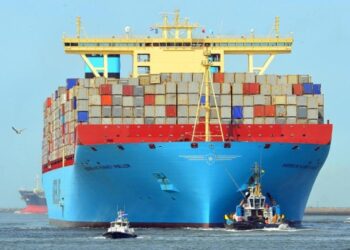
According to the World Bank and S&P Global Intelligence’s 2024 Port Productivity Report, among the 405 ports measured last year, the best-performing U.S. container port, Charleston, ranks globally at number 53. Most large high-container volume ports on both coasts rank much lower, in some cases near the bottom. This is not due to fewer vessel calls; for instance, China’s Ningbo-Zhoushan Port (ranked 12th) had over 4,411 vessel calls compared with New York/New Jersey’s 1,335 calls, ranking 93rd. In fact, only seven U.S. ports rank within the top 100. In other words, American longshore workers are among the highest paid in the world despite having some of the lowest container productivity levels.
Long-Term Implications
———————–
The United States must address labor costs to remain competitive or risk no longer being the world’s strongest economy. Port authorities and dockworkers should embrace new technologies that were mostly developed domestically but primarily used internationally.
While we navigate through the holiday season, January 15 is looming near. If negotiations are unfavorable for ILA, work slowdowns will occur. Union contracts give them the right to inspect every trailer driver, container, and chassis entering the port. In many cases, three to four union members check drivers and equipment. They can slow down operations by discussing each item they see. If safety issues are found, equipment is sent for repairs (also controlled under union contracts).
Consider now the public perception of congestion and traffic that could result in the coming months. Officially, ILA members will work, ports will be open, but slowdowns will impact the entire supply chain as containers may not be extracted or delivered to terminals on time. These delays will cause further delays for everything imported through our ports regardless of customer size. Larger shippers are likely to face more targets. Shippers must consider detention and demurrage fees per container (the Federal Maritime Commission also has a say). Even marine insurance premiums need consideration and may require renegotiation, as most contracts do not cover delays.
When the new USMX-ILA master contract is signed, supply chains will face new labor challenges. Last year, ILWU negotiated a “historic, record-breaking contract” for its members until 2028—imagine how much higher their demands might be when that contract expires based on ILA’s achievements. Also consider California Assembly Bill 5 (AB5), which requires companies to reclassify temporary workers as employees; yesterday’s owner-operators are today’s employees, making them eligible for unionized truck drivers’ unions. Similar laws have been introduced in New York, Massachusetts, and Illinois. Typically, when one union strikes, they receive support from other union brothers. Truck driver unions may decide to support ILA by refusing to handle cargo coming into or leaving certain ports.
At the federal level, lawmakers are discussing warehouse worker protection legislation aimed at protecting warehouse employees from productivity targets set by employers. Some argue that such targets force workers to work unsafely. Existing workplace safety laws are in place; however, behind the scenes, this new law will allow unions to organize warehouse workers more easily, particularly at Amazon, a major target for organized labor.
It seems longshoreman unions are demanding extremely high wages and non-automation as bargaining chips. The ILA is smartly aware that automation is coming. So what will they get? Think about when Malcom created the container: if compensated for lost jobs, unions accepted new technology adoption, a benefit still in place today.
Conclusion
———-
Shippers should prepare and budget for significant increases in transportation costs. Increased operational costs due to labor alone should not come as a surprise when carriers pass these costs on to them. Similarly, shippers will have to pass these costs onto their customers, ultimately borne by the end consumer.
How much will container costs increase? Based on conservative estimates, shippers should prepare for at least a 25-30% increase in container costs throughout the contract period. Remember that this growth is based solely on the current USMX-ILA situation and does not consider any geopolitical conflicts elsewhere or the outcome of the November presidential election.
If our ports are seen as national security operations maintaining and supporting the economy, while ILA demands six-figure incomes and compensation schemes, what does this mean for America’s education system? The average salary for K-8 teachers nationwide is $69,544; it may be time to reassess our national priorities to maintain global competitiveness.
At the 2024 Fall Supply Chain Forum in Knoxville from November 12th to 14th, Maier will co-host a panel discussion on addressing ocean shipping challenges with former South Carolina Ports Authority CEO Jim Newsome and senior leaders from Georgia Ports, Hapag-Lloyd North America, the Federal Maritime Commission, and Louis Dreyfus Company. Don’t miss it. Register today.
### About the Author
_Don Maier is an Associate Professor of Practice in Supply Chain Logistics at the University of Tennessee, Knoxville. His ocean shipping series elucidates the challenges of transporting goods across international waters and explores alternative global trade routes. Read about the consequences of geopolitical issues affecting trade, what happens when cargo is transshipped, and developing new logistics networks to keep freight moving smoothly._
—
Source: New SCMR