The freight industry has spent years investing in technology to stop cargo theft and freight fraud. Companies now use onboarding platforms, monitoring systems, identity verification tools, fraud scoring, tracking software, and AI-driven analytics to help reduce risk. Yet despite all of these tools, freight fraud continues to grow. That is because technology alone does not create consistency inside daily operations. A system can raise a warning, flag unusual activity, or verify a document, but someone inside the company still has to follow the process correctly and make the right decision before freight moves.
why compliance matters in freight
The freight Industry needs more than technology. It needs structure around how decisions are made. Financial institutions learned this lesson years ago. Banks do not rely on employees to simply notice fraud when something feels wrong. They build layered procedures, create standards, document workflows, and assign compliance officers to help make sure those processes are followed consistently. The purpose is not to assume every employee will make the perfect decision every time. The purpose is to reduce operational exposure through consistency and accountability.
Freight has not traditionally worked that way. In many transportation companies, carrier onboarding, dispatching, and shipment release decisions still depend heavily on individual judgment. One employee may thoroughly verify every detail while another skips steps because of time pressure. One office may follow a strict process while another depends almost entirely on experience and instinct. Organized theft groups take advantage of those gaps. They do not need every employee to miss something. They only need one inconsistent process to create an opening.
building a certified fraud compliance officer
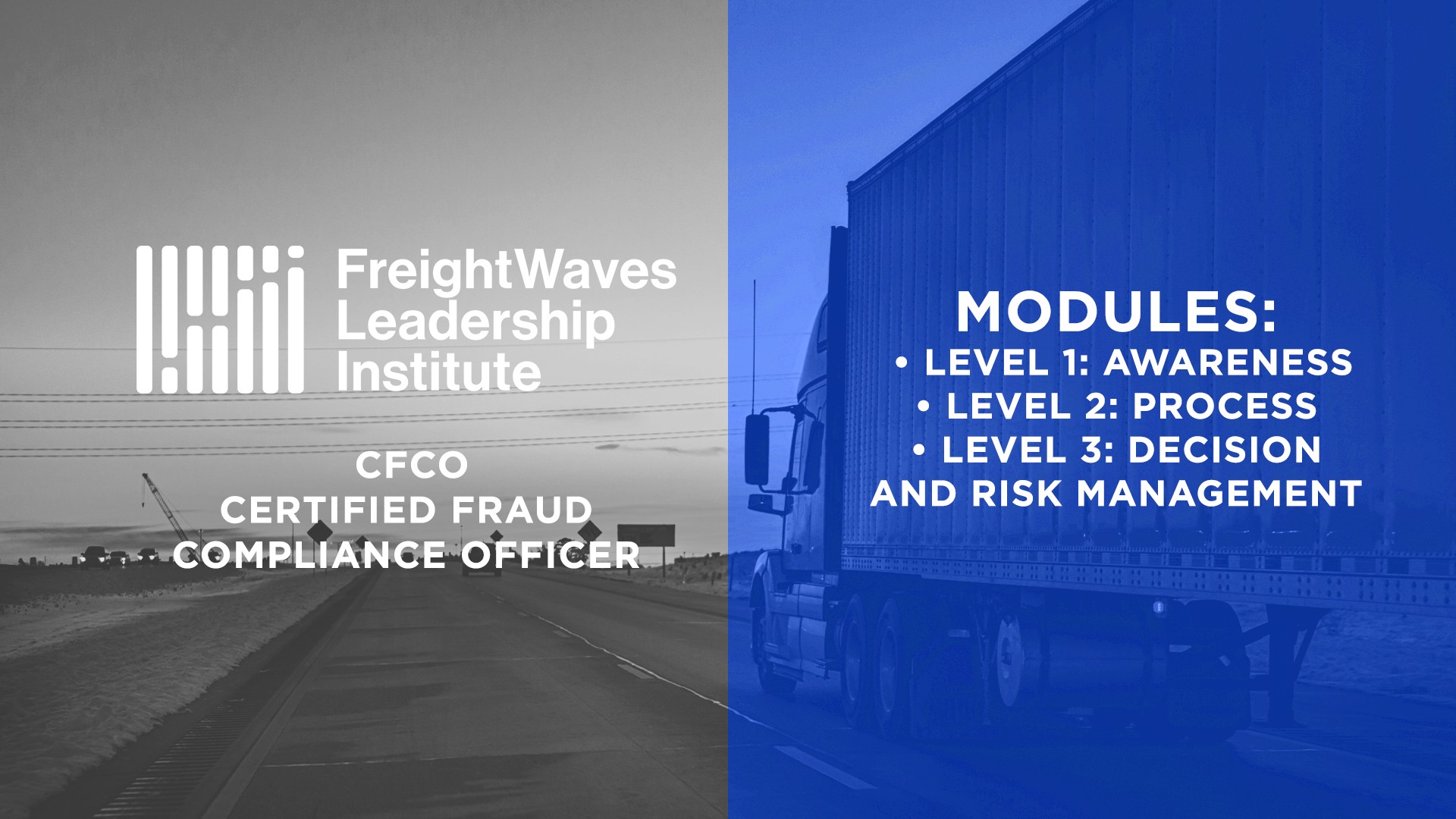
The course is built around three areas: awareness, process, and risk management. Level 1 focuses on awareness and helps explain how modern freight fraud actually happens. It covers identity manipulation, carrier fraud, communication compromise, shipment diversion, and the ways organized groups gain access to freight. Level 2 focuses on process and helps companies create repeatable workflows that reduce inconsistent reviews. Level 3 focuses on risk management and decision-making. It teaches teams how to evaluate layered information, escalate concerns properly, and make stronger operational decisions when something does not fully line up.
This conversation is becoming even more important as legal pressure on the industry continues to grow. The recent Supreme Court decision tied to the Montgomery broker liability case raised serious questions across transportation about carrier selection, operational oversight, and broker responsibility. Whether companies agree with the ruling or not, the message to the industry is becoming clear. Companies will increasingly need to show that they have structured processes, documented procedures, and trained personnel responsible for reducing operational risk before freight moves.
That is where a Certified Fraud Compliance Officer can become critical inside an organization. A CFCO helps create accountability and consistency across teams. Employees have someone they can go to with questions about verification, onboarding, or operational risk. Leadership has someone responsible for helping make sure procedures are followed the same way every time. Instead of depending entirely on instinct, companies begin building repeatable systems designed to reduce exposure before freight is released.
the industry needs accountability
The transportation industry already has powerful technology available today. What it needs now is a stronger operational mindset around how that technology is used inside daily freight operations. Companies cannot depend entirely on alerts, automation, or instinct to stop organized theft groups that understand the workflow as well as the industry itself. They need trained professionals who understand process, accountability, and structured verification before freight moves.
That is the purpose of the Certified Fraud Compliance Officer program. It is designed to help the industry move from reactive fraud prevention to structured operational risk management. As cargo theft and freight fraud continue to evolve, the companies that build consistent processes and accountability into their operations will be the ones best positioned to reduce exposure and protect freight before control is lost.
Source: FreightWaves
Compiled from international media by the SCI.AI editorial team.