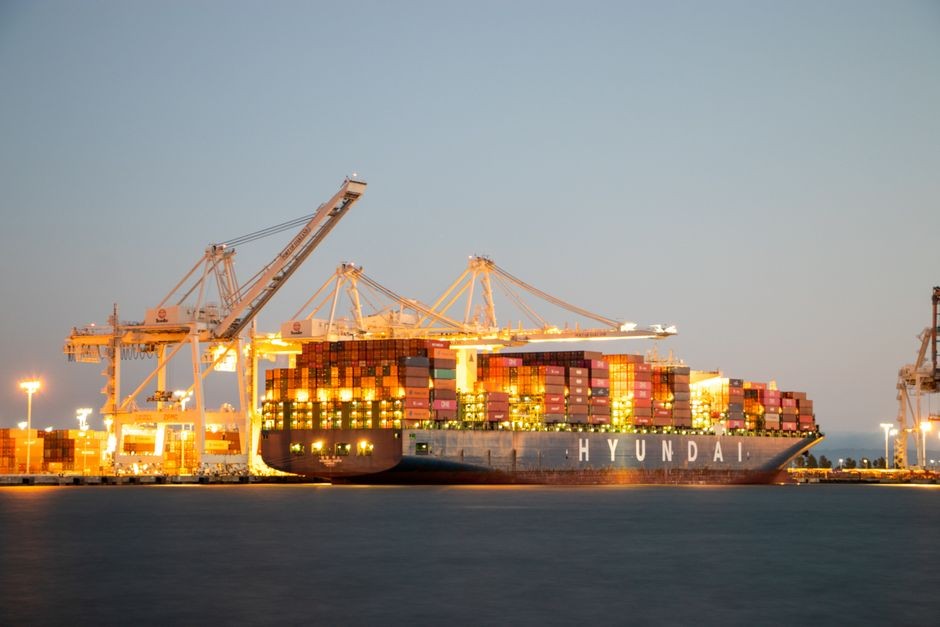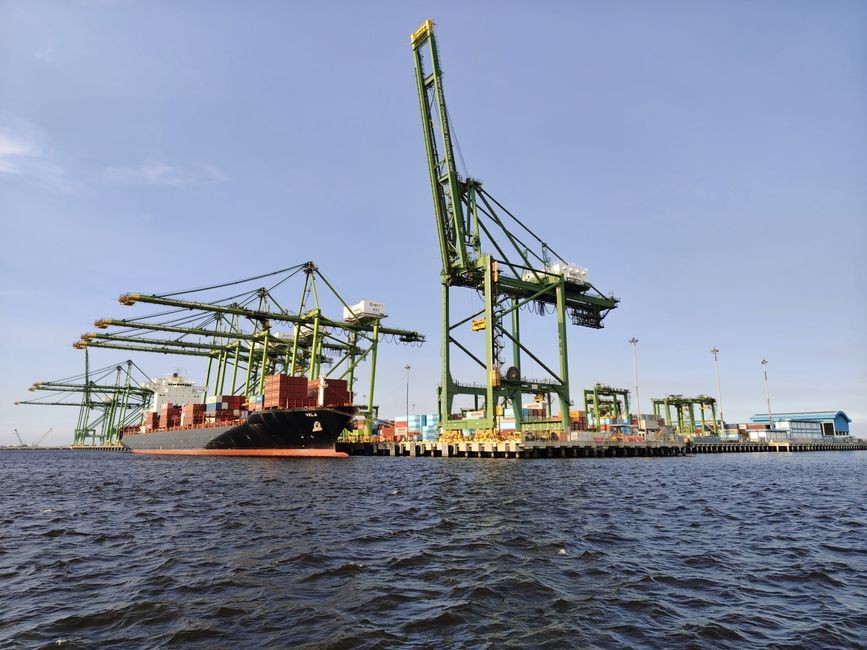
Ho Chi Minh City's import-export volume surged by 7.98% to 133.74 billion USD in the first seven months of 2026, driven by strong growth in electronics and machinery. Facing geopolitical headwinds and US tariff pressures, the city is accelerating logistics infrastructure reforms, including the establishment of the Cai Mep Ha Free Trade Zone, to enhance supply chain resilience and diversify international markets.
China-ASEAN trade reached $643B in H1, with intermediate goods up 24.5% to 2.86 trillion yuan, reflecting deep industrial integration. Guangxi-ASEAN trade hit 248.21B yuan in H1 2026, up 2.5%, while the China-Laos Railway recorded 17.17B yuan in cargo value, up 33.8%. RCEP and expanded rail networks are accelerating cross-border supply chain connectivity across the region.
Tougher customs treatment of low-value airfreight shipments threatens to reverse some of the ecommerce sector’s rapid growth according to new analysis from Trade and Transport Group. Cross-border ecommerce accounted for almost 18% of intercontinental air cargo traffic last year despite representing only around 6% of global online sales.
Port congestion across North Asia surged past 2.4 million TEUs after Typhoon Dolphin struck China's eastern coast on August 9th, halting terminal operations in Ningbo and Shanghai. While trucking resumes, carriers report rolled cargo and missed sailings lasting one to two weeks. Petrochemical prices rose by 500 yuan per tonne amid logistics constraints, while Asia-Europe rates show softening demand despite tight capacity.
JD Logistics reported strong financial performance for the first half of 2026, highlighting significant growth in integrated supply chain revenue and expanded overseas logistics capabilities. Total revenue for the period reached 124.7 billion yuan, equivalent to approximately $18.5 billion. This figure represents a year-on-year increase of 26.5%. The company's adjusted operating profit surged by 39.9%, totaling 3.6 billion yuan, indicating that cost reduction measures, efficiency gains, and business mix optimization are yielding substantial results. The integrated supply chain segment generated 59.4 billion yuan in revenue, up 18.5% year-on-year. The company serves nearly 80,000 external integrated supply chain customers. The average revenue per customer reached 254,000 yuan, indicating a shift from volume-driven expansion to deep engagement with high-value clients. JD Logistics' overseas operations emerged as a primary growth engine, characterized by the rapid scaling of warehouse infrastructure and express delivery networks. The company currently operates more than 200 overseas warehouses, bonded warehouses, and direct-mail warehouses across 26 countries and regions worldwide. The total overseas warehouse management area has exceeded 2 million square meters. JoyExpress, the company's proprietary express delivery brand, has densified its network in multiple European countries, including the United Kingdom, Germany, the Netherlands, and France. In the United States, the company expanded its roster of consumer electronics clients by offering integrated warehousing and omnichannel fulfillment services. In Europe, service coverage was broadened to include multiple leading home appliance and drone brands. Additionally, the company partnered with a top consumer electronics client in the Middle East to jointly build a high-standard smart warehouse, exporting its automation capabilities to the region. JD Logistics is accelerating the deployment of artificial intelligence and automation technologies across its warehousing, sorting, and delivery operations. The company deployed the fully upgraded Super Brain LLM 2.0 at scale during the JD 618 shopping festival. The system is capable of calculating the fastest routes for hundreds of millions of parcels within three minutes. An AI-powered map-based inventory diagnostic assistant enables differentiated smart replenishment across tens of millions of SKUs, driving merchant inventory turnover efficiency improvements of 30% to 40%. In warehousing, the self-developed "ZhiLang" goods-to-person solution has entered a phase of large-scale replication. It has been deployed in more than 60 warehouses globally, with new installations in the United Kingdom and Germany. In sorting, the "YiLang" embodied intelligent robotic arm has been upgraded from a single-arm to a dual-arm configuration. Driven by the Super Brain LLM, the system fuses visual, force, and tactile sensor data to complete a full cycle of recognition, suction, grasping, and palletizing in just 10 seconds. On the delivery side, over 1,000 autonomous vehicles are now in regular operation across more than 20 provinces in China. Shenzhen launched the first nighttime autonomous vehicle delivery routes to enable 24-hour uninterrupted operations. In drone delivery, the company operates over 100 domestic routes. In June, the company launched China's largest drone-to-village delivery network in Zizhong County, Sichuan Province, covering 78 administrative villages with delivery times as fast as 7 minutes. JD Logistics introduced multiple new service offerings and deepened its penetration in specific industries during the first half of the year. Revenue from other customers, including express delivery, freight, and on-demand delivery, reached 65.3 billion yuan, up 34.8% year-on-year. JD Airlines now operates 13 all-cargo aircraft, with next-day delivery capabilities for air freight continuing to improve. Express delivery services have achieved full coverage of all county-level regions in China, reaching essentially every administrative village, with nearly 100,000 service stations established across rural townships and villages nationwide. The company introduced the "JingChongDa" pet delivery service in June, featuring proprietary dedicated delivery, pre-screening quarantine, and full-chain traceability. The service has expanded to more than 40 core cities across China with a 100% positive review rate. The express delivery division also rolled out integrated pickup-and-delivery services and two new time-definite products, including cross-city express delivery that is as fast as 4 hours.
According to theprint.in, a new report released by the NITI Aayog identifies twelve key manufacturing sectors where India can expand its global footprint, aiming to reverse decades of stagnant market share growth compared to China. Stagnant Market Share vs China’s Dominance India’s share in global manufacturing value grew from about 1.5 percent in 1995 to […]
According to Seatrade Maritime, the global container shipping market has experienced a volatile surge in the first half of 2026, driven by geopolitical disruptions in the Middle East that have effectively doubled freight rates on major trade lanes. Market impact of geopolitical disruption In a mid-year analysis, Seatrade Maritime Podcast spoke with Daniel Richards, an […]
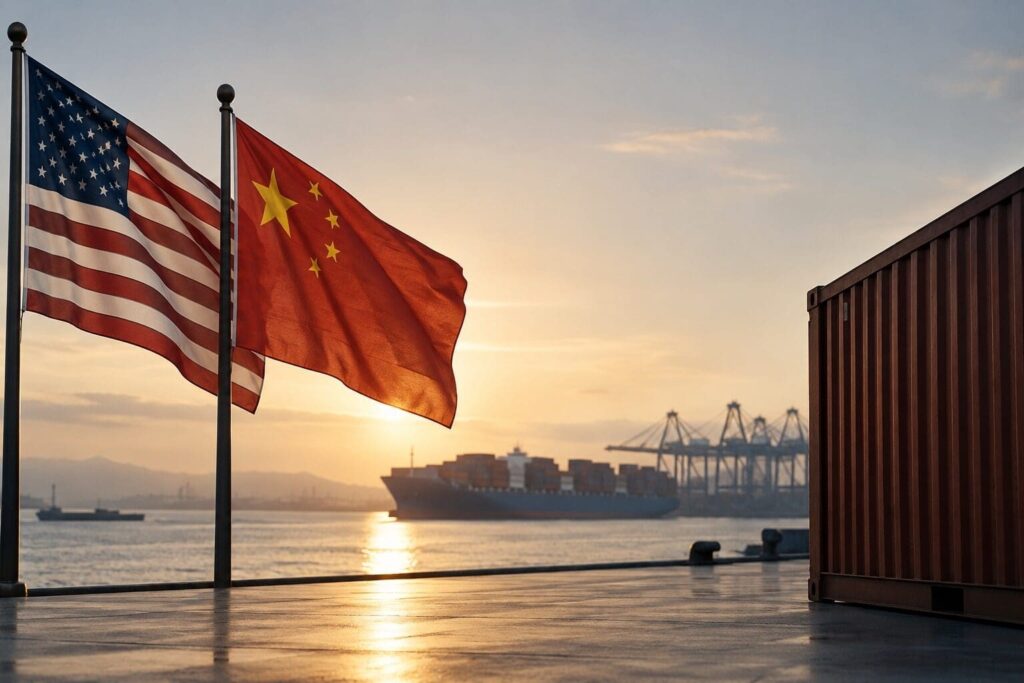
The United States has accused over 40 countries, including India, Mexico, and the EU, of operating a "shadow transshipment network" to evade tariffs on Chinese goods. Senior trade adviser Peter Navarro released a report estimating the impact at up to $303 billion annually. To enforce compliance, the US plans to deploy an AI system called "Detective Border" to analyze shipment data and identify illicit routing, marking a significant shift in trade enforcement strategies.
China’s foreign trade rose 17.3% to ¥30.13 trillion in the first seven months of 2026, with exports up 14% and imports surging 22%. High-tech exports jumped over 50% in July, accounting for nearly 60% of monthly export growth. U.S.-China trade fell 1.6%, while ties with over 180 countries—including ASEAN and the EU—expanded. Green exports like EVs and lithium batteries posted double-digit growth for the 17th straight month. China also applies zero tariffs to imports from 63 countries.
UnionPay International is connecting Chinese mobile payment apps—including the UnionPay app and bank-linked wallets—to Brazil’s Pix instant payment system, enabling Chinese tourists to scan QR codes and pay in real time. The pilot launches in Q3 2026 amid U.S. tariffs targeting Pix’s regulatory model. Pix, launched in November 2020, serves 15 million merchants and processes over 1.2 billion transactions monthly. The integration marks UnionPay’s first direct linkage with a non-Asian national real-time payment system and reflects growing financial infrastructure alignment between China and Latin America.
Apple holds roughly $1 billion in finished but unpackageable A20 Pro wafers at TSMC due to a DRAM shortage, jeopardizing iPhone 18 Pro and foldable iPhone availability ahead of their September launch. The bottleneck stems from Apple’s shift to wafer-level multi-chip module packaging, which requires DRAM to be bonded at the wafer stage — a process halted by constrained supply from Micron, SK Hynix, and Samsung. Foxconn and BYD face compressed assembly timelines, while Apple’s bid to source cheaper DRAM from China’s CXMT failed on price. The iPhone 17 shipped 245 million units in 2025, setting a high bar Apple may struggle to meet amid these constraints.
Typhoon-induced port congestion in Asia and worsening Panama Canal restrictions have pushed US East Coast container spot rates to $9,988/FEU — within $12 of the $10,000/FEU threshold — according to Xeneta data cited in Seatrade Maritime. Ted Chen of Dimerco Express Group confirmed vessels face five- to seven-day berthing delays in heavy winds, while blanked sailings and inflexible fuel/canal surcharges prevent meaningful rate declines despite softer consumer demand. US West Coast rates rose 14% and East Coast rates 13% in early August; meanwhile, Asia–Europe rates fell nearly 5%.
The U.S. sanctioned Waldo Perez Cortes, Cuba’s military, naval and air attache in Beijing, on 7 August 2026, accusing him of procuring military equipment from China for Cuba’s armed forces. He was among six Cuban nationals and five entities added to the Treasury’s SDN list. Perez Cortes, a senior colonel and MINFAR official, has publicly engaged with China’s People’s Liberation Army. The action reflects intensifying U.S. enforcement against third-country arms procurement networks — especially those involving China and Russia — and underscores rising geopolitical risk for supply chain actors handling defense-related logistics across Latin America.
Container shipping capacity between Asia and West Africa rose almost 30% year-on-year to 1.4 million TEUs across 185 vessels as of 1 July 2026 — following a 40% jump the prior year. Ports like Durban face 80-hour average anchorage delays, while Maersk expanded services to Tema, Abidjan, Lekki, Kribi, and Pointe Noire in Q2 2026. DHL Global Forwarding reports China-Africa as its fastest-growing trade, and DP World plans a logistics hub near Mombasa. South Africa also signed a 200,000-ton soybean export deal with China on 7 August 2026.
The Trump administration, via the FCC, banned U.S. imports of new Chinese humanoid and quadruped robots and grid-connected power inverters effective 28 July 2026. The move targets AI supply chain security, citing risks of data theft, cyberattacks like Volt Typhoon, and overreliance akin to China’s rare earth dominance. Unitree—holding under 20% of the global humanoid robot market—is directly affected, as are Chinese inverter leaders Sungrow (300274.SZ) and Huawei. The Chinese Embassy pledged countermeasures, while the FCC plans broad exemptions for non-Chinese suppliers.