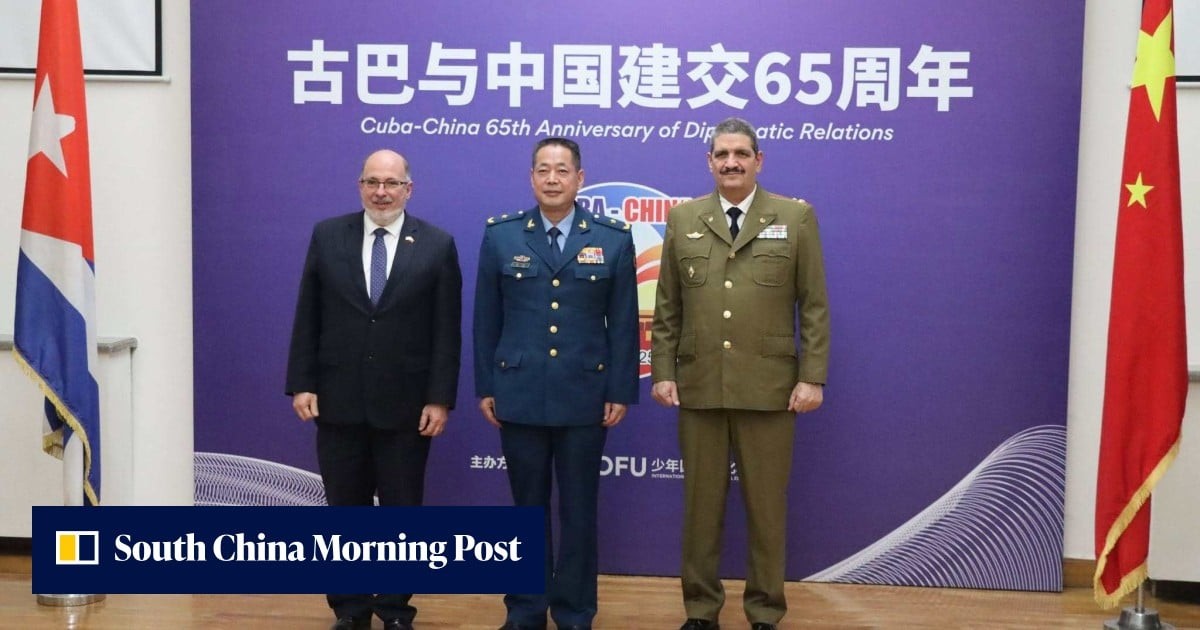
According to www.scmp.com, the United States sanctioned Waldo Perez Cortes, Cuba’s military, naval and air attache in Beijing, on 7 August 2026, accusing him of facilitating military equipment procurement from China for Cuba’s armed forces.
Targeted Sanctions Against Cuban Officials and Entities
The U.S. Treasury Department added six Cuban nationals and five entities to its Specially Designated Nationals and Blocked Persons (SDN) list on Thursday, 7 August 2026. Among them was Waldo Perez Cortes, identified by the U.S. State Department as an official of Cuba’s Ministry of the Revolutionary Armed Forces (MINFAR). According to the report, Perez Cortes was “involved in the procurement of military-related equipment from China to Cuba.” The announcement did not specify the types of equipment, Chinese suppliers, or transaction values involved.
The Cuban state news agency Prensa Latina confirmed Perez Cortes holds the rank of senior colonel and serves as Cuba’s military, naval and air attache in Beijing — a position that places him at the nexus of bilateral defense engagement. His inclusion on the SDN list freezes any U.S.-based assets and prohibits U.S. persons from engaging in transactions with him.
Public Diplomacy and PLA Engagement
Waldo Perez Cortes has appeared publicly alongside senior officers from China’s People’s Liberation Army, underscoring institutional-level coordination between the two countries’ defense establishments. According to the source, he has spoken about Beijing’s support for Cuba’s defence capabilities during such engagements — though no specific commitments, timelines, or funding figures were disclosed.
These interactions occurred against a backdrop of deepening China–Latin America security ties. Since 2024, China has expanded defense cooperation agreements with at least four Latin American nations, including joint training exercises and technology transfer frameworks. Cuba’s participation aligns with broader regional trends, though it remains among the most politically sensitive due to longstanding U.S. embargo restrictions.
Geopolitical Context and Supply Chain Implications
The sanctions reflect heightened U.S. scrutiny of third-country procurement channels used by embargoed states — particularly those involving dual-use or military-grade goods sourced from China and Russia. The U.S. State Department explicitly cited procurement from both China and Russia as grounds for targeting the listed individuals and firms.
For supply chain professionals monitoring geopolitical risk, this action signals intensified enforcement of extraterritorial controls on defense-related logistics. It reinforces the need for rigorous end-to-end due diligence — especially when intermediaries, diplomatic personnel, or state-owned entities act as procurement agents. As noted in prior U.S. enforcement guidance, even non-commercial diplomatic roles can trigger sanctions if they materially advance prohibited arms transfers.
The move also highlights growing friction in Latin America over competing influence strategies. While China has invested over $150 billion in Latin American infrastructure since 2005, U.S. policy increasingly treats defense-related procurement as a red line — regardless of whether transactions occur via commercial contracts or official delegations.
Broader Enforcement Pattern
This is not an isolated action. Between 2023 and 2026, the U.S. Treasury has designated 23 individuals and 17 entities linked to Cuban defense procurement, with 11 of those designations occurring in the first half of 2026. Most targets were tied to networks sourcing components from China, Russia, and Iran — often routed through third jurisdictions like Dubai, Singapore, and Serbia.
Notably, the sanctions against Perez Cortes mark the first time a serving Cuban military attache in Beijing has been individually named and blocked — elevating diplomatic risk for similar liaison officers across other sanctioned jurisdictions. Practitioners advising multinational firms must now assess whether routine engagement with foreign defense attachés — even in non-transactional settings — could expose counterparties to secondary sanctions exposure.
Source: South China Morning Post
Compiled from international media by the SCI.AI editorial team.