Skip to content

Ocean · Supply Chain · Warehousing & Transport

Maersk and Hamburg Süd Confirm “Cape” Route, Launching a New Chapter of Twin Star Collaboration

Maersk and Hapag-Lloyd Announce Gemini Collaboration Launch on February 1, 2025, to Leverage Cape Network

Original source: Source information pending

Maersk and Hamburg Süd Confirm “Cape” Route, Launching a New Chapter of Twin Star Collaboration

Ask SCI.AI about this story

📋 本文要点

Maersk and Hapag-Lloyd Announce Gemini Collaboration Launch on February 1, 2025, to Leverage Cape Network

Shipping giants Maersk and Hapag-Lloyd announced that they will utilize the Cape route when launching the “Gemini Collaboration Project” on February 1, 2025, highlighting the ongoing threat to vessels and crews in the Red Sea region.

This decision is the latest indication of the unresolved crisis in the Red Sea, with Iran-backed Houthi forces having launched a campaign against shipping since almost a year ago, in solidarity with Palestinians during the Gaza conflict between Israel and Hamas.

In early September, Maersk and Hapag-Lloyd outlined two potential scenarios for the launch of the Gemini project based on conditions in the Red Sea: either resuming Red Sea routes or continuing to use the Cape route as an alternative.

“In a joint statement, following thorough consideration and given ongoing security concerns in the Red Sea region, Hapag-Lloyd AG and Maersk A/S confirm that they expect to gradually introduce the Cape network when launching the Gemini collaboration on February 1, 2025,” the companies said.

“Due to the highly dynamic situation, Hapag-Lloyd and Maersk will return to the Red Sea as soon as it is safe to do so.” The statement added.

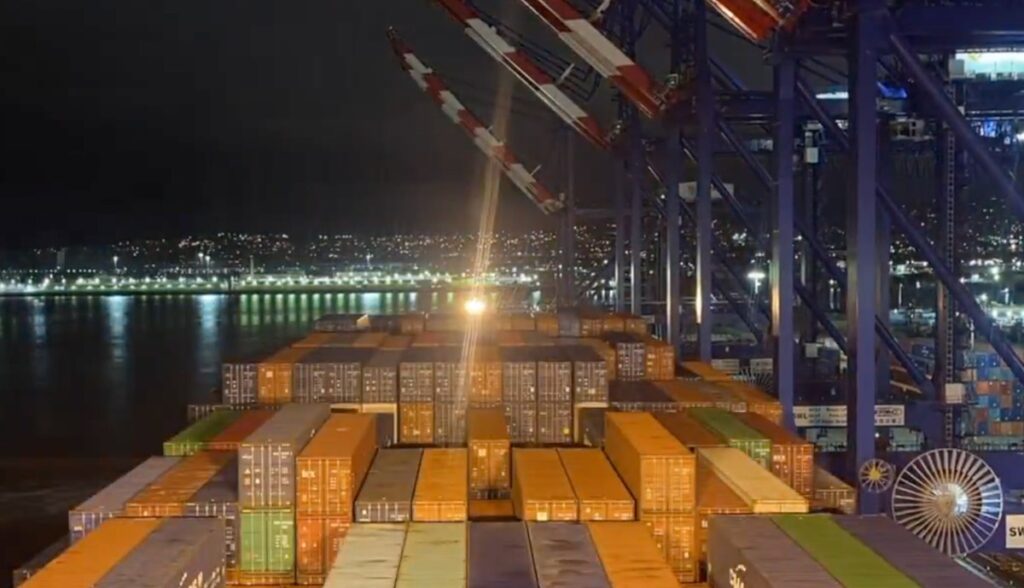
The Cape network will include 29 mainline services supported by 28 feeder connections. It will deploy approximately 340 vessels with a total capacity of 3.7 million TEUs.

The collaboration aims to achieve industry-leading on-time performance exceeding 90%, ensuring efficient and flexible service once fully implemented, along the East-West trade lanes. This is planned through a hub-and-spoke model centered around strategic “hub” ports—many owned or operated by Hapag-Lloyd/HGT or APM Terminals—with feeder services connecting these hubs to “spoke” ports.

The decision to opt for the longer Cape route underscores the emphasis on safety. “Following thorough consideration, the implementation of the Cape network is due to ongoing security concerns in the Red Sea region. Given the current geopolitical situation and the need to ensure the safety of our personnel, we have determined that this route is the only viable option at present,” the companies stated.

As part of their participation in the Gemini collaboration, Hapag-Lloyd will exit THE Alliance by late January 2025, aligning with Maersk and MSC Mediterranean Shipping Company’s termination of the 2M Alliance.

—

Source: gCaptain
Ask SCI.AI Finished reading? Continue with SCI.AI. Explore the related policy, route, company and historical context. Continue asking
Stay ahead of supply chain shifts

One email a week: the stories that matter and new risk events — in English, free.

Prefer RSS? Articles Risk events

Xeneta: Asia-US West Coast spot rates jump 343% on Iran war
Warehousing & Transport

Xeneta: Asia-US West Coast spot rates jump 343% on Iran war

Asia-U.S. West Coast container spot rates were 343% above their February 28 level in October, just 14% below the pandemic-era record, according to freight-rate intelligence provider Xeneta. The company forecasts a 5% decline in long-term contract rates for 2027, with the global container fleet expected to grow 6.8% while demand rises between 2.5% and 4%. Xeneta chief analyst Peter Sand traces the volatility to the Red Sea conflict in 2024, U.S. tariffs in 2025 and the Strait of Hormuz closure in 2026, and warns that fuel costs and route disruptions could still upend the outlook.

AI hardware demand lifts air cargo rates 30% year over year
Warehousing & Transport

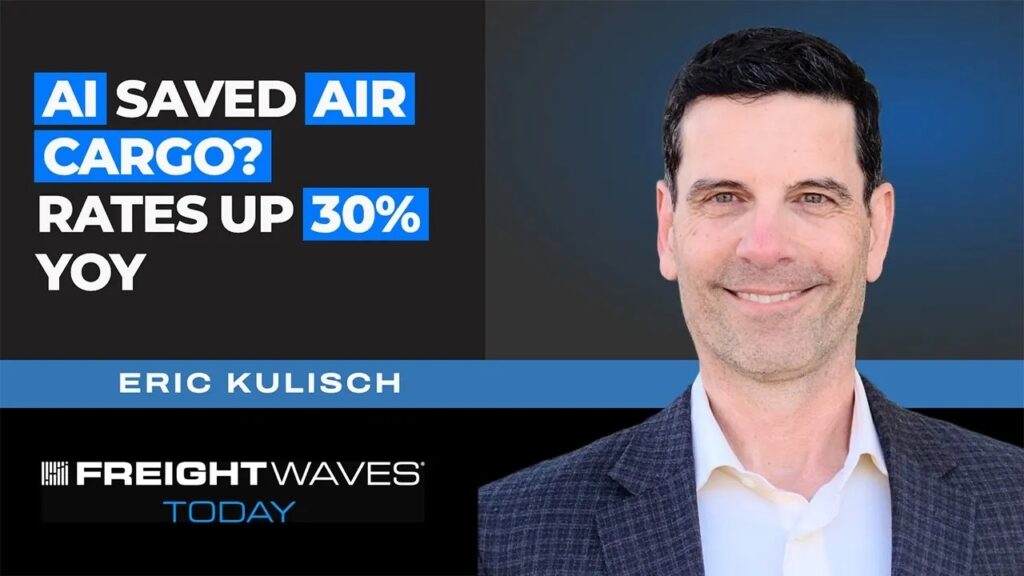
AI hardware demand lifts air cargo rates 30% year over year

Air cargo rates are up 30% year over year and volumes have grown about 6%, according to FreightWaves, as surging AI equipment demand offsets slower e-commerce and automotive flows. The strength has defied forecasts of a 2025 softening after a down 2024. Meanwhile, Walmart is deploying Wing and Zipline drones across nearly 300 stores; Zipline raised $1.5 billion and Wing plans a $125 million Texas factory ahead of anticipated FAA beyond-line-of-sight rules.

Truckload rejections hold at 12.8% as peak season stalls
Risk & Resilience

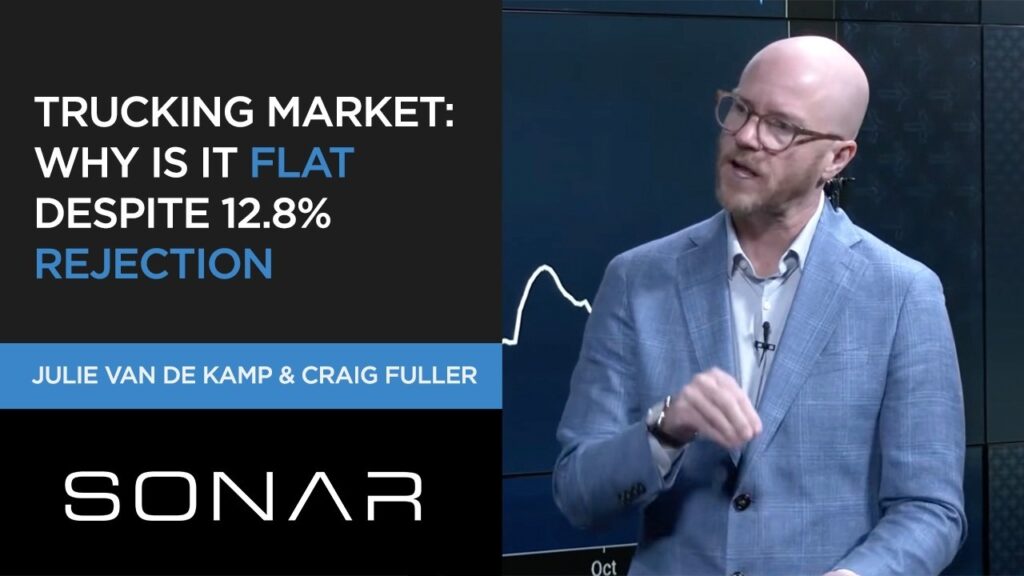
Truckload rejections hold at 12.8% as peak season stalls

Truckload tender rejections are holding near 12.8%, roughly double the 6% recorded a year earlier, yet FreightWaves analysts Julie Van de Kamp and Craig Fuller say the market shows little of the tightening momentum normally seen ahead of peak season. The rejection index has slipped only about one percentage point in 20 days, even as November's Outbound Tender Volume Index averages 11,434, up 12% year over year and 3% from October. Refrigerated freight is the exception, with reefer rejections at 21% versus 12.6% last year, and a super El Niño could add further pressure on reefer capacity this winter.

Welcome Back!

Login to your account below

Create New Account!

Fill the forms below to register

Retrieve your password

Please enter your username or email address to reset your password.

Scan to share via WeChat

Open WeChat and scan the QR code to share

QR Code

Add New Playlist