Explore

  • Trending
  • Latest
  • Tools
  • Browse
  • Subscription Feed

Logistics

  • Ocean
  • Air Cargo
  • Road & Rail
  • Warehousing
  • Last Mile

Regions

  • Southeast Asia
  • South Asia
  • Central Asia
  • Japan & Korea
  • Middle East
  • Europe
  • Russia
  • Africa
  • North America
  • Latin America
  • Australia
SCI.AI
  • Supply Chain
    • Strategy & Planning
    • Logistics & Transport
    • Manufacturing
    • Inventory & Fulfillment
  • Procurement
    • Strategic Sourcing
    • Supplier Management
    • Supply Chain Finance
  • Technology
    • AI & Automation
    • Robotics
    • Digital Platforms
  • Risk & Resilience
  • Sustainability
  • Research
  • Expert Columns
  • English
    • Chinese
    • English
No Result
View All Result
  • Login
  • Register
SCI.AI
No Result
View All Result
Home Risk & Resilience Geopolitics

Truck Parts Tariff Raises Repair Costs 20%-30%

2026/05/22
in Geopolitics, Risk & Resilience, Trade & Tariffs
0 0
Truck Parts Tariff Raises Repair Costs 20%-30%

By Adam Wingfield · Tuesday, May 19, 2026

Section 232 Tariff Drives 20%–30% Price Hikes on Key Components

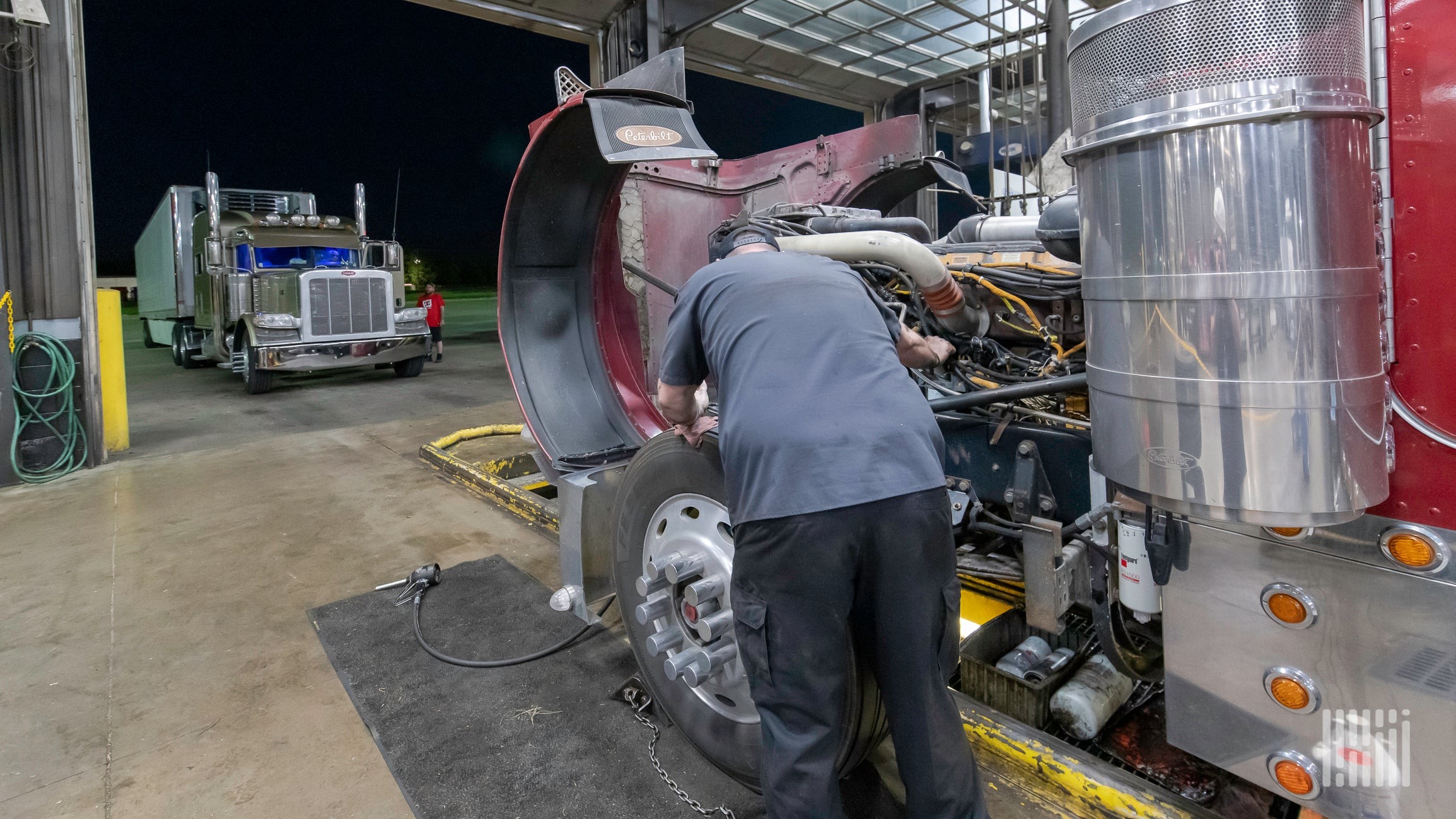
According to FreightWaves, the Section 232 tariff on imported medium and heavy-duty truck parts took effect on November 1, 2025, imposing a 25% duty on components from Class 3 through Class 8 vehicles, engines, transmissions, tires, and chassis parts. The impact is now visible on repair invoices, with key components such as injectors, turbochargers, EGR systems, DPF assemblies, and transmissions now 20% to 30% more expensive than they were two years ago. This increase is based on data from the Decisiv/TMC Parts and Labor Service Benchmark Report cited by Decisiv CEO Tim Hardin.

Supply Chain Anxiety Adds 40% to Unit Cost Growth

The tariff is not the sole driver of rising costs. The Richmond Fed’s CFO Survey attributes nearly 40% of total unit cost growth in 2025 and 2026 to tariffs and tariff-related uncertainty. Decisiv CEO Tim Hardin explained at the TMC annual meeting in Nashville that pricing adjustments often occur preemptively:

“Typically what I’ve seen is it gets priced into the supply chain regardless of whether there’s a physical impact or not.”

Distributors and manufacturers are raising prices in anticipation of disruptions, even before shortages occur.

Steel and Aluminum Duties Further Inflate Prices

Section 232 duties on imported steel and aluminum now stand at 50%. These elevated input costs flow through the manufacturing chain, affecting brake components, chassis parts, frames, and structural hardware. Even parts not directly subject to the 25% truck part tariff see price increases due to broader cost inflation in the supply chain.

Remanufactured Parts Offer 30%–70% Savings

Remanufactured components are gaining traction as a cost-effective alternative. These parts are rebuilt from domestically sourced cores in the U.S., avoiding Section 232 exposure entirely. According to the American Trucking Associations’ total cost of ownership analysis, remanufactured heavy-duty components—such as engines, transmissions, axles, brake systems, turbochargers, injectors, and DPF assemblies—typically cost 30% to 70% less than new parts while meeting OEM performance standards. The North American remanufacturing market accounted for approximately 45% of the global $74 billion market in 2026, per Persistence Market Research.

Legitimate Remanufacturing Requires Defined Process

A remanufactured part is not a used part or a shop rebuild. It undergoes complete disassembly, cleaning, inspection, replacement of all wear items, reassembly to OEM tolerances, and testing to OEM performance standards. The finished product includes a warranty—often equivalent to or better than new parts. Decisiv’s Service Relationship Management platform, which analyzes over seven million assets and 300,000 monthly service events, shows that powertrain repairs are the top service category across all truck age brackets, and brakes rank in the top four. These categories have the most mature and deepest remanufactured supply chains.

Invoice Transparency Remains Limited

Distributors are not required to disclose tariff exposure on invoices. A part made entirely from U.S.-origin materials carries no direct Section 232 exposure. A part assembled in the U.S. from USMCA-compliant Mexican or Canadian components is only taxed on non-U.S. content. Fully imported parts outside USMCA coverage face the full 25% tariff. The Federal Register and CBP entry-filing guidance define these classifications, but most invoices consolidate all costs into a single price, obscuring the underlying cost drivers.

Source: FreightWaves

Compiled from international media by the SCI.AI editorial team.

More on This Topic

  • EU clears U.S. trade pact hurdle to avoid Trump tariffs (May 22, 2026)
  • Novata Launches AI Tool for Supply Chain Risk Monitoring (May 22, 2026)
  • I Squared Among Bidders for $5 Billion Trafigura, Mubadala Port — Bloomberg (May 21, 2026)
  • F1 Tests Rail Freight for First Time — FreightWaves (May 21, 2026)
  • Zim Posts $86M Q1 Net Loss Amid Merger Turmoil — The Loadstar (May 21, 2026)
ShareTweet

Related Posts

EU clears U.S. trade pact hurdle to avoid Trump tariffs
Geopolitics

EU clears U.S. trade pact hurdle to avoid Trump tariffs

May 22, 2026
0
Novata Launches AI Tool for Supply Chain Risk Monitoring
Disruptions

Novata Launches AI Tool for Supply Chain Risk Monitoring

May 22, 2026
0
I Squared Among Bidders for $5 Billion Trafigura, Mubadala Port — Bloomberg
AI & Automation

I Squared Among Bidders for $5 Billion Trafigura, Mubadala Port — Bloomberg

May 21, 2026
1
F1 Tests Rail Freight for First Time — FreightWaves
AI & Automation

F1 Tests Rail Freight for First Time — FreightWaves

May 21, 2026
3
Zim Posts $86M Q1 Net Loss Amid Merger Turmoil — The Loadstar
AI & Automation

Zim Posts $86M Q1 Net Loss Amid Merger Turmoil — The Loadstar

May 21, 2026
3
China’s Origin Share Drops 2.8% in Tariff-Optimised Supply Chains
Geopolitics

China’s Origin Share Drops 2.8% in Tariff-Optimised Supply Chains

May 21, 2026
2

Leave a Reply Cancel reply

Your email address will not be published. Required fields are marked *

Recommended

10% of Retail/Manufacturing Leaders Trust AI for Autonomous Decisions

10% of Retail/Manufacturing Leaders Trust AI for Autonomous Decisions

23 Views
March 30, 2026
全球性干扰与电子商务推动九月份航空货运量增长

Global Disruptions and E-commerce Boost September Air Cargo Volumes

9 Views
February 15, 2026
The New Era of Supply Chain Digital Platforms: IFS Acquisition of Softeon Marks Convergence of WMS and SaaS

The New Era of Supply Chain Digital Platforms: IFS Acquisition of Softeon Marks Convergence of WMS and SaaS

11 Views
March 25, 2026
Tunisia Launches $Billion-Scale Sahel Trade Corridor

Tunisia Launches $Billion-Scale Sahel Trade Corridor

20 Views
April 25, 2026
Show More

SCI.AI

Global Supply Chain Intelligence. Delivering real-time news, analysis, and insights for supply chain professionals worldwide.

Categories

  • Supply Chain Management
  • Procurement
  • Technology


  • Risk & Resilience
  • Sustainability
  • Research

© 2026 SCI.AI. All rights reserved.

Powered by SCI.AI Intelligence Platform

Welcome Back!

Sign In with Facebook
Sign In with Google
Sign In with Linked In
OR

Login to your account below

Forgotten Password? Sign Up

Create New Account!

Sign Up with Facebook
Sign Up with Google
Sign Up with Linked In
OR

Fill the forms below to register

All fields are required. Log In

Retrieve your password

Please enter your username or email address to reset your password.

Log In

Scan to share via WeChat

Open WeChat and scan the QR code to share

QR Code

Add New Playlist

No Result
View All Result
  • Supply Chain
    • Strategy & Planning
    • Logistics & Transport
    • Manufacturing
    • Inventory & Fulfillment
  • Procurement
    • Strategic Sourcing
    • Supplier Management
    • Supply Chain Finance
  • Technology
    • AI & Automation
    • Robotics
    • Digital Platforms
  • Risk & Resilience
  • Sustainability
  • Research
  • Expert Columns
  • English
    • Chinese
    • English
  • Login
  • Sign Up

© 2026 SCI.AI