A settlement between CN and Union Pacific has injected new momentum into what is being described as one of the largest mergers in transportation history — the proposed Norfolk Southern-UP combination — but a veteran railroader and former Maersk procurement head says the deal’s core freight-diversion promise remains unsubstantiated.
CN Settlement Restores Strategic Relevance
Paul Tonsiger, CEO and founder of Integrated Multimodal Solutions, who spent 25 years at CN and its predecessor Illinois Central Railroad, said the CN agreement repositioned a railroad that had been sidelined in the broader merger conversation. Until the settlement, Tonsiger said, CN “was frankly irrelevant in the conversations that were going on.” In one move, the railroad regained strategic standing.
Tonsiger flagged one underreported asset the deal unlocks: CN’s Elgin, Joliet and Eastern Railway, acquired roughly 15 years ago, which would give UP a bypass route around Chicago, reducing dwell and improving network fluidity for intermodal traffic. He called the move “incredibly smart” but underreported. The intermodal benefit stems from avoiding Chicago congestion — a persistent bottleneck affecting service reliability and transit times.
“Where’s the Beef?” — Skepticism Over Diversion Claims
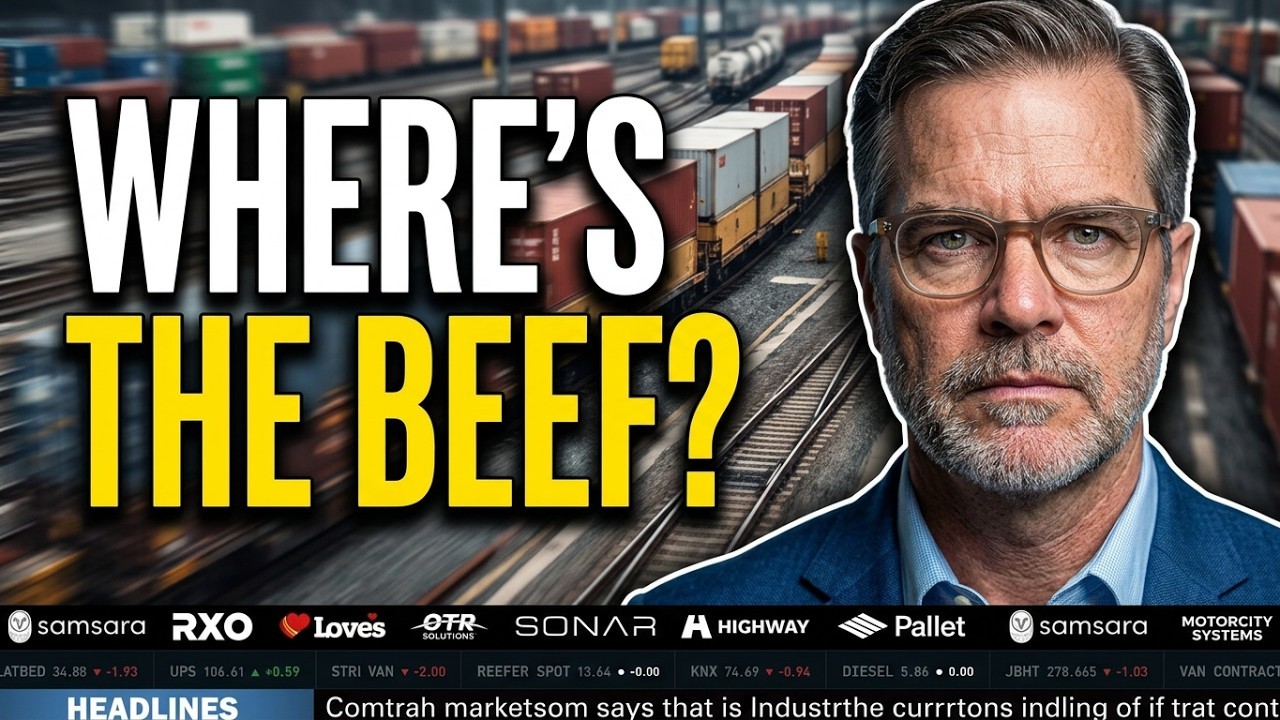
“Where’s the beef? I mean, I still haven’t seen any specifics — maybe I’m wrong, maybe they’re out there — but I haven’t seen any specifics like, you know, from Chicago to Kansas City or Oklahoma City to Atlanta, I’m going to take these specific truckloads off and these are the customers I’m going to work with to do it.” — Paul Tonsiger, CEO and founder of Integrated Multimodal Solutions
The merger application cites a diversion of 2.2 million truck moves, a figure Tonsiger called skeptically vague. He argued that the railroads have yet to publish lane-level detail showing which shippers, corridors, and volumes underpin that number. He noted the figure is roughly equivalent to the annual truckload volume of a carrier the size of Knight-Swift — a benchmark that puts the claim in context as a relatively modest shift in overall freight flows.
Tonsiger emphasized that the merger process has already dragged on for roughly a year, and he urged the parties to accelerate. “The ball needs to move forward,” he said, adding that he expects the latest CN-related filing to shift the Surface Transportation Board’s calculus — even if the full significance of the settlement may be “being promoted more than it actually means.”
Wholesaler Model Limits Rail Leverage
On the question of who ultimately controls intermodal freight relationships, Tonsiger was direct: it is not the railroads. “The railroads are wholesalers,” he said, noting that their direct customers are large intermodal marketing companies and ocean carriers such as Schneider, J.B. Hunt, Maersk, CMA, and Evergreen — not the beneficial cargo owners such as Home Depot or Walmart.
This structure, he explained, means railroads have limited direct leverage over volume growth and must rely on IMCs and steamship lines to translate network improvements into actual shipments. He drew on his time as head of procurement at Maersk, where BNSF and CSX were the primary rail carriers, to illustrate how past interline arrangements between carriers such as IC, WC, and CN fell apart over pricing and customer ownership disputes.
Consolidation vs. Collaboration: A Structural Argument
Tonsiger pushed back on the notion that collaboration agreements among existing railroads can substitute for consolidation. He argued a merged UP-NS network could instead approach a steamship line directly and offer end-to-end solutions — for example moving cargo from Norfolk to Kansas City or Norfolk to Minneapolis — in ways the current fragmented structure does not support.
The Surface Transportation Board will have final authority over the merger, and Tonsiger expressed confidence in the STB’s process, noting that — unlike regulatory reviews in other countries — the decision rests with a small number of board members rather than the Treasury Department or Justice Department.
- CN-UP settlement gives CN renewed relevance and would hand UP a Chicago bypass via the EJ&E, a move Tonsiger called ‘incredibly smart’ but underreported.
- Tonsiger, a 25-year CN veteran and former Maersk procurement head, says the merger’s 2.2 million truck-diversion claim still lacks lane-level specifics after roughly a year of proceedings.
- Railroads function as wholesalers in intermodal, with IMCs and steamship lines — not the carriers themselves — controlling BCO relationships and volume growth.
He also cited long-term freight growth stagnation, noting that industry expansion has remained stuck near 2.5% for two decades — a figure he described as “the freight industry’s own math [that] doesn’t add up.”
Source: FreightWaves
Compiled from international media by the SCI.AI editorial team.