According to www.aircargonews.net, Brazilian airline GOL Linhas Aéreas has signed a comprehensive unit load device (ULD) management agreement with Jettainer, a Lufthansa Cargo-owned provider specializing in digital ULD solutions.
Scope and Technology Integration
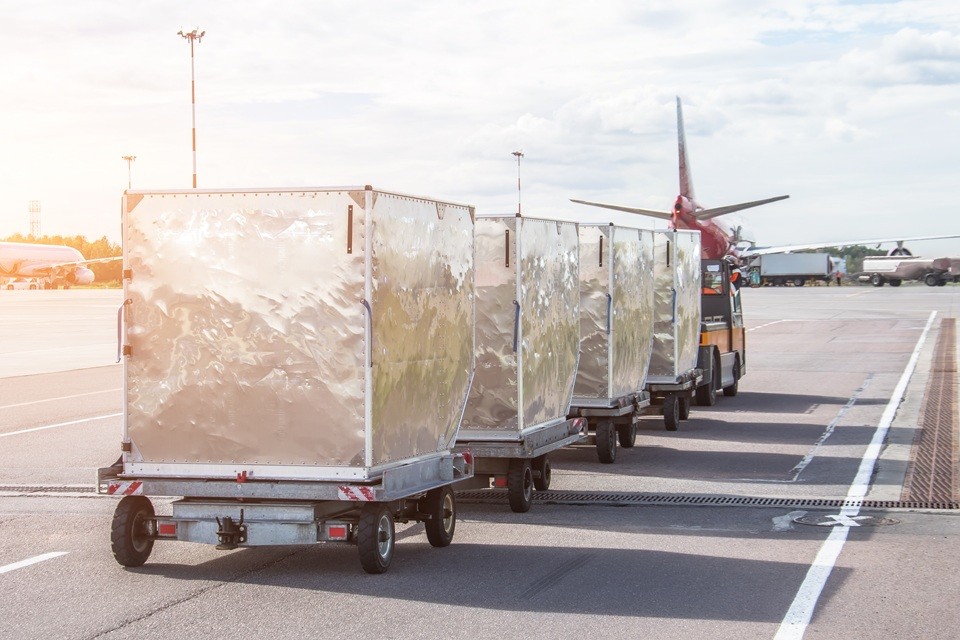
The agreement covers end-to-end ULD supply, maintenance, and digital fleet management across GOL’s expanding cargo operations. Central to the partnership is JettainerNG, Jettainer’s cloud-based IT platform designed to enhance real-time visibility of container and pallet assets. According to the report, this system aims to reduce ULD losses and improve asset utilization rates — critical metrics for airlines managing large, high-value logistics equipment.
The platform supports automated tracking, predictive maintenance scheduling, and inventory reconciliation — capabilities that align with GOL’s operational scaling. The source states that JettainerNG enables granular monitoring of ULD location, status, and service history, reducing manual audits and downtime. This integration comes as GOL prepares to deploy five widebody Airbus A330-900 aircraft, whose delivery will mark the airline’s formal entry into intercontinental freight services.
Strategic Group Alignment
Jettainer now serves as the designated ULD management provider for all airlines within the Abra Group, which includes Avianca, GOL, and Wamos Air. The source states this consolidation “will further unlock synergies, streamline operations, and contribute to cost optimization across the group.” By standardizing ULD management under one digital platform, the Abra Group seeks to harmonize processes, share data-driven insights, and negotiate vendor contracts collectively — a move consistent with industry-wide trends toward centralized asset governance.
With GOL operating around 700 flights per day and serving more than 30 million passengers annually, its inclusion significantly expands Jettainer’s South American footprint. The report notes that this strengthens Jettainer’s regional presence and reinforces cross-airline collaboration within the Abra Group — particularly relevant given Avianca’s recent humanitarian aid flights to Venezuela and shared infrastructure investments.
Leadership Perspectives
Patricia Bello, general director of GOLLOG, emphasized the strategic timing of the partnership:
“The partnership with Jettainer marks another important step for our new intercontinental operations, enabling the safe and efficient transport of cargo on our widebody aircraft.” — Patricia Bello, general director of GOLLOG
Bello underscored how ULD efficiency directly impacts cargo revenue potential on long-haul routes — where maximizing payload per flight cycle is essential. She added that Jettainer’s expertise supports GOL’s broader mission “to shorten distances and connect people, opportunities, and businesses around the world.”
Shailendra Kothari, managing director of Jettainer Americas Inc., confirmed the commercial significance:
“We are delighted to support GOL in its ambitious growth journey with our efficient ULD management solutions.” — Shailendra Kothari, managing director of Jettainer Americas Inc.
Kothari highlighted GOL’s scale — 700 flights per day and 30 million passengers per year — as validation of Jettainer’s scalability in high-volume environments. He noted the deal advances Jettainer’s regional strategy, citing strengthened South American operations and expanded value delivery across the Abra Group.
Industry Context and Implications
This agreement reflects a broader industry shift toward outsourced, technology-enabled ULD management. Major carriers including Lufthansa Cargo and Qatar Airways have adopted similar models to reduce capital expenditure, improve traceability, and meet IATA’s ULD Tracking Resolution 753 compliance targets. Unlike legacy systems reliant on barcodes or manual logs, Jettainer’s IoT-based tracking — referenced in the source as “Lufthansa Cargo takes up Jettainer’s IOT-based ULD tracking” — provides continuous location and condition data via embedded sensors.
For supply chain professionals, the implications are concrete: reduced ULD loss rates (industry averages exceed 8% globally), faster turnaround times at stations, and improved forecasting accuracy for ground handling resources. With GOL’s A330-900s scheduled for delivery in 2026, the timing ensures digital readiness ahead of first intercontinental cargo flights — a milestone expected no later than Q4 2026.
Source: Air Cargo News
Compiled from international media by the SCI.AI editorial team.