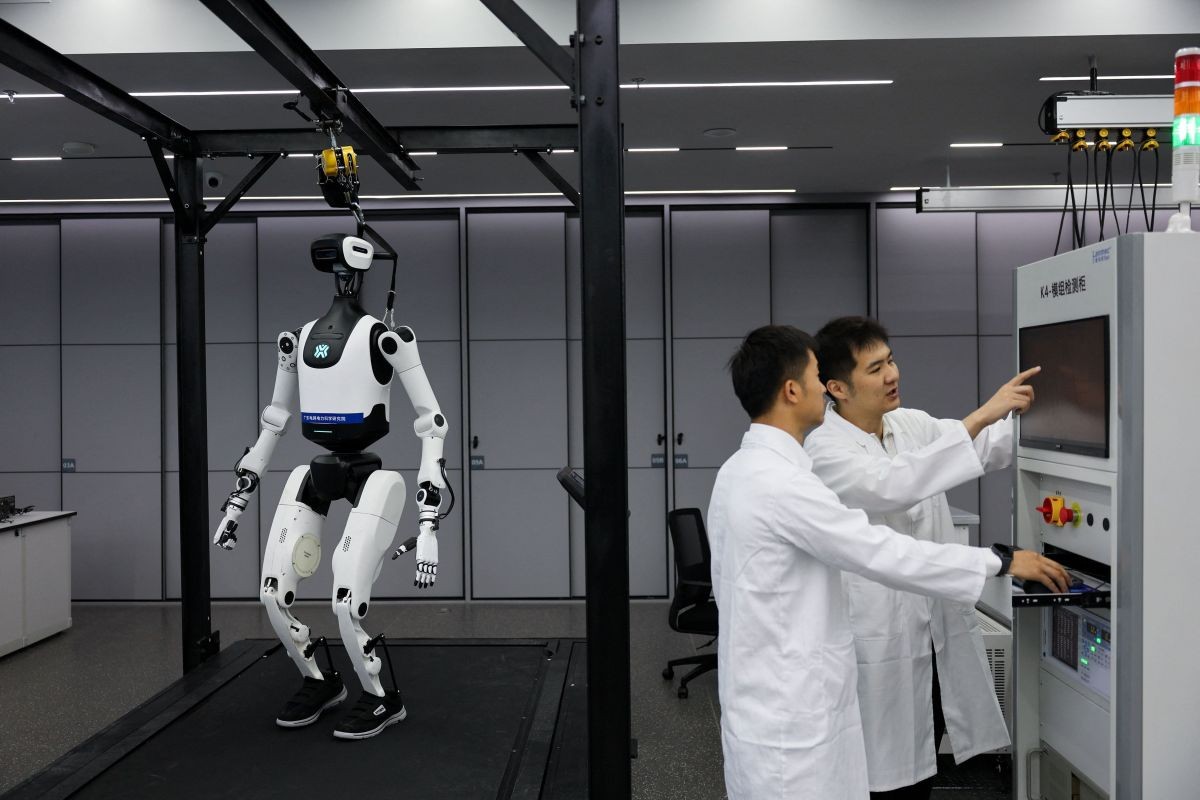
The Trump administration, via the FCC, banned U.S. imports of new Chinese humanoid and quadruped robots and grid-connected power inverters effective 28 July 2026. The move targets AI supply chain security, citing risks of data theft, cyberattacks like Volt Typhoon, and overreliance akin to China’s rare earth dominance. Unitree—holding under 20% of the global humanoid robot market—is directly affected, as are Chinese inverter leaders Sungrow (300274.SZ) and Huawei. The Chinese Embassy pledged countermeasures, while the FCC plans broad exemptions for non-Chinese suppliers.
According to www.cnnbrasil.com.br, the Trump administration announced on Tuesday, 28 July 2026, sweeping import restrictions targeting Chinese humanoid and quadruped robots, as well as grid-connected power inverters — measures designed to safeguard U.S. artificial intelligence supply chains and critical infrastructure.
FCC-led national security action
The Federal Communications Commission (FCC) issued the prohibitions late on 28 July 2026, with immediate effect upon publication. The rules apply exclusively to new models not yet launched in the U.S. market, though the FCC retains authority to revoke existing authorizations for previously approved devices. According to the FCC’s official statement,
“These devices can create vulnerabilities in the supply chain that could harm U.S. economic and national security and pose a cybersecurity risk threatening America’s critical infrastructure.”
FCC Chair Brendan Carr affirmed the agency’s ongoing commitment, stating:
“The FCC will continue doing its part to protect America’s critical supply chains.”
Targeted hardware and strategic rationale
The ban covers two distinct technology categories: first, humanoid and quadruped robots manufactured in China; second, grid-connected power inverters — essential components enabling renewable energy sources and battery systems to interface with electrical grids and data center infrastructure. The U.S. Treasury Secretary, Scott Bessent, warned concurrently that Chinese AI firms face potential U.S. sanctions for intellectual property theft. Officials explicitly cited lessons from the rare earth minerals crisis — where China’s dominance enabled geopolitical leverage — as motivation to preempt similar dependencies in AI-enabling hardware.
The restrictions aim to counter three documented threats: supply chain disruption, data exfiltration, and cyberattacks. FCC officials specifically referenced the Volt Typhoon campaign — a 2023 operation attributed to Chinese state actors that hijacked private routers to conceal follow-on intrusions into critical infrastructure.
Key affected companies and market impact
Unitree, a Chinese robotics firm holding just under 20% of the global humanoid robot market according to Counterpoint Research, is among the most directly impacted manufacturers. Unitree was recently added to the Pentagon’s list of entities allegedly backed by the Chinese military. It has partnered with Nvidia to deploy the company’s latest Blackwell AI chips in its robots — a collaboration Nvidia says keeps all robot-generated data within the U.S. and serves primarily American academic and research institutions.
In the power inverter sector, China leads global production, with Sungrow Power Supply (300274.SZ) and Huawei dominating exports. Huawei, already subject to severe U.S. sanctions, has aggressively expanded into Western inverter markets through price reductions. The Department of Defense has separately banned procurement of photovoltaic cells, modules, or inverters made by foreign entities deemed “concerning” — a category encompassing multiple Chinese firms.
Geopolitical response and exemptions
The Chinese Embassy in Washington stated Pequim would take “all necessary measures in response to any action causing material damage to its interests.” It urged the U.S. to
“heed the objective and rational voices of business communities in both countries”
and cease what it called defamation and sanction threats against Chinese enterprises. Four additional sources confirmed the FCC intends to grant broad exemptions to non-Chinese suppliers — consistent with prior actions against foreign drones and routers. This exemption framework is expected to accelerate nearshoring and diversification efforts among U.S. data center operators and industrial automation integrators.
U.S. Representative John Moolenaar, Republican of Michigan and chair of the House Select Committee on the Chinese Communist Party, welcomed the move, calling it
“a step that protects our country and strengthens our nation’s robotics industry.”
His committee has proposed legislation mandating national security reviews of Chinese robotics imports — signaling further regulatory tightening ahead.
Source: cnnbrasil.com.br
Compiled from international media by the SCI.AI editorial team.