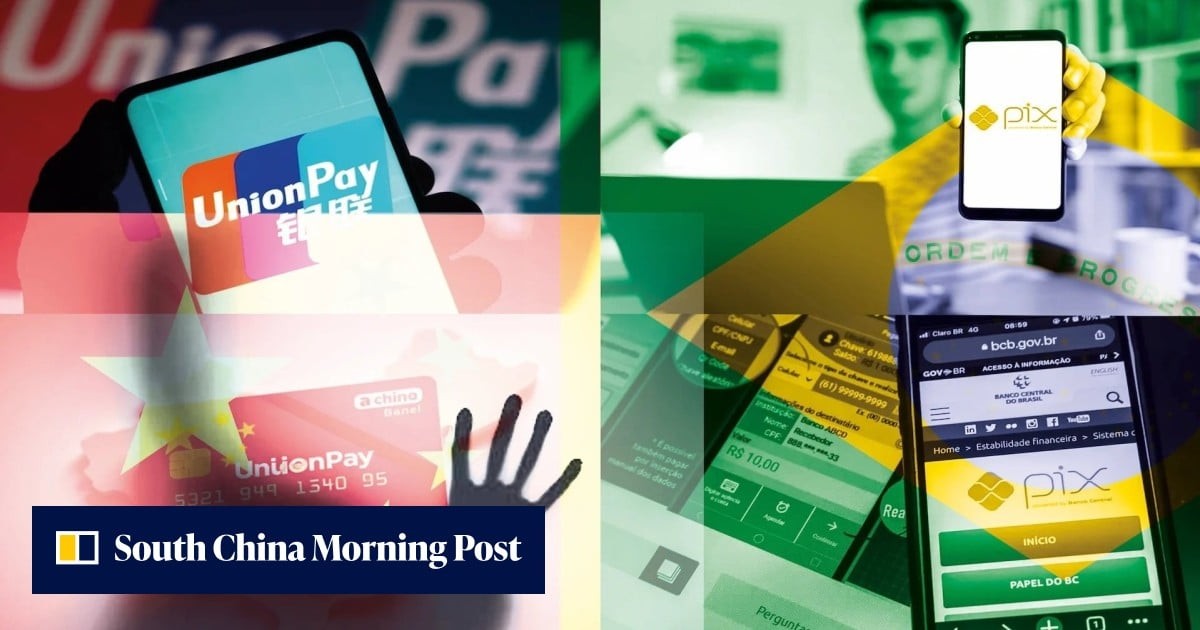
According to www.scmp.com, China’s UnionPay International plans to connect Chinese mobile payment apps—including the UnionPay app and bank-linked digital wallets—to Brazil’s Pix instant payment system, enabling Chinese tourists to scan merchant QR codes and pay directly from domestic accounts.
Pilot Launch Amid U.S. Trade Pressure
The integration follows U.S. imposition of tariffs targeting Brazil’s Pix system—a move Washington cited as distorting competition in cross-border payments. The pilot enables real-time, account-to-account transfers at no cost to end users, replicating Pix’s core functionality for inbound Chinese consumers. According to the report, the initiative was announced weeks after the U.S. levied trade measures against Brasilia over Pix’s regulatory structure.
UnionPay’s global network includes more than 15 million merchants across Latin America, Asia, and Europe—though the Brazil pilot specifically targets tourism-driven transactions. Pix itself launched in November 2020 under the oversight of the Central Bank of Brazil, which both regulates the national payment industry and operates Pix internally—a dual mandate that U.S. card networks have challenged as anti-competitive.
Infrastructure and Adoption Scale
Pix has become the dominant domestic payment rail in Brazil, processing over 1.2 billion transactions per month as of mid-2026, according to central bank data cited by Brazilian financial media. It now serves approximately 15 million merchants—from multinational department stores to informal street vendors—pushing cash and cheques to near-irrelevance in daily commerce.
The system settles funds in seconds, 24/7, with zero fees for individuals and minimal charges for businesses. Its technical architecture relies on open APIs and standardized messaging protocols, allowing third-party integrations like UnionPay’s without requiring changes to Pix’s core infrastructure. Under the agreement, UnionPay will route payments through its existing settlement channels with Brazilian banks, using local currency (BRL) conversion at point-of-sale.
Strategic Implications for Cross-Border Payments
This marks UnionPay’s first direct interoperability arrangement with a national real-time payment system outside Asia. The move expands its footprint beyond traditional card-based acceptance into instant, QR-based rails—aligning with its broader strategy to support outbound Chinese travelers amid tightening U.S.-China financial restrictions.
Chinese state media reported that access would later extend to other digital wallets in UnionPay’s global network—including those operated by Bank of China, Industrial and Commercial Bank of China, and China Construction Bank. The pilot is scheduled to begin in Q3 2026, with full rollout targeted for early 2027. No financial terms of the agreement were disclosed, but implementation costs are being borne jointly by UnionPay International and participating Brazilian acquirers.
For supply chain professionals managing cross-border tourism logistics—including duty-free retail, airport concessions, and hospitality payment systems—the integration reduces foreign exchange friction and eliminates reliance on international card networks subject to geopolitical volatility. It also sets a precedent for similar linkages between national instant payment systems and non-Western financial infrastructures.
Source: South China Morning Post
Compiled from international media by the SCI.AI editorial team.