According to FreightWaves, trailer rental scams are escalating across the U.S. trucking industry, with fraudsters increasingly using fake Facebook ads to lure owner-operators into wiring payments via Zelle or Cash App and unknowingly taking trailers already leased to legitimate customers.
How the scam operates
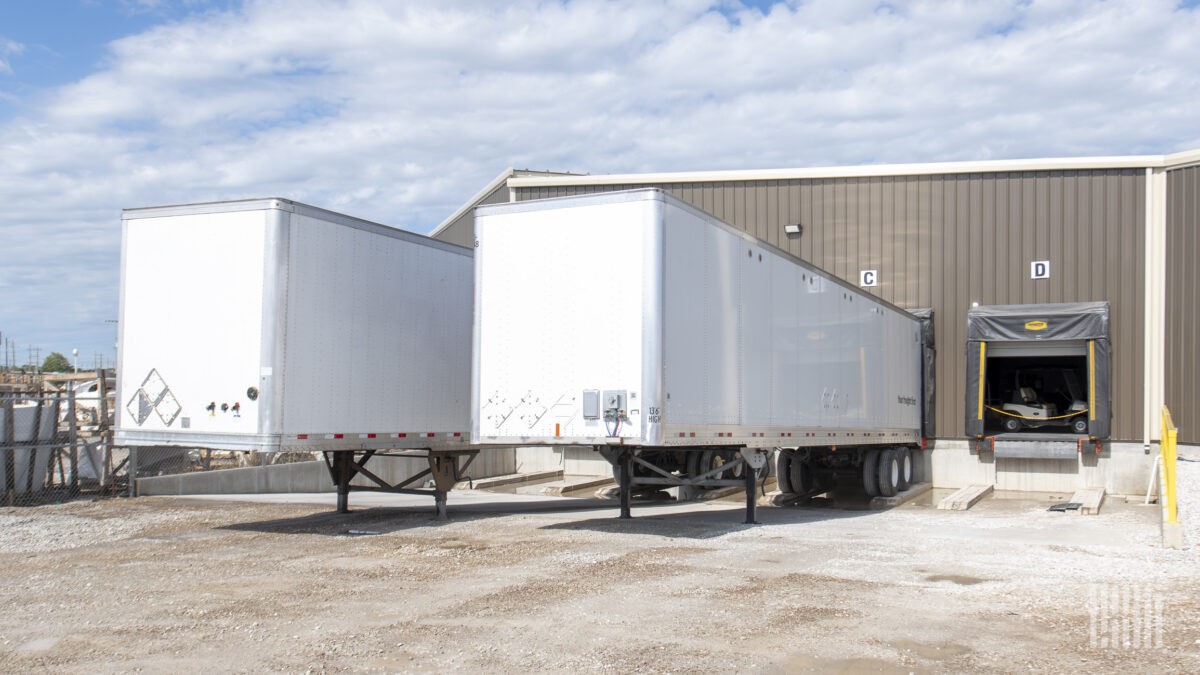
The scam begins with a deceptively simple social media ad offering low-cost trailer leases. Fraudsters communicate exclusively through text-based apps like WhatsApp or Facebook Messenger — never by phone or official company email. After exchanging a few messages about pickup timing and location, they send a short rental agreement bearing a forged leasing company logo. Victims are asked to submit their MC Authority letter and CDL copy, then instructed to pay immediately via Zelle or Cash App — no credit check, no insurance verification, and no formal paperwork. The pickup site is typically an unsecured yard or open parking lot with no fencing or access control.
The victim drives away with a trailer already under active lease to another carrier. When the rightful lessee discovers the missing unit, they report it stolen. The unwitting driver loses their payment — often $1,500–$3,000 per trailer — and may face criminal investigation for possession of stolen property. According to FreightWaves, these incidents have jumped sharply in the last year, with over 70% of reported fraud cases involving app-based peer-to-peer payments.
Industry-wide impact and response
Sarah Bradbury, Vice President and General Counsel of Premier Trailer Leasing, which manages a national fleet of over 70,000 trailers across 42 secured branches, stated:
“An occasional inconvenience has become a recurring logistical challenge, requiring police reports and repossession efforts that further strain our customers’ resources.”
Greg Akselrod, Chief Product and Technology Officer of Outpost, emphasized that physical security alone is insufficient:
“An unsecured yard creates the opportunity, but a fence and barrier arm only control access. They don’t validate whether a driver is authorized to leave with a specific trailer. That’s why every outgate should be treated as an asset transaction: before any trailer leaves the yard, the facility needs to verify the driver’s identity, the tractor-trailer pairing, and the expected movement against its YMS or TMS.”
Shannon Breen, CEO and Founder of FreightVana, a Top100 third-party logistics provider operating over 700 trailers, underscored the payment red flag:
“As an industry, for both cargo and trailer fraud, we have to keep educating the professional carrier base that Zelle/CashApp/Venmo/etc. are not and will not be acceptable forms of payment.”
She noted that zero of the Top100 brokerages use such platforms for carrier payments — yet they dominate scam transactions.
Red flags and legitimate leasing standards
Legitimate trailer leasing companies follow rigorous, transparent protocols. They require full credit applications, proof of insurance, and direct communication via phone and official email. Equipment pickup occurs only at branded, secure yards with visible signage and on-site staff. Before departure, a trained representative conducts an in-person inspection and verifies all documentation. Crucially, no reputable firm accepts payment via Zelle, Cash App, or Venmo.
Key warning signs include:
- The only contact method is text or messaging apps — no phone number or corporate email
- Payment demanded exclusively through peer-to-peer apps
- Rental agreement contains typos or appears self-designed
- Pickup location is an unsecured, unstaffed lot without company branding
Dean Vicha, President of NationaLease, one of North America’s largest full-service truck leasing organizations, advised fleets to prioritize partners with modern, well-maintained fleets and a verified national network. He stressed that due diligence — including verifying MC numbers, checking BBB ratings, and confirming physical yard addresses — remains the most effective defense.
Cargo theft context amplifies risk
Trailer rental fraud emerges amid a broader surge in supply chain crime. Reported direct losses from cargo theft cost the U.S. industry nearly $725 million annually, while total economic impact — including supply chain disruption — reaches up to $35 billion. Strategic cargo theft, where criminals impersonate carriers to divert shipments, has spiked 1,500% since 2021 and now accounts for roughly one-third of all supply chain thefts nationwide.
High-profile incidents illustrate the scale: thieves intercepted two semi-trucks carrying 24,000 bottles of Guy Fieri’s Santo Tequila — valued at $1 million — en route from Laredo, Texas, to Pennsylvania. In another case, fraudsters used fake credentials to steal 378,000 tins of Tucker Carlson’s “ALP Drifter” nicotine pouches worth nearly $7 million, driving the load as far as Kentucky before disabling its tracking device.
Source: FreightWaves
Compiled from international media by the SCI.AI editorial team.