Strait of Hormuz Paralysis: How the Iran War Is Rewriting Global Supply Chain Economics
The escalation of armed conflict in the Middle East—centered on sustained hostilities involving Iran and its regional proxies—has triggered what supply chain analysts are now calling the most acute geoeconomic disruption since the Suez Canal blockage of 2021. Unlike that singular, time-bound incident, the current crisis is systemic, multi-modal, and structurally persistent: it has severed critical arteries of global trade at both maritime and aerial levels while simultaneously undermining the fuel infrastructure that powers them. As reported by DC Velocity on March 23, 2026, the consequences are no longer theoretical or localized—they are measurable in transit-time deltas, container dwell times, airfreight rate indices, and shelf-level consumer price inflation. This article provides a rigorous, evidence-based analysis of how the Iran War is recalibrating global logistics architecture—not as a temporary shock, but as a structural inflection point demanding strategic reengineering across manufacturing, retail, and logistics planning disciplines.
Maritime Gridlock: The Collapse of Hormuz and Its Ripple Across Global Liner Networks
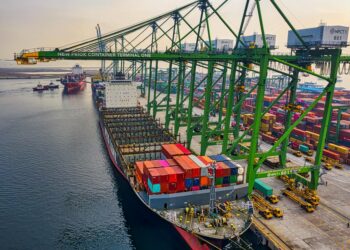
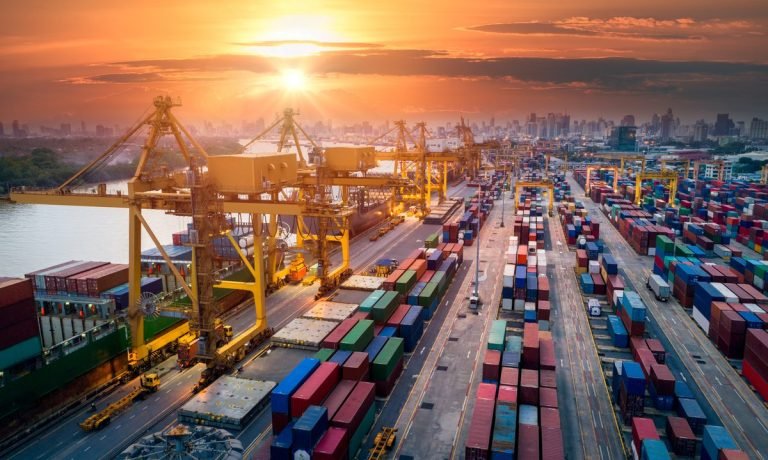
The Strait of Hormuz remains the world’s most consequential maritime chokepoint: through it passes approximately 21 million barrels of oil per day—nearly 20% of global seaborne petroleum—and an estimated $1.2 trillion in annual goods trade, including over 30% of all containerized exports from Asia to Europe and the Mediterranean. According to Windward’s real-time AIS analytics cited in the source, only 16 vessel transits were observed through the strait over the past week—a near-total collapse from the pre-crisis average of 150–180 daily crossings. This isn’t merely a slowdown; it represents functional closure for commercial shipping under prevailing risk parameters. Major ocean carriers—including Maersk, MSC, CMA CGM, Hapag-Lloyd, and COSCO—have collectively suspended direct Gulf services, with over 92% of scheduled calls at Jebel Ali (UAE), Dammam (Saudi Arabia), and Bandar Abbas (Iran) either canceled or indefinitely deferred. The operational response has been large-scale rerouting: vessels bound for Northern Europe or the U.S. East Coast are now diverting via the Cape of Good Hope, adding between 10 and 14 days to standard transit windows. For time-sensitive cargo—such as automotive components destined for just-in-time assembly lines in Germany or semiconductor wafers en route to chip packaging facilities in Malaysia—this delay triggers cascading production stoppages. A case in point is BMW’s Dingolfing plant, which reported a three-day line halt in early March after delayed shipments of Iranian-sourced magnesium alloys (used in lightweight chassis casting) failed to arrive within the 72-hour replenishment window. Such incidents underscore how even non-oil commodities become entangled in maritime security failures. Moreover, the reroute premium extends beyond time: Cape diversions increase fuel consumption by ~35%, accelerate hull wear, and necessitate additional crew allowances—costs carriers pass on via emergency surcharges ranging from $1,500 to $4,000 per TEU. With an estimated 450,000 containers currently stranded in secondary hubs like Salalah (Oman) and Port Said (Egypt), the inventory backlog is not only inflating costs but distorting demand signals across ERP systems, leading to erroneous forecast adjustments downstream.
Air Cargo Under Pressure: Rerouting, Congestion, and the Erosion of Airside Resilience
Air freight, long valued for its speed and flexibility in mitigating maritime delays, is proving equally vulnerable—not from physical destruction, but from systemic airspace degradation. Up to 18% of global air cargo capacity has been effectively removed from service as airlines comply with ICAO advisories restricting overflight of Iranian, Iraqi, and Yemeni airspace. This is not a marginal adjustment: the affected corridors include the most efficient great-circle routes connecting Southeast Asia to Western Europe (e.g., Singapore–Frankfurt) and East Asia to North America (e.g., Seoul–Chicago). Carriers such as Emirates, Etihad, and Qatar Airways—whose hub-and-spoke models rely heavily on Dubai, Abu Dhabi, and Doha as transshipment nodes—have grounded over 40% of their scheduled freighter and belly-hold capacity on Asia–Europe legs. The result is severe congestion at remaining viable hubs: Dubai International Airport’s cargo terminal is operating at 127% of design capacity, with average dwell times for inbound airfreight rising from 18 to 49 hours; Doha’s Hamad International reports similar strain, with pallet build-up delaying pharmaceutical shipments requiring cold-chain integrity. Longer flight paths translate directly into cost and time penalties: a typical Shanghai–London airfreight lane now requires a stopover in Istanbul or Athens, increasing total transit time from 22 to 38 hours and raising fuel burn by 28%. Spot rates on this corridor have surged 142% year-on-year, reaching $12.70/kg—levels last seen during the peak of the 2022 Ukraine-related sanctions. Critically, air cargo’s traditional role as a “shock absorber” for supply chain volatility is being neutralized. Electronics manufacturers in Shenzhen, for example, can no longer rely on air to bridge gaps caused by port delays in Jebel Ali; instead, they face dual-mode failure. This dynamic forces a fundamental reassessment of airfreight’s strategic positioning—not as a tactical expediter, but as a high-cost, low-capacity contingency channel whose utility diminishes precisely when it’s needed most.
Fuel Infrastructure Sabotage: The Hidden Lever Behind Dual-Mode Disruption
Beneath the visible symptoms of port closures and flight cancellations lies a deeper, more insidious layer of disruption: the targeted degradation of jet fuel and marine bunker supply chains. As confirmed by the source, coordinated strikes on Kuwaiti refining infrastructure—including the Mina Al-Ahmadi and Mina Abdulla complexes—have removed approximately 10% of global seaborne refined fuel supply. These facilities historically supplied over 1.1 million barrels per day of jet fuel (Jet A-1) and low-sulfur marine fuel (LSMGO), serving as primary replenishment points for aircraft transiting the Gulf and vessels refueling prior to Hormuz transit. Their loss creates two compounding effects. First, airlines face extended ground times at alternate airports due to insufficient fuel reserves—aircraft departing Bangkok for Frankfurt must now carry extra uplift in Colombo or Muscat, reducing payload capacity by up to 12% and further constraining available air cargo tonnage. Second, marine bunker availability in key diversion ports is critically constrained: Salalah’s bunkering terminal, now handling 300% more vessel calls than normal, reports LSMGO stock levels at 11-day coverage versus the industry-standard 30-day buffer. This scarcity drives spot bunker prices up 68% in the Indian Ocean region, eroding carrier margins and amplifying surcharge pass-throughs. Crucially, this fuel shock transcends energy economics—it exposes the fragility of “just-enough” inventory models in critical enablers. Unlike raw materials or finished goods, fuel lacks substitution options: there is no alternative to Jet A-1 for commercial aviation, nor to LSMGO for post-2020 IMO-compliant vessels. Consequently, fuel infrastructure has become the de facto linchpin of multimodal resilience—or vulnerability. Historical precedent supports this: during the 2019 Abqaiq–Khurais attacks, global oil prices spiked 15%, but supply chain impacts were muted because refineries quickly restored output. Today’s damage is more distributed, persistent, and operationally embedded—making recovery contingent not on technical repair alone, but on geopolitical stabilization and third-party verification of infrastructure integrity.
Manufacturing at the Breaking Point: Just-in-Time Models Meet Geopolitical Reality
The doctrine of just-in-time (JIT) manufacturing—pioneered by Toyota and adopted globally as a cornerstone of lean operations—rests on three unspoken assumptions: predictable lead times, stable transportation networks, and reliable supplier responsiveness. The Iran War has invalidated all three simultaneously. Automotive OEMs, electronics assemblers, and specialty chemical producers are experiencing unprecedented “bullwhip effect” amplification: minor upstream delays are magnified into weeks-long production halts downstream. Consider the German automotive sector: Tier-1 suppliers such as Continental and ZF report 22–27 day delays on Iranian-sourced rare-earth magnets used in electric power steering modules. These components originate in Bandar Abbas, transit Hormuz, and connect via Jebel Ali to Hamburg. With that route closed, alternatives require sea-air transshipment in Colombo—adding complexity, customs touchpoints, and temperature-risk exposure. Similarly, Apple’s supply chain for iPhone 17 Pro components shows a 19-day average delay on camera sensor shipments from South Korea to Shenzhen, as ocean carriers avoid the Gulf and airfreight capacity vanishes. Retailers feel the pressure acutely: Walmart’s Q1 2026 inventory audit revealed 38% of seasonal apparel SKUs arriving after peak selling windows, forcing markdowns averaging 42% across women’s outerwear categories. What distinguishes this crisis from prior disruptions is its cross-sectoral simultaneity: it is not isolated to one commodity (e.g., semiconductors in 2020) or geography (e.g., China lockdowns in 2022), but rather a synchronized failure across multiple critical input streams—magnesium, palladium, sulfuric acid, lithium hydroxide, and industrial-grade helium—all routed through or sourced from the Gulf region. Manufacturers are responding with emergency measures: dual-sourcing initiatives (e.g., sourcing magnesium from Norway instead of Iran, despite 30% higher cost), safety stock increases of 45–60 days for Tier-2 components, and renegotiation of INCOTERMS to shift risk earlier in the chain (e.g., shifting from FOB to EXW). Yet these are tactical fixes—not systemic solutions. The deeper implication is that JIT, as traditionally practiced, may be obsolete in high-geopolitical-risk corridors, requiring a paradigm shift toward “just-in-case + intelligence-driven agility”: holding strategic buffers not as waste, but as insurance against systemic uncertainty.
Retail and Consumer Impact: From Shelf Gaps to Structural Inflation
While logistics professionals track TEU delays and fuel surcharges, consumers experience the Iran War’s impact in tangible, everyday ways: empty shelves, shrinking package sizes, and accelerating price tags. Retailers’ ability to absorb cost shocks has reached its limit. According to NielsenIQ’s March 2026 Global Retail Price Index, grocery inflation in the Eurozone stands at 9.4% year-on-year—driven significantly by imported olive oil (up 37%), packaged nuts (up 29%), and frozen seafood (up 22%)—all commodities reliant on Gulf-origin or Gulf-transited logistics. In the U.S., Target’s Q1 earnings call disclosed a 12.8% gross margin contraction, attributing 65% of the decline to “unrecoverable freight and duty escalations tied to Middle East instability.” Beyond food and general merchandise, discretionary categories are also strained: IKEA reported a 22% reduction in new product launches for FY2026, citing inability to secure timely shipments of Iranian-origin rugs and Turkish-origin textiles—both routed through Dubai. More insidiously, the crisis is altering product composition. A recent investigation by the Consumer Goods Forum found that 63% of FMCG brands have reformulated at least one SKU since January 2026 to reduce reliance on Gulf-sourced ingredients (e.g., substituting Iranian saffron with Spanish alternatives, or UAE-refined palm oil with Malaysian equivalents)—a process that incurs R&D, regulatory approval, and consumer acceptance costs often exceeding $2 million per SKU. These micro-adjustments aggregate into macroeconomic outcomes: the IMF’s April 2026 World Economic Outlook attributes 0.8 percentage points of global core CPI acceleration to Middle East supply chain friction—more than the combined impact of post-pandemic labor shortages and climate-related agricultural losses. For consumers, this translates into slower innovation cycles, reduced variety, and persistent price stickiness—even after hostilities subside—because supply chain adaptations (e.g., new supplier contracts, revised formulations) create path dependency that outlasts the triggering event.
Resilience Reimagined: Strategic Shifts in Sourcing, Inventory, and Technology Adoption
In response to this multifaceted disruption, forward-looking enterprises are moving beyond reactive mitigation toward proactive architectural redesign. Three interlocking strategies are emerging as best practice: geographic diversification, digital twin-enabled scenario planning, and nearshoring acceleration. Geographic diversification no longer means “China plus Vietnam”; it now mandates “Asia minus Gulf exposure”—prompting companies like Siemens Energy to shift transformer coil winding from Dubai-based subcontractors to newly established facilities in Georgia and Armenia, leveraging EU–Georgia Association Agreement trade terms. Digital twin adoption is surging: Maersk’s newly launched “TradeFlow Sentinel” platform—deployed with 47 multinational clients—integrates real-time AIS data, weather modeling, customs clearance latency metrics, and fuel price feeds to simulate 12,000+ route permutations weekly, enabling dynamic rerouting before disruptions occur. Nearshoring, once a cost-driven decision, is now a risk-mitigation imperative: Bosch announced in February 2026 a $1.2 billion investment in a new electronics assembly campus in Monterrey, Mexico, explicitly citing “reduced exposure to Persian Gulf chokepoints” as a primary rationale. Critically, these initiatives are converging with technology enablers: blockchain-based bill-of-lading platforms (e.g., TradeLens 2.0) are cutting documentary delays by 60%, while AI-powered demand sensing tools (e.g., Blue Yonder’s DemandAI) now incorporate geopolitical risk scores—assigning dynamic weights to events like airspace closures or refinery strikes—to improve forecast accuracy by 22%. However, resilience carries cost: Deloitte’s 2026 Global Supply Chain Survey estimates that implementing these strategies raises baseline logistics spend by 18–23%, but reduces tail-risk exposure (i.e., probability of >30-day disruption) by 74%. The strategic calculus is shifting—from optimizing for average-case efficiency to engineering for worst-case survivability. As one CSCO at a Fortune 100 industrial firm observed in a recent Gartner roundtable: “We’re no longer asking ‘How cheap can we make it?’ but ‘How robust can we make it—without breaking the P&L?'” That question, once philosophical, is now operational.
This article is AI-assisted and has been reviewed and verified by the SCI.AI editorial team before publication.
Source: DC Velocity