Middle East Geopolitical Escalation Tests Global Supply Chain Resilience
As the Iran War continues to escalate across the Middle East, global supply chains are rapidly reflecting the immediate impact of this violent conflict through extended delivery delays and persistently rising costs. These disruptions are challenging just-in-time inventory models and delaying critical goods across multiple sectors including automotive, electronics, chemicals, and consumer products. According to a statement from Eran Tamir, Global CEO of Miami-based Non-Vessel Operating Common Carrier (NVOCC) ICL Global, this trend is evident across multiple transportation modes.
In the air freight sector, up to 18% of global air cargo capacity has been impacted as airlines reroute around restricted airspace. Key hubs like Dubai, Abu Dhabi, and Doha are facing congestion, while major carriers including Emirates, Etihad, and Qatar Airways have adjusted or suspended certain operations. Longer flight paths are driving up transit times, fuel consumption, and airfreight rates, particularly across Europe-Asia corridors.
Ocean Freight Networks Severely Disrupted: Route Diversions and Emergency Surcharge Surge
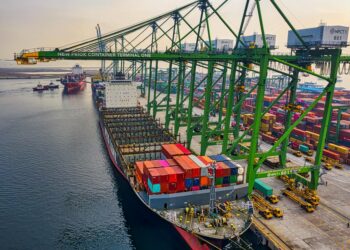
Similarly, ocean freight users are reporting delays and cost surges. Major carriers such as Maersk, MSC, CMA CGM, Hapag-Lloyd, and COSCO are rerouting or suspending services in the Gulf. Some vessels are diverting via the Cape of Good Hope, adding 10 to 14 days to transit times. Emergency surcharges ranging from $1,500 to $4,000 per container are being applied, with an estimated 450,000 containers currently delayed in regional networks.
The reasons for these business impacts are clear. According to a report from ocean freight data provider Windward, on the water, transit activity through the Strait of Hormuz remains near collapse, with only 16 AIS-visible crossings recorded over the past week. In the air, jet fuel supply chains have been materially disrupted following strikes on key Kuwaiti refining infrastructure, removing approximately 10% of global seaborne supply.
“Taken together, the current environment reflects a tightly controlled Strait [of Hormuz], declining export volumes, and a global maritime system adapting through rerouting, selective access, and shifting supply chains.” — Windward in a daily intelligence report on the crisis in the Gulf
Multimodal Transport Networks Under Comprehensive Pressure: From Port Congestion to Route Disruption
The impact of this conflict is being felt across all sea routes, with major shipping companies suspending services to the Middle East and containers stranded in congested ports. At least 20,000 seafarers in the region are also affected. Shipping lines have suspended services into the Arabian Gulf and are diverting vessels to alternative ports, where cargo is being discharged and held for onward movement.
These alternative routes add an average of 10-15 days to Asia-Europe transit times, resulting in reduced vessel capacity and a sharp increase in ocean freight rates. Furthermore, tensions in both the Gulf and the Red Sea have disrupted regular Suez Canal services, making logistics costs and timelines increasingly unpredictable. This crisis is rewiring global supply chains, with the era of frictionless, highly globalized semiconductor supply chains appearing to decisively unwind, paving the way for a deeply fragmented, regionalized future.
Energy Supply Chains Severely Impacted: Oil Supply Shocks and Fuel Crisis
The Iran War could lead to unprecedented oil supply shocks. According to the Dallas Fed, this disruption could be five times larger than the impacts of previous conflicts that slowed the flow of oil from the Middle East. The blockade of the Strait of Hormuz is slowing Q2 economy, with the Federal Reserve closely monitoring the Iran situation’s impact on global oil markets.
Following strikes on key Kuwaiti refining infrastructure, jet fuel supply chains have been materially disrupted, removing approximately 10% of global seaborne supply. This disruption to energy supply chains not only affects the aviation industry but also creates ripple effects across global manufacturing and transportation networks, further exacerbating supply chain fragility.
Global Logistics System Adaptive Adjustment: From Temporary Disruption to Structural Shift
The current logistics crisis is distinguishing between temporary disruptions and structural shifts. While logistics disruptions in certain regions may be temporary, the ongoing geopolitical volatility in the Middle East represents a structural shift in ocean freight flow. The global logistics system is adapting to this new reality through rerouting, selective access, and supply chain shifting.
Vessel diversions via the Cape of Good Hope are absorbing the world’s spare vessel capacity, meaning even shippers on Trans-Pacific or Intra-Asia lanes should prepare for “contagion” effects in the form of rising rates and equipment imbalances. This adaptive adjustment of the global logistics system is reshaping fundamental paradigms of supply chain management, forcing companies to reevaluate their logistics strategies and risk mitigation measures.
Corporate Response Strategies: From Inventory Buffering to Supply Chain Diversification
Facing this unprecedented supply chain challenge, companies are adopting multiple response strategies. Many are increasing safety stock, abandoning just-in-time models in favor of more buffered inventory strategies. Others are seeking supply chain diversification, reducing dependence on single regions or transportation routes.
Some businesses are investing in digital supply chain technologies to enhance visibility and responsiveness. Real-time tracking systems, predictive analytics, and AI-driven logistics platforms are helping companies better manage risks and optimize alternative routes. Additionally, companies are strengthening collaboration with logistics providers to jointly develop customized solutions to address this crisis.
This crisis highlights the importance of supply chain resilience. Companies need to not only address current challenges but also prepare for potential future geopolitical shocks. This includes investing in more flexible and distributed supply chain networks, as well as developing stronger risk management and contingency planning capabilities.
Source: DC Velocity
Compiled from international media by the SCI.AI editorial team.