Introduction
For decades, manufacturers have pursued automation to drive efficiency, reduce costs, and stabilize operations. That approach delivered meaningful gains, but it is no longer enough. Today’s manufacturing leaders face a different challenge: how to grow amid labor constraints, rising complexity, and increasing pressure to innovate faster without sacrificing safety, quality, or trust.
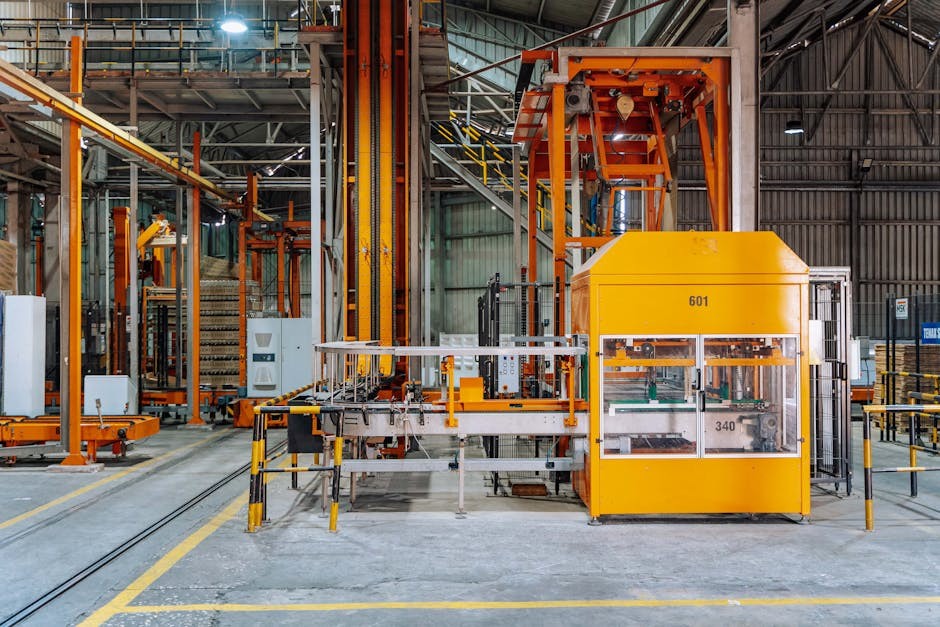
The next phase of industry transformation demands something beyond traditional automation: systems that can perceive, reason, act, and learn in the physical world. This is where Physical AI comes in — artificial intelligence designed specifically to operate safely and effectively alongside humans in factory floors, warehouses, and production lines.
The Three Pillars of Physical AI
Physical AI systems rest on three foundational capabilities: perception, reasoning, and action. Each must work seamlessly with the others to create intelligent automation that adapts to changing conditions.
Perception involves giving machines the ability to see, hear, touch, and understand their environment. This goes far beyond simple camera feeds — it means creating rich 3D models of factory spaces, understanding object relationships and spatial dynamics, detecting anomalies in equipment behavior, and maintaining situational awareness even in dynamic environments with moving people and materials.
NVIDIA’s Omniverse platform provides the underlying infrastructure for building these perceptual models. By simulating entire factories with physics-accurate rendering, companies can train AI agents on millions of scenarios before deploying them to real hardware. The result: systems that rarely surprise operators because they’ve “seen” almost every situation beforehand.
Reasoning transforms raw sensor data into actionable insights. A Physical AI system doesn’t just detect that a robot arm is vibrating abnormally — it understands what that vibration might mean, estimates the probability of equipment failure, considers alternative explanations, and recommends specific maintenance actions.
Microsoft’s Industrial Graph technology maps the complete web of relationships across an enterprise: which suppliers feed which factories, which products use which components, which production lines share critical resources. When disruptions occur — a port strike, a supplier bankruptcy, a natural disaster — the system can instantly simulate thousands of ripple effects and recommend optimal responses.
Action closes the loop by executing decisions in the physical world. Physical AI doesn’t stop at analysis; it takes concrete steps to improve outcomes. If a production bottleneck is detected, the system can automatically reconfigure workflows, reroute materials, adjust schedules, or alert human operators with specific remediation suggestions.
Deployment Realities: What Works, What Doesn’t
After years of hype and failed pilots, the Physical AI field is finally maturing into practical deployment. Several patterns have emerged from successful implementations:
Pattern 1: Start Narrow, Scale Fast
Companies that try to replace entire production lines with AI upfront often fail. The better approach: identify a single high-value use case (like visual quality inspection or predictive maintenance), prove value there, then expand incrementally. Boston Dynamics’ Spot robots, deployed initially for safety inspections in hazardous facilities, have now expanded to material handling, equipment monitoring, and worker assistance roles.
Pattern 2: Digital Twin First
Never deploy Physical AI directly on production hardware without exhaustive simulation testing. Companies like Siemens and GE have spent billions building factory-scale digital twins precisely for this purpose. These virtual replicas allow teams to stress-test AI behaviors under extreme conditions, validate safety protocols, and refine response algorithms before touching real equipment.
Pattern 3: Human-in-the-Loop Design
The most successful systems treat AI as augmentation rather than replacement. Operators remain responsible for final decisions while AI handles routine perception-action cycles. This design philosophy preserves human accountability while relieving workers of tedious tasks, reducing burnout and improving overall system performance.
Pattern 4: Data Infrastructure Matters Most
AI models are only as good as the data they’re trained on. Enterprises investing in robust data pipelines, sensor networks, and annotation workflows consistently outperform those hoping to bolt AI onto legacy IT systems. Cloud infrastructure providers like AWS, Azure, and Google Cloud have responded with specialized manufacturing tools addressing exactly these needs.
Industry Vertical Breakdown
Not all industries adopt Physical AI equally. Here’s how leading sectors are applying the technology:
Automotive Manufacturing
The automotive sector leads Physical AI adoption, driven by intense competition and massive capital investments in electrification. BMW’s Spartanburg plant in South Carolina uses AI-powered cameras to inspect paint quality in real-time, achieving 99.7% defect detection accuracy compared to 94% with manual inspection. Tesla’s Gigafactories employ autonomous mobile robots for parts delivery, coordinated by central AI systems that optimize routes based on real-time traffic patterns across the facility.
Electronics Assembly
Consumer electronics demand ultra-high precision and rapid changeovers — perfect conditions for Physical AI. Foxconn, Apple’s largest manufacturing partner, has deployed thousands of AI-enabled robots for circuit board assembly, achieving yields exceeding 99.9%. These robots combine microscopic vision systems with micro-manipulation actuators capable of placing components smaller than a grain of rice.
Pharmaceutical Production
Pharma manufacturers face stringent regulatory requirements around traceability and contamination prevention. Pfizer’s injection molding facilities use Physical AI to monitor environmental conditions continuously, logging every parameter needed for FDA compliance automatically. When anomalies occur — temperature spikes, humidity deviations, particulate matter — the system alerts operators and initiates corrective protocols without waiting for human intervention.
Food and Beverage
Tyson Foods implemented AI-guided sorting systems that inspect meat cuts for quality markers, fat distribution, and potential defects, optimizing yields while ensuring consistent product specifications. Coca-Cola’s bottling lines use computer vision to verify label alignment, fill levels, and cap torque in real-time, rejecting substandard products before they reach consumers.
Economic Impact: ROI Beyond Efficiency
While productivity gains dominate the conversation, the most compelling arguments for Physical AI investment come from broader economic benefits:
Reduced Downtime Costs
Manufacturing downtime averages $220,000 per hour for discrete manufacturing, $500,000+ for continuous processes. Predictive maintenance powered by Physical AI can prevent 85% of unplanned outages according to McKinsey research. For a mid-sized auto parts supplier running 24/7 operations, avoiding just two catastrophic failures annually pays for the entire AI investment program.
Quality Improvement Revenue Impact
Nestlé’s chocolate plants report 15% yield improvements after implementing AI-assisted process optimization, adding an estimated €50 million in annual revenue across their European facilities. Reducing rejection rates by even one percentage point translates to millions in recovered revenue plus avoided scrap disposal costs.
Workforce Extension
Labor shortages persist globally, particularly for skilled technicians willing to work night shifts in challenging environments. Physical AI extends the capability of existing workforce rather than replacing it. An operator managing one CNC machine yesterday can now supervise four simultaneously, with AI handling error detection, tool wear monitoring, and quality verification.
Supply Chain Resilience
Ford’s recent shift to new battery chemistries exemplifies this agility — their AI systems automatically adjusted tolerance parameters and retrained inspection models within weeks. Global disruptions exposed fragility in traditional supply chain architectures. Companies with Physical AI systems can pivot production more quickly when components become unavailable.
Regulatory Landscape and Compliance
Physical AI operates at the intersection of multiple regulatory regimes, each imposing distinct requirements:
Safety Standards
OSHA, ISO 10218 (industrial robots), and UL 3300 establish baseline safety expectations for human-robot collaboration. Physical AI systems must demonstrate predictable, interpretable behavior under all operating conditions. Independent certification bodies like TÜV Rheinland now offer specialized Physical AI safety assessments, providing third-party validation for insurers and regulators.
Data Privacy and Security
IIoT sensors collect vast amounts of operational data, some potentially sensitive. GDPR, CCPA, and emerging cybersecurity regulations impose strict controls on collection, storage, and transmission. Manufacturers increasingly deploy edge computing to process sensitive data locally while transmitting only anonymized metrics to cloud services.
Audit Trail Requirements
ISO 9001, AS9100, and FDA 21 CFR Part 11 mandate comprehensive documentation of all manufacturing decisions. Blockchain-backed audit trails are gaining adoption among pharmaceutical and aerospace manufacturers seeking tamper-proof records.
Future Outlook: Where Physical AI Heads
Looking ahead, several trends will shape Physical AI evolution:
Swarm Intelligence
Current Physical AI operates largely independently on individual devices. Next-generation systems coordinate across fleets of robots, sharing sensory information and collaborative strategies dynamically. Amazon’s warehouse robotics divisions are pioneering this approach, enabling hundreds of mobile units to cooperatively optimize order fulfillment without centralized control.
Generative Design Integration
Autodesk’s Firefly platform generates component designs optimized for additive manufacturing, while concurrent Physical AI simulations predict stress points and failure modes before production begins. This integration compresses R&D cycles from months to weeks.
Quantum-Sensor Fusion
Integrating quantum sensor data with Physical AI enables earlier anomaly detection — predicting bearing failures weeks in advance versus days with conventional vibration analysis.
Neuromorphic Computing
Intel’s Loihi and similar neuromorphic chips mimic biological neural networks, delivering orders-of-magnitude improvements in energy efficiency while enabling ultra-low-latency decision making critical for fast-moving production environments.
Conclusion: The Industrial Renaissance
Physical AI represents more than technological progress — it signals a fundamental reimagining of what manufacturing can achieve. By combining centuries of industrial engineering wisdom with cutting-edge artificial intelligence, manufacturers are creating systems that are safer, more adaptable, and ultimately more human-centric than ever before.
The road ahead remains challenging. Technical hurdles persist in areas like rare event prediction, ambiguous situation interpretation, and long-horizon task planning. Organizational barriers around skills gaps, change management, and ROI justification slow adoption in conservative industries. Regulatory frameworks lag behind technological capabilities in many jurisdictions.
Yet the momentum is undeniable. Investment in Industrial AI grew 250% year-over-year in 2025 according to CB Insights. Major enterprises commit tens of billions to physical AI infrastructure. Early success stories multiply, providing proof points for skeptics.
The question is no longer whether Physical AI will transform manufacturing, but how quickly organizations can adapt to capitalize on its benefits. For CEOs, CTOs, and plant managers reading this: your competitors are already deploying these systems. The window to establish leadership narrows with each quarter. Now is the time to move beyond pilots, invest in comprehensive architectures, and position your enterprise for the industrial renaissance awaiting those brave enough to embrace it.
Source: technologyreview.com
This article was AI-assisted and reviewed by our editorial team.