According to www.bloomberg.com, Brazil has reached 98% of its annual beef export quota to China as of early May 2026 — a level typically not achieved until late November or December. This acceleration reflects a structural shift in global red meat trade flows, driven by supply constraints in competing exporters and strengthened bilateral sanitary protocols.
Quota Utilization and Timing Shift
Brazil’s annual beef quota for China stands at 1.2 million metric tons, established under the 2023 Protocol on Veterinary Health Requirements for Bovine Meat. As of May 5, 2026, Brazilian exporters had shipped 1.176 million metric tons, per data from China’s General Administration of Customs and Brazil’s Ministry of Agriculture. That represents a 42% year-on-year increase in volume during the first four months of 2026. Historically, Brazil used only 31% of its quota by early May in the 2021–2025 average period.
Drivers Behind the Surge
The surge follows two key developments: first, Australia’s beef exports to China fell 27% year-on-year in Q1 2026, after Beijing reinstated anti-dumping duties on certain Australian chilled cuts in February 2026; second, Argentina’s quota utilization stood at just 19% as of May 5, 2026, constrained by domestic price controls and export taxes imposed in March 2026. Meanwhile, Brazil secured approval for 17 additional slaughterhouses to export to China between January and April 2026 — bringing the total number of authorized facilities to 54.
Supply Chain Implications
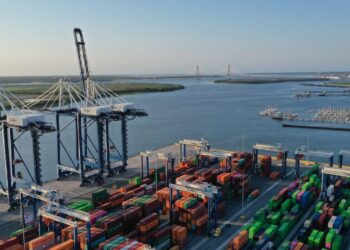
Logistics bottlenecks have emerged at Brazilian ports: Santos Port Authority reported 14-day average dwell times for refrigerated containers in April 2026, up from 7.2 days in April 2025. Exporters are chartering additional reefer vessels — Maersk confirmed deploying three extra weekly sailings on its Brazil–China beef lane starting in March 2026. According to the report, cold-chain integrity remains critical: over 92% of Brazilian beef shipments to China use temperature-monitored containers with real-time GPS and humidity tracking, per Brazil’s National Supply Company (CONAB) audit data from Q1 2026.
Industry Context and Precedent
This reallocation mirrors broader protein trade recalibrations. In 2025, China increased its beef import tariff-rate quota (TRQ) by 150,000 metric tons, allocating 70% of the expansion to Latin American suppliers. The U.S. share of China’s beef TRQ remained flat at 275,000 metric tons — unchanged since 2022. Brazil’s rise coincides with infrastructure upgrades: the federal government invested R$2.1 billion ($380 million) in rural cold-chain hubs between 2023 and 2025, including six new pre-cooling stations in Mato Grosso state — Brazil’s top beef-producing region, which accounted for 34% of national exports in 2025.
Source: Bloomberg
Compiled from international media by the SCI.AI editorial team.