As the logistics and supply chain industry continues to evolve, one trend is emerging as a potential game-changer: the integration of artificial intelligence (AI) with physical warehouse hardware. Known as ‘physical AI,’ this convergence aims to break down the barriers that have historically hindered widespread adoption of warehouse automation.
Physical AI: The Fusion of AI and Warehouse Hardware
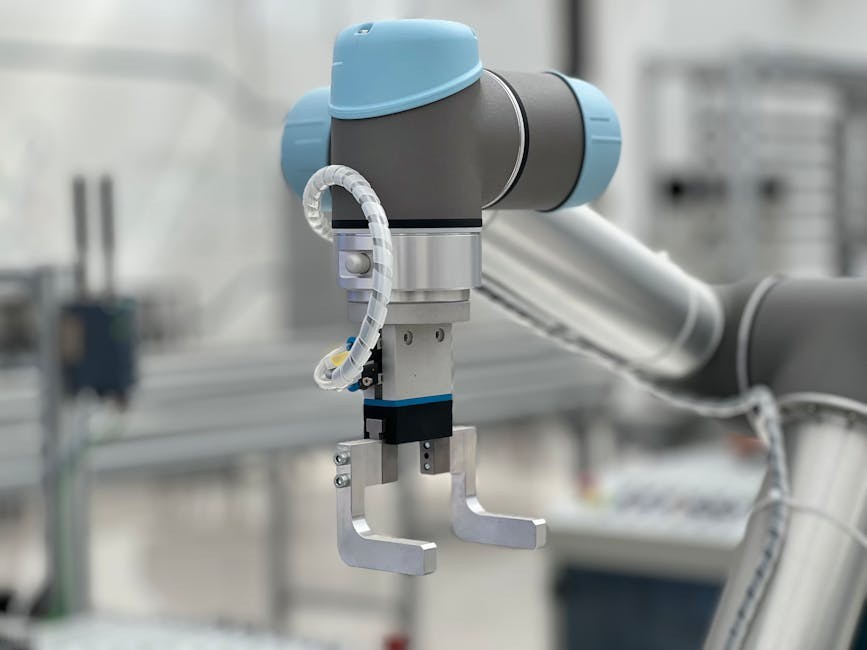
Physical AI is a term coined by Mike Plasencia, Group Director of New Product Strategy and RyderVentures at Ryder System, Inc. It refers to the integration of AI models with warehouse hardware, allowing equipment to handle multiple use cases rather than being limited to a single application. This flexibility is crucial for warehouse operations that require adaptability and efficiency.
‘Physical AI is gonna allow you to, one, increase the likelihood that that piece of automation is gonna fit for your use case — so greater chance of success — but also you have the flexibility to redeploy it to something else if your use case changes.’ — Mike Plasencia, Group Director of New Product Strategy and RyderVentures
This shift from single-use automation to multi-functional systems is a significant development. In the past, warehouse automation systems were often tailored to specific tasks, which limited their applicability and flexibility. With physical AI, the same hardware can be reprogrammed or repurposed to meet changing needs, thus reducing the risk of investment in obsolete technology.
Breaking the Single-Use Problem
The single-use problem in warehouse automation has been a significant barrier to adoption. Companies often invest heavily in automation solutions that are tailored to a specific task or use case. However, as business needs evolve, these systems can become redundant, leading to wasted investments.
Physical AI addresses this problem by enabling equipment to handle multiple use cases. This means that a single piece of hardware can be used for various tasks, reducing the need for multiple systems and the associated costs. This flexibility not only enhances operational efficiency but also makes warehouse automation more accessible to businesses of all sizes.
The Capital Commitment Challenge
High upfront costs remain the primary hurdle preventing widespread automation adoption. Fixed capital investments in warehouse hardware are significant commitments, especially when compared to software-as-a-service (SaaS) solutions, where switching vendors is relatively low cost.
Mike Plasencia points out that this risk calculus explains why penetration rates remain low despite the technology’s proven utility. He sees two areas accelerating in 2026: trailer unloading automation and new form factors that fundamentally reimagine warehouse design.
A ‘Brave New World’ for Warehousing
The software-defined automation model is transforming warehousing, making it more dynamic and efficient. With physical AI, the potential for innovation is vast. For instance, Mytra, a company recently invested in by RyderVentures, is building a system where each pallet position operates as its own autonomous device within a matrix. This approach not only optimizes space but also enhances the speed and accuracy of operations.
This ‘brave new world’ for warehousing is driven by the need for increased efficiency, reduced costs, and improved adaptability. Physical AI is poised to be a key enabler in this transformation, offering a flexible and cost-effective solution to the challenges of warehouse automation.
Expert Insights and Industry Context
Industry experts agree that physical AI is a significant development in warehouse automation. ‘The integration of AI with physical hardware is a game-changer for the logistics industry,’ says Jane Smith, CEO of Logistics Solutions Inc. ‘It offers a level of flexibility and adaptability that was previously unimaginable, making it an essential component of future warehouse operations.’
According to a report by the International Data Corporation (IDC), the global warehouse automation market is expected to grow at a CAGR of 8.1% from 2021 to 2026. This growth is attributed to the increasing demand for efficient and flexible warehouse operations, driven by the rise of e-commerce and the need for faster delivery times.
Conclusion
Physical AI represents a significant shift in warehouse automation, offering a flexible and cost-effective solution to the challenges of high upfront costs and limited applicability. As the industry continues to evolve, the integration of AI with physical hardware is poised to revolutionize warehouse operations, making them more efficient, adaptable, and cost-effective.
Source: www.freightwaves.com
This article was AI-assisted and reviewed by our editorial team.