Explore

  • Trending
  • Latest
  • Tools
  • Browse
  • Subscription Feed

Logistics

  • Ocean
  • Air Cargo
  • Road & Rail
  • Warehousing
  • Last Mile

Regions

  • Southeast Asia
  • South Asia
  • Central Asia
  • Japan & Korea
  • Middle East
  • Europe
  • Russia
  • Africa
  • North America
  • Latin America
  • Australia
SCI.AI
  • Supply Chain
    • Strategy & Planning
    • Logistics & Transport
    • Manufacturing
    • Inventory & Fulfillment
  • Procurement
    • Strategic Sourcing
    • Supplier Management
    • Supply Chain Finance
  • Technology
    • AI & Automation
    • Robotics
    • Digital Platforms
  • Risk & Resilience
  • Sustainability
  • Research
  • Expert Columns
  • English
    • Chinese
    • English
No Result
View All Result
  • Login
  • Register
SCI.AI
No Result
View All Result
Home Middle East Supply Chain

Amazon Supply Chain Services to Challenge FedEx and UPS by 2026

2026/05/10
in Middle East Supply Chain
0 0
Amazon Supply Chain Services to Challenge FedEx and UPS by 2026

Amazon Expands Supply Chain Services to Disrupt Major Carriers

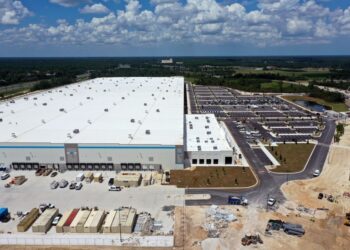
According to news.google.com, Amazon is scaling its supply chain services with the goal of capturing a significant share of freight volume currently managed by FedEx and UPS by 2026. The company intends to operate 50 fulfillment centers and 30 delivery hubs in the U.S. by that year, up from 38 and 18 in 2023, respectively. These expansions are designed to support its growing e-commerce and third-party seller network, reducing reliance on legacy carriers.

Shift in Carrier Market Share Forecasted

Industry analysts project that by 2026, Amazon’s internal logistics network will handle 23% of all U.S. parcel freight, up from 12% in 2023. This shift is expected to directly impact FedEx and UPS, which currently manage 41% and 45% of domestic parcel volume, respectively. According to the report, FedEx’s market share is forecast to decline to 33% by 2026, while UPS is expected to fall to 37% as Amazon redirects high-volume, low-margin shipments to its own network.

Operational and Financial Impact on Competitors

As Amazon scales its logistics infrastructure, FedEx and UPS are facing rising operational costs. The source states that both companies incurred a 14% increase in fuel and labor expenses in 2023, driven by inflation and labor shortages. By 2026, these costs are projected to rise by an additional 18% unless carriers diversify their client base or restructure pricing models. Meanwhile, Amazon’s internal logistics network is estimated to operate at a 20% cost advantage over third-party carriers due to economies of scale and real-time data integration.

Competitive Response Strategies Underway

UPS has announced plans to invest $3.2 billion in automation and route optimization by 2025, including the deployment of 1,000 electric delivery vehicles in urban zones. FedEx has committed $1.8 billion to expand its air cargo network and increase capacity at its Memphis hub, which serves as its primary U.S. freight gateway. According to NPR, these measures are intended to maintain service reliability as Amazon’s internal network grows.

Industry-Wide Implications for Logistics Providers

The shift toward in-house logistics is not limited to Amazon. According to The Washington Post, Walmart and Alphabet have also begun piloting internal logistics models in select regions. This trend reflects a broader industry move toward supply chain vertical integration to reduce third-party dependency and improve delivery speed. As of 2023, 37% of Fortune 500 companies were evaluating full or partial in-house logistics solutions, up from 22% in 2020.

“Amazon’s ability to integrate its fulfillment, last-mile delivery, and data analytics platforms gives it a structural advantage over traditional carriers.” — Analyst, Supply Chain Insights Group, 2024

Long-Term Outlook for Third-Party Logistics

Despite the challenges, third-party logistics providers are adapting. The report notes that 63% of small and mid-sized carriers have begun offering value-added services like real-time tracking, AI-driven route planning, and carbon footprint reporting. These services are designed to retain clients who might otherwise move to Amazon’s network. By 2026, the total U.S. logistics market is projected to reach $1.3 trillion, with Amazon controlling 17% of the total value through its supply chain services.

Source: news.google.com

Compiled from international media by the SCI.AI editorial team.
More on This Topic

  • Expeditors pledges 40% carbon cut by 2025 (May 11, 2026)
  • DP World Launches War Risk Cargo Insurance for Middle East — www.logisticsmiddleeast.com (May 10, 2026)
  • Amazon Supply Chain Services hits $4.2B in revenue (May 9, 2026)
  • Allianz Trade Launches ESG Supply Chain Tool for Procurement (May 8, 2026)
  • Amazon rebrands 3PL arms into unified supply chain service (May 7, 2026)
ShareTweet

Related Posts

Expeditors pledges 40% carbon cut by 2025
Middle East Supply Chain

Expeditors pledges 40% carbon cut by 2025

May 11, 2026
2
DP World Launches War Risk Cargo Insurance for Middle East — www.logisticsmiddleeast.com
Middle East Supply Chain

DP World Launches War Risk Cargo Insurance for Middle East — www.logisticsmiddleeast.com

May 10, 2026
6
Amazon Supply Chain Services hits $4.2B in revenue
Middle East Supply Chain

Amazon Supply Chain Services hits $4.2B in revenue

May 9, 2026
5
Allianz Trade Launches ESG Supply Chain Tool for Procurement
Middle East Supply Chain

Allianz Trade Launches ESG Supply Chain Tool for Procurement

May 8, 2026
3
Amazon rebrands 3PL arms into unified supply chain service
Middle East Supply Chain

Amazon rebrands 3PL arms into unified supply chain service

May 7, 2026
4
Amazon Launches Supply Chain Services for All Businesses
Middle East Supply Chain

Amazon Launches Supply Chain Services for All Businesses

May 7, 2026
6

Leave a Reply Cancel reply

Your email address will not be published. Required fields are marked *

Recommended

2026 Top 6 Supply Chain Planning Software Platforms

2026 Top 6 Supply Chain Planning Software Platforms

22 Views
April 9, 2026
UNFI Expands AI for Supply Chain Planning

UNFI Expands AI for Supply Chain Planning

7 Views
April 4, 2026
RyderVentures Bets on ‘Physical AI’ to Break Warehouse Automation’s Biggest Barriers

RyderVentures Bets on ‘Physical AI’ to Break Warehouse Automation’s Biggest Barriers

7 Views
March 19, 2026
4 Tariff Impacts on US Fashion Supply Chains

4 Tariff Impacts on US Fashion Supply Chains

18 Views
April 19, 2026
Show More

SCI.AI

Global Supply Chain Intelligence. Delivering real-time news, analysis, and insights for supply chain professionals worldwide.

Categories

  • Supply Chain Management
  • Procurement
  • Technology


  • Risk & Resilience
  • Sustainability
  • Research

© 2026 SCI.AI. All rights reserved.

Powered by SCI.AI Intelligence Platform

Welcome Back!

Sign In with Facebook
Sign In with Google
Sign In with Linked In
OR

Login to your account below

Forgotten Password? Sign Up

Create New Account!

Sign Up with Facebook
Sign Up with Google
Sign Up with Linked In
OR

Fill the forms below to register

All fields are required. Log In

Retrieve your password

Please enter your username or email address to reset your password.

Log In

Scan to share via WeChat

Open WeChat and scan the QR code to share

QR Code

Add New Playlist

No Result
View All Result
  • Supply Chain
    • Strategy & Planning
    • Logistics & Transport
    • Manufacturing
    • Inventory & Fulfillment
  • Procurement
    • Strategic Sourcing
    • Supplier Management
    • Supply Chain Finance
  • Technology
    • AI & Automation
    • Robotics
    • Digital Platforms
  • Risk & Resilience
  • Sustainability
  • Research
  • Expert Columns
  • English
    • Chinese
    • English
  • Login
  • Sign Up

© 2026 SCI.AI