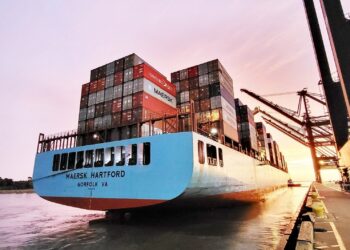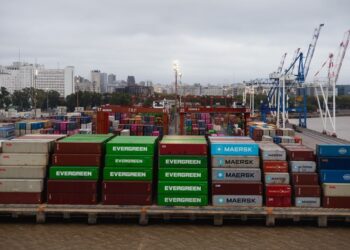
Across the American industrial landscape — from the humming battery lines of Georgia to the silent rail yards of Ohio — a quiet but consequential unraveling is underway. Nearly 4,000 workers have been laid off in just the past six weeks, according to verified WARN filings and corporate disclosures spanning eight states: California, Georgia, Tennessee, Texas, Ohio, South Carolina, Pennsylvania, and Alabama. This is not a localized correction or cyclical blip; it is a structural recalibration driven by converging forces — collapsing demand signals in electric mobility, overbuilt logistics infrastructure, client attrition in intermodal services, and aggressive network consolidation by parcel giants. Unlike the pandemic-era supply chain shocks that manifested as shortages and delays, today’s crisis reveals itself in shuttered loading docks, vacant assembly bays, and HR departments processing severance packages. The layoffs are concentrated not in legacy sectors alone but precisely where capital has flowed most aggressively over the past five years: EV battery manufacturing, third-party logistics (3PL) warehousing, and intermodal rail terminals — all now confronting a harsh reality: capacity outpaced demand, and speed of execution was mistaken for strategic resilience.
The Automotive Supply Chain Collapse: From Battery Boom to Bust Cycle
The most jarring data point in this wave is SK Battery America’s decision to cut 958 jobs — 37% of its workforce — at its Commerce, Georgia plant. That facility, opened in 2022 with $2.6 billion in federal and state incentives and heralded as a cornerstone of Biden’s Inflation Reduction Act industrial policy, was built to supply Ford’s F-150 Lightning and other North American EV platforms. Yet within two years, SK cited ‘shifting EV demand’ as the rationale — a euphemism for automakers slashing production forecasts amid slower-than-expected consumer adoption, persistent range anxiety, charging infrastructure gaps, and macroeconomic headwinds including elevated interest rates that dampen auto loan affordability. The layoffs were not isolated to Georgia: First Brands Group, a bankrupt Tier 2 supplier specializing in fluid systems and lighting components, announced 572 layoffs in Brownsville, Texas, and 333 in Fayetteville, Tennessee, as part of its Chapter 11 restructuring. These cuts reflect deeper dysfunction — not just in final assembly, but across the multi-tiered automotive value chain where suppliers operate on razor-thin margins and limited contractual flexibility. When OEMs delay model launches or cancel programs outright — as General Motors did with its Ultium-based midsize SUV — the ripple effect propagates instantly downstream, exposing how fragile just-in-time manufacturing becomes without demand visibility beyond 90 days.
This collapse exposes a fundamental misalignment between public investment timelines and private-sector commercialization rhythms. Federal subsidies accelerated capital deployment, but they did not de-risk product-market fit or accelerate charging standardization. As Dr. Elena Rodriguez, Senior Fellow at the MIT Center for Transportation & Logistics, observes:
“We funded the factory before we validated the fleet. Battery plants like SK’s were sized for 2027 volume assumptions — but 2024 U.S. EV penetration remains below 8%, and dealer inventory sits at 112 days’ supply. That mismatch isn’t inefficiency — it’s systemic overcommitment.” — Dr. Elena Rodriguez, Senior Fellow, MIT Center for Transportation & Logistics
Moreover, the geographic concentration of these cuts — Georgia, Tennessee, Texas — underscores how regional economic development strategies prioritized job creation metrics over long-term ecosystem viability. When SK reduced its workforce by 37%, it didn’t just eliminate positions; it weakened local supplier networks, strained municipal tax bases, and triggered secondary layoffs among maintenance contractors, logistics vendors, and even small businesses serving plant employees. The fallout extends beyond payroll: commercial real estate vacancy rates near Commerce, GA have spiked 22% since Q3 2023, while local vocational training programs report 40% enrollment declines in battery technician tracks — evidence that human capital pipelines are being severed faster than they were built.
Logistics Infrastructure Overbuild and Client Attrition Crisis
The warehouse and distribution sector is experiencing what industry analysts now term ‘the great rationalization’ — a post-pandemic correction characterized not by growth slowdown, but by active contraction. Saddle Creek Logistics Services plans to lay off 151 workers in Bessemer, Alabama; GEODIS will eliminate 105 jobs in Ashville, Ohio after a key client ceased operations at the site; GXO Logistics filed notice to shut down its West Jefferson, Ohio, facility, affecting 102 workers; and CJ Logistics America announced 71 layoffs in Fontana, California. Crucially, these are not failures of individual companies — all are profitable, well-capitalized firms — but symptoms of a broader market failure: excessive speculative construction. Between 2021 and 2023, U.S. industrial real estate developers broke ground on 1.2 billion square feet of new warehouse space, a 63% increase over the prior three-year cycle. Much of that space was leased on short-term, rate-sensitive contracts tied to e-commerce fulfillment peaks that have since normalized. As retailers optimize inventory turns and shift toward hybrid fulfillment models — combining stores-as-fulfillment-centers with regional micro-fulfillment units — the demand for massive, single-tenant Class A warehouses has evaporated. The result is not just vacancies, but contract terminations that cascade directly into workforce reductions.
This dynamic reveals a critical vulnerability in the 3PL business model: extreme client concentration risk. At GEODIS’s Ashville facility, the departure of one anchor tenant — reportedly a major apparel brand shifting to nearshored production in Mexico — triggered the entire shutdown. Similarly, GXO’s West Jefferson closure followed the loss of a Fortune 100 CPG client that consolidated its North American distribution into two mega-hubs instead of five regional facilities. Such decisions are driven by AI-powered network optimization tools that prioritize total landed cost over local employment impact — a calculus that rarely includes community stabilization funds or retraining liabilities.
- Saddle Creek’s Bessemer layoff represents a 28% reduction in its Alabama workforce, concentrated among material handling technicians and shift supervisors with 5–12 years’ tenure
- CJ Logistics’s Fontana closure eliminates roles spanning dock operations, WMS administration, and customs compliance — functions increasingly automated via robotic process automation (RPA) and computer vision systems
- GEODIS’s Ashville site had operated at 92% utilization for 18 months prior to the client exit, demonstrating how quickly ‘full capacity’ can become ‘excess capacity’ in asset-light logistics models
The implications extend beyond labor: insurance carriers are revising underwriting criteria for industrial properties, citing ‘tenant instability risk’ as a top-3 rating factor, while lenders are imposing stricter debt-service coverage ratios on new warehouse loans — signaling that the era of easy capital for speculative logistics development has ended.
Rail Intermodal Disruption: Contract Losses Expose Fragile Terminal Economics
Parsec LLC’s decision to close intermodal terminals in Columbus, Ohio (115 jobs), Jacksonville, Florida, and North Charleston, South Carolina (39 jobs) is more than a corporate restructuring — it is a stark indictment of the financial fragility underlying America’s rail freight modernization efforts. Intermodal terminals depend on long-term, volume-guaranteed contracts with shippers and railroads; when those contracts expire or are renegotiated downward — as occurred after Norfolk Southern’s service reliability deteriorated following the East Palestine derailment — terminal operators face immediate margin pressure. Parsec’s Columbus facility, for example, handled primarily domestic container moves between Midwest manufacturers and Southeast ports; with shippers diverting volumes to truckload carriers offering faster, more predictable transit times, the terminal’s throughput fell 31% year-over-year, rendering its fixed-cost structure unsustainable. Unlike trucking firms that can adjust fleet size monthly, intermodal operators face multi-year leases on cranes, chassis pools, and land — assets that cannot be liquidated without steep penalties. The layoffs span operational tiers: loader operators, diesel mechanics, yard controllers, and terminal managers — indicating a complete operational wind-down, not selective downsizing.
This episode highlights a dangerous asymmetry in the U.S. freight ecosystem: railroads retain pricing power and network control, while terminal operators bear disproportionate execution risk. When BNSF or Union Pacific announce service changes — such as reducing double-stack train frequency on the Southern Corridor — terminals like Parsec’s North Charleston location lose guaranteed volume overnight. Yet they cannot unilaterally raise rates to compensate without violating their contractual obligations to rail partners. As Michael Chen, Director of Freight Strategy at the Council of Supply Chain Management Professionals (CSCMP), notes:
“Intermodal terminals are the canaries in the coal mine for rail network health. Parsec’s closures aren’t about poor management — they’re about terminals built for 2025 volumes operating in a 2024 reality where shippers demand end-to-end visibility, not just rail-mile efficiency. The rail industry hasn’t invested in digital twin integration or API-driven booking systems at the terminal level, so when customers leave, there’s no data layer to diagnose why or recover quickly.” — Michael Chen, Director of Freight Strategy, CSCMP
The consequences are systemic: port authorities in Charleston and Jacksonville report declining rail-to-truck transfer volumes, forcing them to subsidize drayage incentives to retain cargo. Meanwhile, chassis leasing companies report 17% higher idle rates in markets where Parsec operated, confirming that equipment utilization — not just labor — is collapsing across the intermodal value chain.
FedEx Network 2.0: Efficiency Gains at the Expense of Geographic Equity
FedEx’s closure of its Pittston, Pennsylvania facility — eliminating 63 jobs — is the most visible manifestation of ‘Network 2.0’, a $5 billion, multi-year initiative to consolidate pickup, linehaul, and delivery operations into integrated micro-hubs. The company’s stated goal — a ‘one van, one neighborhood’ model — seeks to reduce vehicle miles traveled, lower fuel consumption, and improve on-time performance. But the operational logic masks a profound spatial reallocation of labor: rather than optimizing existing infrastructure, FedEx is deliberately concentrating resources in high-density urban corridors and abandoning lower-volume suburban and exurban nodes. Pittston, a former coal-mining hub with aging infrastructure but strong highway access, no longer fits the algorithmic routing models that now govern package flow. The closure follows similar actions in Indianapolis, Memphis, and Dallas, where FedEx shuttered legacy sortation centers in favor of AI-optimized ‘SmartHubs’ co-located with Amazon and Walmart distribution parks. What makes Pittston emblematic is its demographic profile: 68% of affected workers had over 15 years’ tenure, and 41% lived within five miles of the facility — meaning the layoff wasn’t just a job loss, but a community destabilizer in a region already grappling with opioid crises and population decline.
This strategy reflects a broader trend in last-mile logistics: the replacement of human-centric network design with machine-optimized topology. Traditional hub-and-spoke models allocated resources based on historical volume patterns and political considerations; Network 2.0 uses real-time GPS telemetry, predictive demand modeling, and parcel-level weight/dimension scanning to determine optimal drop-point density. The result? A 22% reduction in average delivery stops per route — but also a 34% increase in average route length for drivers assigned to consolidated hubs. While FedEx reports improved on-time metrics, independent studies by the National Employment Law Project show that driver turnover in consolidated markets has risen 29% since 2023, suggesting that efficiency gains are being extracted from labor intensity rather than technological augmentation.
- Pittston’s closure eliminates 63 positions, including 22 package handlers, 18 sortation technicians, and 13 administrative staff — roles with median wages 18% above Luzerne County’s living wage threshold
- FedEx’s SmartHub investments prioritize locations within 10 miles of major interstate interchanges and adjacent to high-capacity fiber optic routes — criteria that systematically exclude legacy industrial towns lacking broadband infrastructure
- Since announcing Network 2.0 in 2022, FedEx has closed 17 facilities and opened 9 new SmartHubs — a net reduction of 8 physical nodes, despite a 12% increase in annual parcel volume
The implication is clear: the future of parcel logistics is not distributed, but digitally concentrated — and communities without the right geospatial or digital attributes are being rendered obsolete.
Manufacturing and Grocery Sector Contraction: The Hidden Ripple Effects
Beyond headline-grabbing EV and logistics layoffs, quieter but equally significant contractions are unfolding in furniture, heavy-truck components, and food manufacturing — sectors often overlooked in macro supply chain narratives. Ashley Furniture Industries’ 266-worker layoff in Mesquite, Texas reflects softening demand in residential remodeling and office-furniture refresh cycles, exacerbated by commercial real estate vacancy rates exceeding 19% nationwide. Commercial Vehicle Group’s 76 layoffs at its Piedmont, Alabama plant — which produces seating for Freightliner and Mack trucks — signal weakening demand in Class 8 trucking, where orders fell 41% year-over-year in Q1 2024 due to freight recession conditions and carrier fleet overcapacity. Even Boelter Companies’ closure of its Custom Deco manufacturing facility in Toledo, Ohio (63 jobs) points to structural shifts: the company exited decorative metal fabrication after losing contracts to Mexican and Vietnamese suppliers offering 35% lower landed costs, despite U.S. tariffs on imported steel. These are not cyclical downturns but secular transitions — away from domestically anchored manufacturing ecosystems toward globally arbitrated production networks where proximity to end markets is secondary to landed cost and regulatory predictability.
The grocery sector adds another layer of complexity. Campbell’s 205-job cut at its Paris, Texas plant — repurposed for sauce-only production — illustrates how CPG companies are abandoning diversified manufacturing footprints in favor of product-line specialization. By consolidating soup, broth, and ready-to-eat meals into fewer, larger facilities equipped with continuous-cook kettles and AI-driven quality control, Campbell’s achieves 14% lower unit labor costs — but at the expense of regional manufacturing diversity. Similarly, Bluum USA’s closure of its Irving, Texas distribution center (60 jobs) follows its loss of a major retail pharmacy contract to a competitor offering blockchain-enabled track-and-trace and same-day replenishment SLAs. These closures reveal an accelerating bifurcation in food supply chains: one tier optimized for shelf-stable, high-volume SKUs using centralized, automated plants; another tier focused on fresh, perishable, and locally branded items requiring decentralized, agile facilities. The former drives consolidation and layoffs; the latter remains underserved by current infrastructure investment — creating a paradox where food insecurity coexists with underutilized cold-storage capacity in secondary markets. As supply chain economist Dr. Priya Mehta argues:
“We’re not seeing a supply chain ‘crisis’ — we’re witnessing a supply chain ‘recomposition’. The jobs lost in Georgia battery plants or Ohio warehouses aren’t disappearing; they’re migrating to software-defined logistics platforms, predictive analytics teams, and sustainability compliance offices. The question isn’t whether jobs will return — it’s whether the displaced workforce possesses the credentials to access them.” — Dr. Priya Mehta, Supply Chain Economist, Stanford Graduate School of Business
Source: www.freightwaves.com
This article was AI-assisted and reviewed by our editorial team.