Sustainability as Strategic Infrastructure: From Compliance to Core Architecture
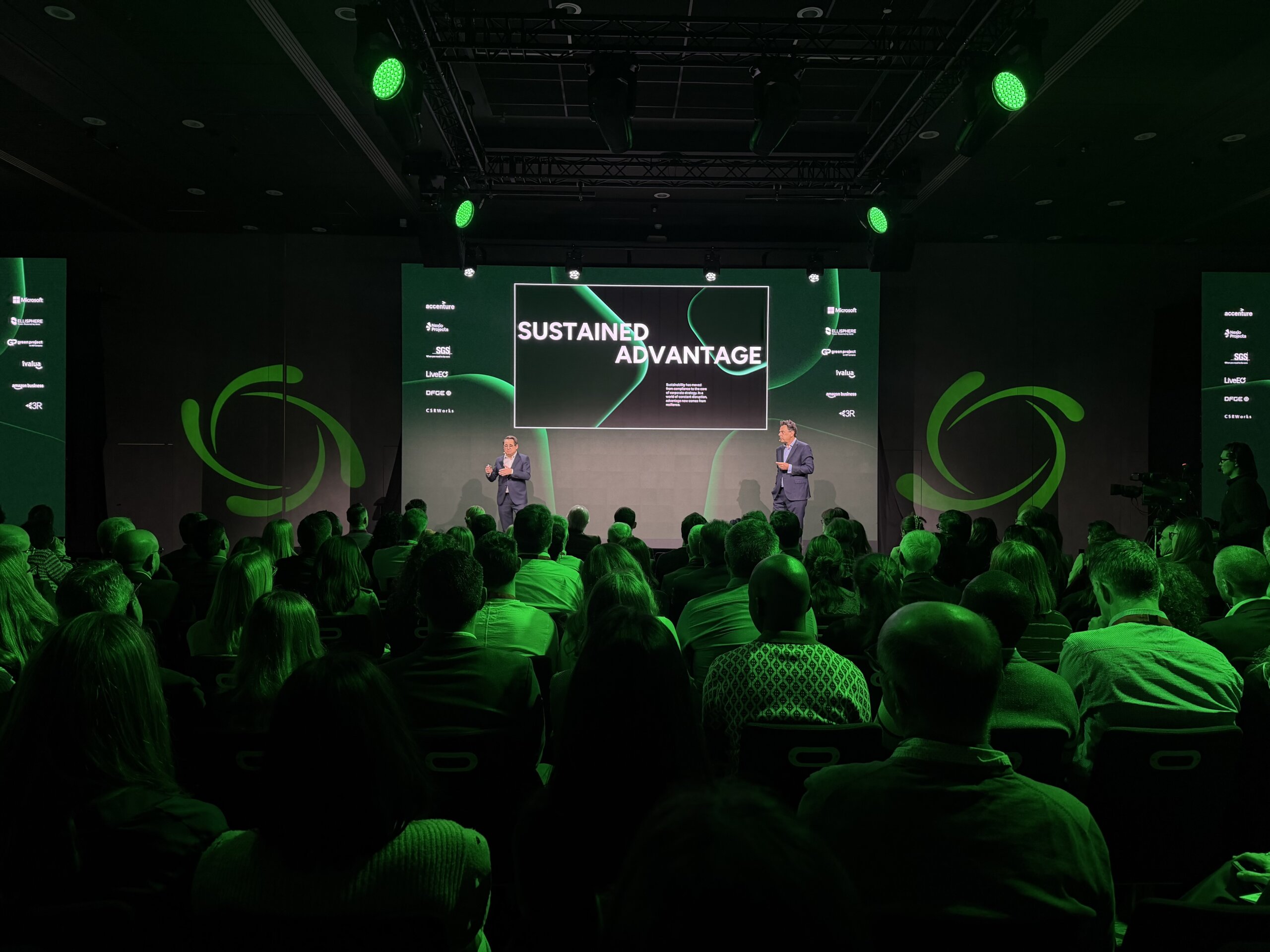
The paradigm shift catalyzed at Sustain 2026 is not merely incremental—it represents a foundational reengineering of how global enterprises conceive of value creation. With 827 in-person delegates convening in Paris and over 1,375 virtual participants spanning 62 countries—including procurement officers from Unilever’s Nairobi sourcing hub, ESG directors at Siemens’ Singapore regional HQ, and sustainability leads from Brazil’s JBS and India’s Tata Steel—the conference confirmed that sustainability has ceased to be a standalone function or CSR add-on. Instead, it is now being codified into the enterprise architecture itself: embedded in ERP logic, baked into supplier scorecards, reflected in executive compensation metrics, and integrated into capital allocation models. This structural integration reflects a maturation beyond reporting frameworks like GRI or CDP toward operationalized governance—where sustainability KPIs trigger automatic workflow escalations, budget reallocations, or contract renegotiations. For instance, Nestlé’s “Creating Shared Value” program now ties 20% of senior leadership bonuses to verified progress on deforestation-free palm oil sourcing, while Maersk’s Ocean Network Express has redesigned its carrier selection algorithm to weight carbon intensity alongside transit time and cost—demonstrating how sustainability ceases to be a trade-off and becomes a co-optimization variable.
This architectural evolution is accelerated by regulatory convergence across jurisdictions. The EU Corporate Sustainability Reporting Directive (CSRD), Japan’s revised Stewardship Code, and California’s Climate Corporate Data Accountability Act collectively impose granular, auditable disclosure requirements—not just on Tier 1 suppliers but deep into the Tier 3–4 ecosystem. As a result, procurement teams are no longer gatekeepers of compliance but architects of traceability infrastructure. At Sustain 2026, L’Oréal’s Global Procurement Director described deploying blockchain-enabled digital product passports for cosmetic ingredients sourced from Madagascar’s vanilla cooperatives—a system that simultaneously verifies fair labor practices, tracks carbon footprint per kilogram, and triggers microfinance disbursements upon certification milestones. Such examples illustrate how sustainability infrastructure must now support both external accountability and internal decision velocity. Crucially, this infrastructure demands interoperability: systems built on ISO 20400 principles must seamlessly exchange data with SAP Ariba, Coupa, and Microsoft Dynamics environments. Without standardized data schemas—such as those emerging from the GHG Protocol’s Scope 3 Calculation Guidance v3.0—integration remains fragmented, undermining the very resilience it seeks to build.
Moreover, the strategic imperative extends beyond risk mitigation to innovation acceleration. When sustainability criteria are engineered into R&D gating processes, they unlock new value streams. Philips’ “Circular Design Framework,” mandated across all new product development since 2023, requires engineers to specify material recyclability, disassembly time, and component reuse potential before prototype approval—resulting in 42% higher recovery rates for medical imaging equipment components and $187M in annual remanufacturing revenue. Similarly, Patagonia’s “Footprint Chronicles” platform, now integrated into its PLM system, enables designers to simulate the water savings of substituting conventional cotton with regenerative alternatives before fabric procurement—reducing time-to-market for sustainable SKUs by 37%. These cases underscore that treating sustainability as infrastructure does not constrain agility; rather, it creates feedback loops where environmental and social performance data directly informs product architecture, logistics routing, and inventory policy. As Annet Aris of INSEAD emphasized during her keynote, “The most resilient companies don’t just withstand shocks—they anticipate them through systems that convert sustainability intelligence into adaptive capacity.” This perspective reframes the supply chain not as a linear conduit but as a learning organism—continuously calibrated by real-world impact signals.
The Data Imperative: Transforming Raw Inputs into Decision-Grade Intelligence
At Sustain 2026, a sobering consensus emerged: most organizations possess abundant sustainability data yet suffer from profound intelligence poverty. While 89% of Fortune 500 companies collect supplier ESG disclosures, only 12% report using that data to inform sourcing decisions—a gap exposed in EcoVadis’ 2025 Global Supplier Sustainability Risk Report. The root cause lies not in data scarcity but in systemic fragmentation: emissions data resides in EHS platforms, labor compliance records in audit management systems, and raw material origin details in legacy ERP modules—all operating in silos with incompatible taxonomies. During the “Data Imperative” session, a panelist from Schneider Electric revealed that their pre-integration process required manual reconciliation of 17 different supplier sustainability datasets across 42 countries, consuming 2,400 analyst-hours annually—time that could have been redirected toward collaborative improvement initiatives. The conference therefore pivoted decisively from data collection to data orchestration: building unified data fabrics where supplier declarations, satellite-derived land-use analytics, financial credit scores, and real-time IoT sensor feeds converge into a single source of truth. This orchestration enables dynamic risk scoring—not static snapshots—where a drought alert in Chile’s Atacama region automatically recalibrates lithium supplier risk profiles for battery manufacturers within minutes.
AI-powered analytics emerged not as futuristic speculation but as operational reality. At BMW Group’s breakout session, attendees learned how their AI-driven “Sustainability Signal Engine” processes unstructured data from 12,000+ supplier reports, news articles, NGO assessments, and regulatory filings daily—using natural language processing to detect early warnings of labor practice concerns risks in Malaysian electronics subcontractors or water stress in Vietnamese textile clusters. Crucially, this engine doesn’t generate alerts in isolation; it injects prioritized recommendations directly into SAP S/4HANA procurement workflows—flagging high-risk POs for review, suggesting alternative Tier 2 suppliers with verified water stewardship certifications, and estimating the carbon delta of switching logistics providers. Such integration transforms sustainability intelligence from retrospective reporting into anticipatory governance. Similarly, Walmart’s Project Gigaton dashboard now feeds predictive analytics into its replenishment algorithms: when AI detects rising deforestation risk in Brazilian soy regions, it automatically adjusts order volumes for feed suppliers and triggers joint action plans with producers—demonstrating how decision-grade intelligence operates at transactional speed. The technical prerequisite? Interoperable APIs, clean master data, and human-in-the-loop validation protocols ensuring AI outputs align with corporate values and regulatory boundaries.
The transition to decision-grade intelligence also necessitates redefining data quality beyond accuracy and completeness. At Sustain 2026, the concept of “actionable provenance” gained traction—requiring not just *what* data says but *how it was generated*, *who validated it*, and *under what conditions*. For example, carbon intensity data derived from supplier self-declarations carries different weight than third-party verified measurements from certified labs or satellite-calibrated models. This hierarchy of evidence informs confidence thresholds within procurement systems: low-provenance data may trigger automated requests for verification, while high-provenance data activates automatic contract clauses (e.g., price adjustments for exceeding carbon budgets). The Danish energy company Ørsted exemplifies this rigor: their supplier sustainability portal requires tiered verification—Tier 1 suppliers submit ISO 14064-certified emissions data, Tier 2 partners use industry-standard calculation tools with mandatory documentation uploads, and Tier 3 entities contribute geolocated activity data validated against public satellite imagery. This multi-layered approach ensures that intelligence scales without sacrificing fidelity—turning the long tail of suppliers from a data liability into a strategic asset. As one panelist concluded, “We stopped asking ‘Do we have the data?’ and started asking ‘What decisions will this data enable—and prevent us from making poorly informed ones?’”
AI as Human-Centered Enabler: Scaling Judgment, Not Replacing It
The discourse around artificial intelligence at Sustain 2026 deliberately rejected techno-utopian narratives, instead anchoring AI in pragmatic, ethics-first implementation. Speakers consistently emphasized that AI’s highest-value role is augmenting human judgment—not supplanting it—particularly in contexts demanding contextual nuance, ethical calibration, and stakeholder empathy. Consider Unilever’s deployment of AI in its Sustainable Living Plan: rather than automating supplier sustainability assessments, their system identifies outliers requiring human investigation—flagging a Thai shrimp processor whose reported water usage dropped 60% year-over-year (triggering an on-site verification visit that uncovered inaccurate metering) or highlighting a Kenyan tea cooperative whose gender equity metrics improved despite declining wages (prompting dialogue about local wage-setting dynamics). In each case, AI functions as a sophisticated triage mechanism, allowing sustainability professionals to focus scarce bandwidth on complex, relationship-dependent interventions rather than manual data screening. This human-centered design philosophy recognizes that sustainability decisions involve trade-offs—between short-term cost pressures and long-term resilience, between local community needs and global climate goals—that require moral reasoning no algorithm can replicate.
Operationalizing this principle demands robust governance frameworks that embed ethical guardrails into AI architecture. During the “AI in Sustainable Procurement” session, representatives from the World Economic Forum’s AI Governance Alliance presented a maturity model for responsible AI adoption, emphasizing four non-negotiable pillars: transparency (documenting data sources and model limitations), accountability (assigning human owners for AI-driven decisions), fairness (auditing for bias in supplier risk scoring), and contestability (ensuring suppliers can challenge AI-generated assessments). Airbus’ implementation provides a concrete example: their AI-powered supplier risk engine includes “explanation layers” that translate algorithmic outputs into plain-language rationales (“This supplier’s climate risk score increased due to 3 consecutive years of flood-related production delays in Vietnam, as verified by satellite imagery and local insurance claims data”). Furthermore, every AI-recommended action—from contract renegotiation to de-listing—requires dual human sign-off: one from procurement leadership and another from the company’s Ethics & Sustainability Council. This dual-control mechanism prevents algorithmic determinism while leveraging AI’s capacity to process complexity beyond human cognitive limits—effectively creating a “judgment amplifier” rather than a decision substitute.
Perhaps most significantly, AI is enabling unprecedented scalability in supplier capacity building. Traditionally, sustainability training programs reached only top-tier suppliers due to resource constraints. Now, AI-powered platforms deliver personalized, multilingual upskilling at scale. Coca-Cola’s “Sustainability Coach” chatbot—deployed across 1,200 bottling partners in 200+ countries—uses generative AI to diagnose specific gaps (e.g., “Your wastewater treatment logs show inconsistent pH monitoring”) and deliver context-aware guidance (e.g., “Here’s a step-by-step guide in Swahili for calibrating your pH meter, plus links to low-cost local service providers”). Crucially, the system learns from interactions: when multiple Nigerian beverage producers ask about solar-powered refrigeration solutions, the AI surfaces localized financing options and connects them with vetted installers—transforming isolated queries into collective problem-solving networks. This capability shifts the AI value proposition from efficiency gains to ecosystem empowerment, recognizing that sustainable supply chains thrive not through top-down enforcement but through distributed capability. As one supplier development manager observed, “AI lets us be present everywhere at once—not as auditors, but as coaches.” In this light, AI becomes less a tool for control and more an instrument for cultivating shared responsibility across increasingly complex, globally dispersed networks.
Supplier Collaboration as Value Co-Creation: Beyond Audits to Partnership Ecosystems
The most resonant refrain at Sustain 2026 was unequivocal: adversarial supplier relationships are obsolete. Traditional audit-centric models—characterized by periodic, checklist-driven inspections followed by binary pass/fail outcomes—have proven inadequate for driving systemic change, particularly among small and medium-sized enterprises (SMEs) that constitute 85% of global supply chains. As highlighted in the “Beyond Audits” session, such approaches often incentivize superficial compliance over genuine transformation, generating distrust and obscuring root causes. The conference showcased a decisive pivot toward collaborative ecosystems where buyers and suppliers co-invest in shared sustainability outcomes. IKEA’s “IWAY Improvement Partnerships” exemplify this shift: rather than terminating contracts with Turkish textile suppliers failing water stewardship benchmarks, IKEA committed €24M to co-fund closed-loop dyeing facilities and provided technical assistance to help 42 SMEs achieve ZDHC (Zero Discharge of Hazardous Chemicals) Level 3 certification. Within three years, participating suppliers reduced freshwater consumption by 78% and chemical usage by 63%, while IKEA secured preferential pricing and guaranteed order volumes—demonstrating how collaboration converts sustainability investments into mutual economic advantage.
This partnership paradigm extends deeply into financial engineering. At Sustain 2026, HSBC and BNP Paribas unveiled new sustainability-linked supply chain finance (SCF) programs where interest rates decrease incrementally as suppliers achieve pre-agreed ESG milestones—verified through blockchain-secured data sharing. In one pilot involving 87 automotive Tier 2 suppliers in Eastern Europe, participating firms accessed working capital at rates 1.8% below market average after implementing ISO 50001 energy management systems, with funds specifically earmarked for LED lighting retrofits and heat recovery installations. Critically, these programs avoid “greenwashing traps” by requiring third-party verification and linking incentives to outcome-based metrics (e.g., kWh saved per unit produced) rather than activity-based proxies (e.g., number of training sessions conducted). Similarly, Danone’s “Sustainable Sourcing Fund” provides low-interest loans to dairy farmers in France and Argentina for regenerative agriculture transitions, with repayment terms tied to verified improvements in soil organic carbon and biodiversity indices. These models recognize that financial levers, when aligned with ecological and social outcomes, become powerful catalysts for systemic change—transforming sustainability from a cost center into a value accelerator across the entire value chain.
Technology-enabled collaboration further deepens these partnerships. The conference featured compelling demonstrations of digital collaboration platforms that transcend transactional interfaces to foster knowledge exchange and collective problem-solving. For instance, the Dutch food group FrieslandCampina’s “Co-Creation Hub” connects 18,000 dairy farmers across 12 countries through a secure portal where they share anonymized data on feed efficiency, methane reduction techniques, and pasture management innovations—generating collective insights that inform both farm-level practice improvements and corporate R&D priorities. Likewise, Apple’s Supplier Clean Energy Program uses a shared dashboard where 250+ manufacturing partners track renewable energy procurement, collaborate on joint power purchase agreements, and access technical support for onsite solar installations—resulting in 12.7 GW of clean energy capacity added across the supply chain since 2018. These platforms succeed because they prioritize utility over surveillance: farmers aren’t monitored but empowered, suppliers aren’t rated but resourced. As one SME supplier from Vietnam noted during a panel, “When my buyer helps me reduce energy costs by 30%, they’re not checking my compliance—they’re investing in my competitiveness.” This reframing of collaboration as mutual capability-building represents the most profound operational shift emerging from Sustain 2026: sustainability as a relational technology, not a regulatory burden.
The Financial Architecture of Resilience: Quantifying the ROI of Responsible Growth
Sustain 2026 marked a watershed moment in sustainability economics: the business case shifted decisively from aspirational justification to quantifiable financial engineering. Presenters moved beyond generic claims about “brand value” or “risk reduction” to present rigorous, audited ROI calculations demonstrating how sustainable supply chains directly enhance profitability, liquidity, and valuation. A landmark analysis by BlackRock’s Sustainable Investing Group revealed that companies with top-quartile supply chain sustainability performance delivered 3.2% higher median EBITDA margins over five years—driven primarily by lower input cost volatility (e.g., stable prices for conflict-free minerals), reduced regulatory penalties (averaging $4.7M per violation avoided), and premium pricing capture (7.8% average premium for products with verified circularity credentials). Crucially, these advantages compound: Schneider Electric’s study showed that suppliers achieving EcoVadis Platinum ratings experienced 22% lower supply disruption frequency and 15% faster onboarding times—translating directly into working capital optimization and reduced expedited freight costs. This financial granularity transforms sustainability from a cost center narrative into a core driver of enterprise value, compelling CFOs and procurement leaders to treat ESG investments with the same analytical rigor applied to capital expenditure decisions.
Financing access emerged as perhaps the most potent financial lever discussed. Multiple speakers cited empirical evidence that sustainability performance now materially influences credit terms. According to Moody’s 2025 ESG Integration Report, companies with strong supply chain transparency received investment-grade credit ratings 41% more frequently than peers, while banks like Santander now offer sustainability-linked revolving credit facilities where margin spreads tighten as suppliers achieve pre-defined Scope 3 emissions targets. The conference featured a striking case study from South Africa’s Naspers: after implementing a comprehensive supplier sustainability program covering 93% of procurement spend, the conglomerate secured a €1.2B syndicated loan at 0.45% below benchmark rates—funds explicitly allocated to co-invest with suppliers in renewable energy microgrids across its African logistics network. This trend reflects a broader capital markets evolution: ESG-linked bonds now constitute 28% of global green bond issuance, with investors demanding verifiable supply chain impact metrics as conditionality. As one institutional investor stated bluntly, “We don’t fund sustainability—we fund resilience. And today, you cannot separate the two.” This convergence means procurement leaders must speak the language of finance: translating carbon reduction targets into weighted average cost of capital (WACC) improvements, converting diversity metrics into supplier innovation yield rates, and framing water stewardship as insurance against operational continuity risk.
Finally, the conference illuminated how sustainability ROI manifests in customer-facing value creation. Consumer goods giant Procter & Gamble presented data showing that products launched with certified sustainable attributes achieved 2.3x faster market penetration and 37% higher repeat purchase rates—attributable not to ethical appeals but to demonstrable functional benefits: concentrated detergents with 50% less plastic packaging delivered superior cleaning performance while reducing shipping weight. Similarly, Bosch’s “Green Product Line” (certified under TÜV Rheinland’s sustainability standard) captured 18% market share in European power tools within 18 months—not through premium pricing, but by highlighting extended battery life and modular repairability that reduced total cost of ownership by 29%. These cases dismantle the false dichotomy between sustainability and competitiveness, revealing instead a virtuous cycle where responsible practices drive innovation, enhance customer loyalty, and create defensible market positions. As Richard Gardiner of ShareAction concluded in his closing remarks, “Resilience is the new sustainability—but resilience isn’t abstract. It’s measured in days of inventory, cost of capital, customer retention rates, and employee productivity. When sustainability delivers those metrics, it stops being a department and becomes the operating system.” This financial grounding ensures that the vision articulated at Sustain 2026 isn’t aspirational—it’s executable, measurable, and essential for survival in volatile global markets.
“Resilience is the new sustainability—but resilience isn’t abstract. It’s measured in days of inventory, cost of capital, customer retention rates, and employee productivity.” — Richard Gardiner, ShareAction
Source: EcoVadis
This article was AI-assisted and reviewed by our editorial team.