Immediate Disruption: Cape Rerouting Adds 10–14 Days to Shipping Cycles
South African businesses are facing an immediate supply-chain shock following military strikes on Iran and escalating instability in the Gulf region, according to the Chartered Institute of Procurement & Supply (CIPS). Paul Vos, Regional Managing Director of CIPS Southern Africa, issued an urgent advisory on March 5, 2026, warning that procurement leaders must act within days — not weeks — as the operational consequences are already materializing in real time. Shipping diversions around the Cape of Good Hope, war-risk insurance premiums, and fuel surcharges have begun filtering through to Southern African importers and exporters, marking a structural shift in the region’s trade logistics landscape.
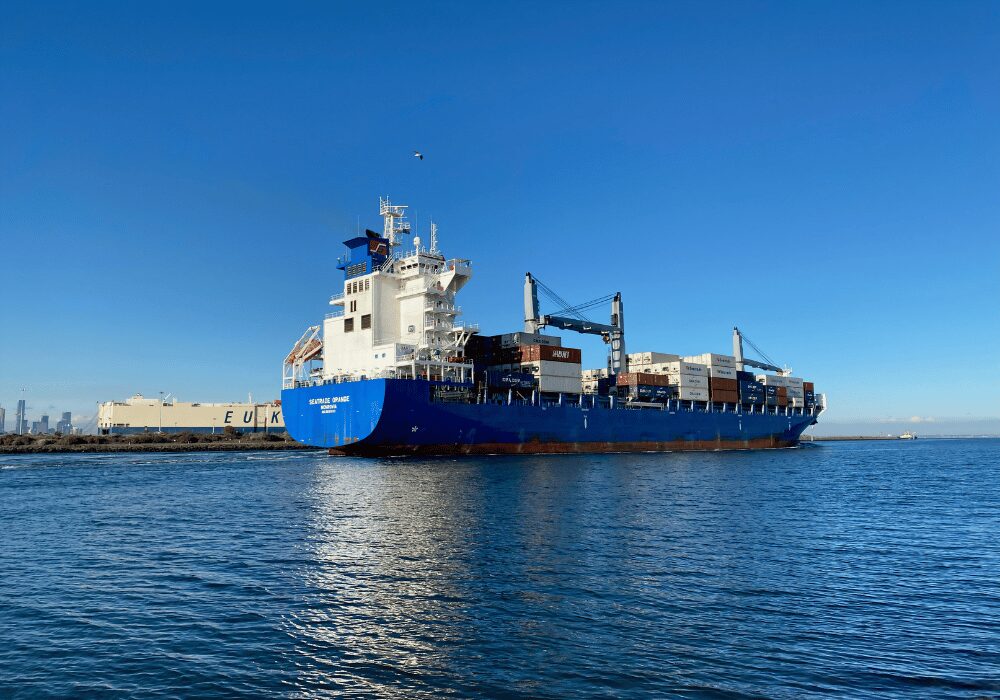
The most immediate physical consequence is the rerouting of container vessels away from the Suez Canal and Red Sea. According to CIPS, this rerouting is adding 10–14 days to global shipping cycles, disrupting production schedules and seasonal demand planning across retail, automotive, electronics, chemicals, and FMCG sectors. For firms running just-in-time (JIT) inventory models — where component replenishment is precisely timed to production windows — an extra two weeks in transit is not a logistical footnote but a fundamental disruption to manufacturing cadence. Seasonal buyers are equally exposed: shipments for Q2 product launches or peak-season replenishment may miss critical market windows entirely, creating downstream revenue impact that compounds over weeks.
The disruption is compounded by the geography of Southern Africa’s import dependence. South Africa serves as the primary gateway for containerized goods entering the broader region, making its port infrastructure the first point of impact for any maritime corridor disruption. Reliance on Middle Eastern or European supply nodes — particularly where single-route logistics are involved — now represents what CIPS characterizes as a strategic vulnerability. Businesses that depend on concentrated supplier bases along the Gulf corridor face a double exposure: extended lead times that disrupt operations, and escalating costs that compress margins. The combination is particularly acute for sectors with narrow operational windows, such as seasonal retail, time-sensitive electronics launches, and automotive assembly lines running lean inventory buffers.
Financial Transmission: Cost Shocks Hit Importers Within 1–2 Billing Cycles
The financial consequences of Gulf instability are transmitting faster than many procurement teams anticipated. CIPS warns that war-risk premiums, fuel surcharges, and container rate hikes are being imposed rapidly by carriers — and crucially, freight is invoiced at the point of sailing rather than arrival. This billing convention means that cost increases are locked in the moment a vessel departs port, with South African importers absorbing the full impact within one to two billing cycles. For companies operating on monthly accounting periods, this translates to elevated cost exposure appearing in April and May 2026 financial statements — well before the goods arrive or inventory is depleted. The speed of cost transmission eliminates the typical buffer period that firms rely on to adjust pricing, renegotiate supplier terms, or secure alternative financing.
Vos is explicit about the timeline and its implications: “You are likely to see cost increases within one to two billing cycles. Exporters reliant on time-sensitive outbound shipments will face similar pressure.” The categories most exposed span the backbone of South Africa’s consumer and industrial economy. Retail importers face higher landed costs on consumer goods; automotive manufacturers confront elevated prices for imported components; electronics distributors see margin compression on imported devices; chemical and FMCG companies absorb surcharges on raw materials and finished goods alike. The combined effect of extended lead times and elevated costs creates a dual squeeze — less inventory arriving later, at significantly higher cost — a combination that stresses both income statements and working capital positions simultaneously.
CIPS advises finance and procurement leaders to take immediate structural action on contract terms. This includes building surcharge pass-through mechanisms into supplier agreements, shifting from fixed-price contracts to indexed pricing linked to publicly available freight benchmarks, and reviewing war-risk exclusion clauses to negotiate interim insurance riders. Critically, executive committees should pre-approve escalation bands of 5–20% for critical procurement categories — enabling rapid commercial responses without sacrificing governance oversight. Without pre-authorized escalation authority, procurement teams risk paralysis: waiting for sign-off on a freight surcharge could mean missing a vessel booking, creating cascading delays that multiply cost and disruption. As Vos warns: “Delayed decisions in this environment translate directly into margin erosion.” Speed of governance is now a competitive variable.
“This is not a distant geopolitical issue. It is already impacting freight routes, pricing structures, and working capital cycles in Southern Africa. Businesses that rely on just-in-time models or concentrated supplier bases are particularly exposed.” — Paul Vos, Regional Managing Director, CIPS Southern Africa
Resilience Framework: The 30% Single Corridor Limit and Multi-Lane Strategy
CIPS introduces a concrete and actionable resilience metric at the core of its advisory: no more than 30% exposure to a single high-risk corridor. This threshold represents the boundary between manageable concentration risk and structural fragility. The 30% cap applies to the aggregate of sourcing concentration, logistics routing, and insurance coverage tied to any single geographic risk zone — whether defined by maritime chokepoints such as the Strait of Hormuz, airspace restrictions, or political jurisdiction. Firms currently routing the majority of their critical imports through the Red Sea or Gulf corridor, without viable alternative lanes in place, are operating beyond this threshold and must take corrective action before the disruption deepens.
The second component of CIPS’s three-step resilience check requires maintaining at least two viable trade lanes for critical product categories. This redundancy principle reflects a fundamental insight: supply chain resilience is not about eliminating exposure to risk, but about preventing any single point of failure from cascading into a systemic crisis. For Southern African importers, alternative routing options may include Cape Town transhipment via alternate feeder services, direct charters for high-value commodities, or air freight for time-critical components — each with its own cost and lead-time tradeoffs that must be evaluated against the cost of disruption. The third step requires stress-testing the financial impact of freight costs doubling with lead times extending by 2–3 weeks, ensuring that leadership has modeled worst-case exposure before it materializes in operating results.
Activating secondary suppliers in Africa or other stable regions is a key short-term mitigation strategy recommended by CIPS. This includes pulling forward inbound orders where possible, increasing safety stock on critical SKUs even temporarily, and confirming that alternative sourcing relationships — often dormant during stable periods — can be operationalized quickly under crisis conditions. For firms heavily reliant on suppliers concentrated in Europe or the Middle East, this means urgently mapping backup vendors in politically stable markets, confirming their capacity and quality standards, and establishing framework agreements that can be activated rapidly. The goal is not to abandon established supplier relationships but to create operational buffers that prevent single-source dependence from becoming a critical liability during prolonged or recurring disruptions.
Stress Test Protocol: 100% Rate Hike, 14-Day Extension, and Three Hard Trigger Thresholds
CIPS prescribes three specific stress simulations that Southern African firms must conduct without delay. The first scenario models a 100% container-rate increase sustained for 60 days — a level that quantifies the upper bound of carrier surcharge exposure under sustained hostilities. The second models a 14-day lead-time extension on all Europe and Middle East routes, capturing the full impact of Cape rerouting and port congestion on inbound supply chains. The third simulates an immediate shutdown of a top-risk supplier with less than 30 days’ recovery window, testing whether alternative sourcing can be activated quickly enough to prevent stockouts or production interruptions. Each simulation must be run against current inventory positions, open purchase orders, and cash flow projections to produce actionable insight rather than abstract risk scores.
These simulations are anchored to three hard trigger thresholds that define the boundary between manageable stress and operational crisis. The first is a 10% stockout risk — the point at which inventory depletion begins to threaten customer service levels, revenue, and contractual commitments. The second is a 20% cost-to-serve increase — the threshold at which margin erosion becomes material to financial performance and requires executive intervention. The third is more than 7 days of production interruption — the point at which manufacturing downtime cascades into customer contract violations, SLA breaches, and long-term commercial relationship damage. CIPS mandates that when any of these thresholds is breached, organizations must escalate to executive leadership immediately and activate pre-approved crisis response protocols — not wait for the next scheduled review cycle.
The practical purpose of these simulations is to force organizations to confront the financial and operational implications of Gulf disruption in a structured setting before they materialize in real operations. CIPS urges every business to implement three high-impact measures within the next 30 days: increase buffer inventory and confirm alternative suppliers; secure short-term freight capacity guarantees; and establish a daily crisis governance cell with rapid approval authority. Vos is direct about the stakes: “Resilience is no longer theoretical. This crisis will separate organisations that treat procurement as administrative from those that treat it as strategic risk management.” The governance cell — comprising procurement, finance, logistics, and operations leaders with delegated authority — is the organizational mechanism that translates resilience strategy into real-time operational decision-making.
SME Vulnerability and Coordinated Intervention
Small and medium-sized enterprises (SMEs) face disproportionate pressure in the current environment due to limited cash buffers, weaker contractual leverage with logistics providers, and reduced capacity to absorb sudden cost increases. CIPS identifies SMEs as requiring special attention from both the private sector and government — not because they are inherently less capable, but because the same cost shocks that large corporations can absorb across diversified balance sheets can be existential for firms operating on thin margins and constrained credit lines. The billing cycle dynamics described above are particularly acute for SMEs: cost increases arriving within 30–60 days, combined with receivables cycles that may not clear for 60–90 days, create acute working capital gaps that can force operational curtailment or default.
CIPS issues a direct call to action to large corporates: shorten SME payment cycles to 15–20 days. This is one of the most immediately actionable measures available to protect supply chain integrity during the crisis. When anchor buyers accelerate payments, SME suppliers gain the liquidity needed to absorb cost increases, secure alternative supply arrangements, and maintain operational continuity — preventing supply chain failures that would ultimately cascade back to the larger firms that depend on them. CIPS also calls on industry bodies to negotiate pooled freight or insurance solutions, enabling SMEs to access volume-based pricing and collective risk coverage that would be economically unviable for individual firms to secure independently. Government is urged to consider temporary rebate mechanisms for high-impact sectors as a bridge measure while supply chains stabilize.
For SMEs themselves, CIPS identifies the highest cost-benefit actions as pooled buying arrangements with peer firms, shared logistics capacity to reduce unit freight costs, and simplified 30-day rolling supply planning — replacing complex multi-month forecasting with practical, near-term inventory management focused on maintaining continuity across the disruption window. CIPS further advises all businesses, regardless of size, to diversify currency exposure to protect against rand volatility driven by oil price spikes and imported inflation — and to renegotiate payment terms with both suppliers and customers to align receivables and payables with the new cost reality imposed by Gulf hostilities. These measures represent the minimum viable resilience posture for navigating the current shock.
Strategic Takeaway: Building Procurement Resilience for a Volatile Era
The CIPS March 2026 advisory arrives at a defining moment for Southern African supply chain governance. By quantifying risk thresholds — the 30% corridor exposure limit, the 10% stockout trigger, the 20% cost-to-serve threshold, the 7-day production stoppage alarm — CIPS establishes a professional benchmark against which every procurement organization can now measure its own preparedness. These are not aspirational targets but minimum viable resilience standards, derived from stress testing against the actual conditions emerging in the Gulf in early 2026. The value of quantified thresholds is that they convert ambiguous risk awareness into specific operational decisions: when a threshold is crossed, the action is predetermined, governance authority is pre-delegated, and response time is measured in hours rather than weeks.
The advisory also highlights a broader structural challenge: the gap between procurement’s strategic importance and its organizational standing in most Southern African firms. Supply chains connecting South Africa to the global economy pass through multiple geopolitical chokepoints — the Strait of Hormuz, the Suez Canal, the Strait of Malacca — all of which are subject to recurring disruptions. Each episode since 2021 has revealed the same vulnerabilities: concentration in high-risk corridors, insufficient safety stock relative to actual lead time variability, and governance structures that prioritize efficiency over resilience. The CIPS framework addresses each of these systematically: the 30% corridor cap limits concentration, the buffer stock and alternative supplier requirements address inventory strategy, and the daily crisis governance cell addresses organizational response capability.
The urgency in Paul Vos’s message is calibrated to the speed of cost transmission. With surcharges hitting within 1–2 billing cycles and lead times already extended by 10–14 days, every week of delayed action compounds the financial and operational exposure. Firms that implement the three high-impact measures — buffer inventory, freight capacity guarantees, and crisis governance — before April 2026 will be structurally better positioned to absorb ongoing disruption. Those that treat this advisory as background noise will encounter the same vulnerabilities again, at greater cost and with less time to respond. As Vos concludes: “Resilience is no longer theoretical.” In Southern Africa’s supply chain context, the 100% rate hike stress test and the 15–20 day payment cycle commitment are the operational expressions of that reality.
Source: infrastructurenews.co.za
This article was AI-assisted and reviewed by our editorial team.