Explore

  • Trending
  • Latest
  • Tools
  • Browse
  • AI Assistant
  • Subscription Feed

Logistics

  • Ocean
  • Air Cargo
  • Road & Rail
  • Warehousing
  • Last Mile

Regions

  • Southeast Asia
  • South Asia
  • Central Asia
  • Japan & Korea
  • Middle East
  • Europe
  • Russia
  • Africa
  • North America
  • Latin America
  • Australia
SCI.AI
  • Supply Chain
    • Strategy & Planning
    • Logistics & Transport
    • Manufacturing
    • Inventory & Fulfillment
  • Procurement
    • Strategic Sourcing
    • Supplier Management
    • Supply Chain Finance
  • Technology
    • AI & Automation
    • Robotics
    • Digital Platforms
  • Risk & Resilience
  • Sustainability
  • Research
  • Expert Columns
  • English
    • Chinese
    • English
No Result
View All Result
  • Login
  • Register
SCI.AI
No Result
View All Result
Home Risk & Resilience Disruptions

Samsung Strike Threatens Chip Supply Chain Trust: 58.1% Night Shift Drop

2026/04/28
in Disruptions, Risk & Resilience
0 0
Samsung Strike Threatens Chip Supply Chain Trust: 58.1% Night Shift Drop

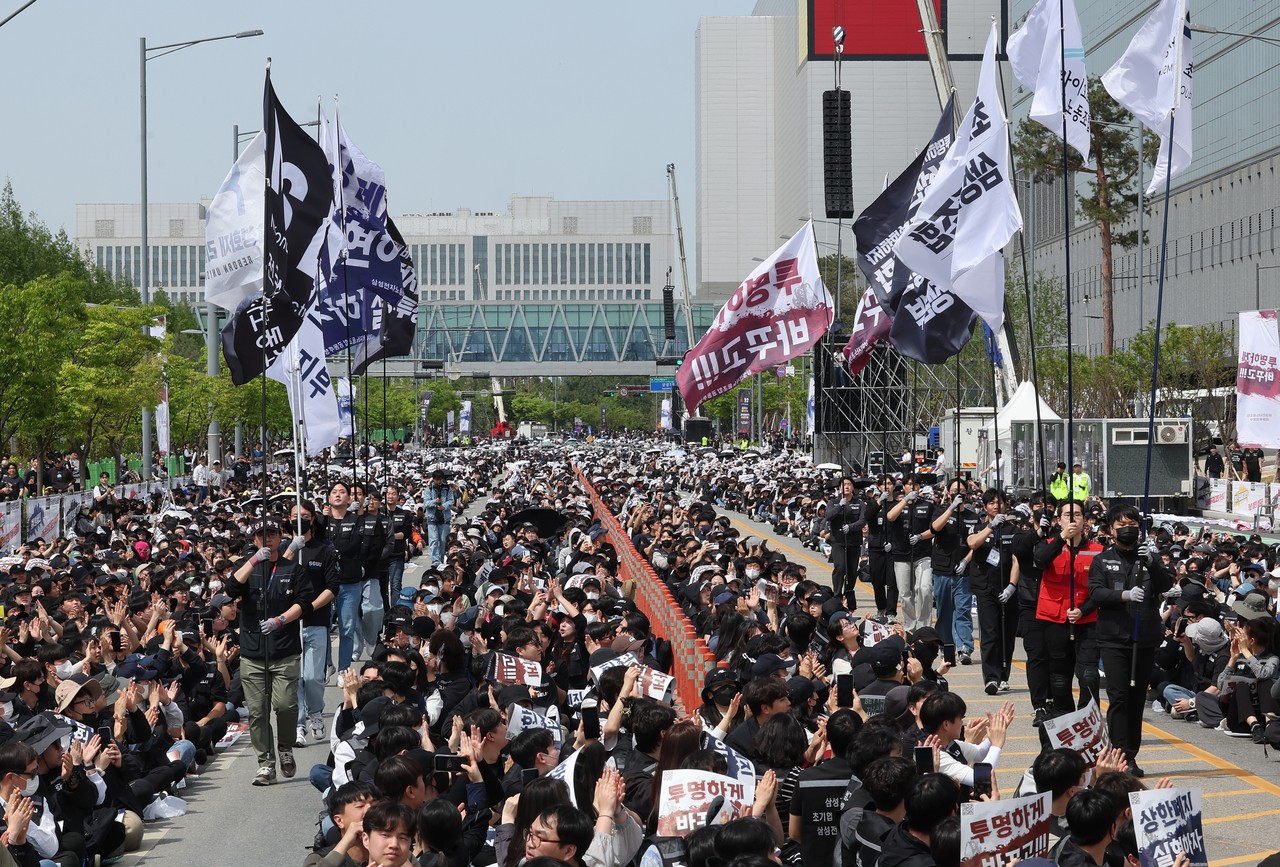
According to www.koreaherald.com, a planned general strike by Samsung Electronics’ labor unions — set for May 21 to June 7, 2026 — poses acute risks to global semiconductor supply chain reliability, with production at the Pyeongtaek chip complex already disrupted during the night shift following a rally of approximately 40,000 union members.

Immediate Production Impact

During the 10 p.m. to 6 a.m. shift, production performance — referred to by the union as “moving” — fell 18.4 percent at memory fabs and a stark 58.1 percent at foundry fabs, according to the joint labor action committee comprising the Samsung Electronics Labor Union, the National Samsung Electronics Union, and Samsung Electronics Labor Union Donghaeng.

Economic and Strategic Risks

University of Seoul economics professor Song Heon-jae, speaking at a seminar hosted by the Ahnmin Policy Forum, warned that a plant shutdown could cost Samsung tens of billions of won per minute — roughly 1 trillion won ($677 million) per day. A prolonged strike could reduce chip operating profit by up to 10 trillion won.

The deeper concern, he emphasized, lies beyond short-term financials:

“Global big tech clients could begin looking at alternative suppliers such as TSMC as part of efforts to spread risk. In the semiconductor industry, where process verification takes enormous time and money, customers who leave are difficult to win back.” — Song Heon-jae, Professor of Economics, University of Seoul

He identified several non-immediate but consequential risks: erosion of customer trust, market share losses as clients absorb switching costs, missed opportunities in the AI chip race, departure of key talent, and a deepening “Korea discount” — a term reflecting investor skepticism toward Korean corporate governance and labor stability.

Union Demands and Strike Logistics

The unions are demanding three core changes: scrapping the cap on performance-based bonuses (currently limited to 50 percent of annual salary), greater transparency in bonus calculation methodology, and a written commitment to allocate 15 percent of operating profit to the bonus pool.

The walkout is scheduled to begin with a gathering near Samsung Electronics Chairman Lee Jae-yong’s residence in Yongsan-gu, Seoul. The Samsung Electronics Labor Union filed a rally notice with Yongsan Police Station for an event at around 1 p.m. on May 21 involving about 50 participants; a union official clarified the event is likely to resemble a press briefing rather than a full-scale protest, though turnout remains fluid.

Broader Industry Context

This would be Samsung Electronics’ second general strike since its founding in 1969 — the first occurred in July 2024 and lasted 25 days. At a time when Nvidia, TSMC, and Intel are intensifying competition in AI-optimized chips, Song stressed that “semiconductor technology can lose competitiveness after falling behind by just one or two years.”

For supply chain professionals, this incident underscores how labor actions at single-tier suppliers — especially those with concentrated, highly specialized manufacturing capacity like Samsung’s advanced logic and memory fabs — can rapidly propagate upstream and downstream. Unlike commodity components, semiconductor process nodes require extensive qualification cycles; even brief disruptions may trigger multi-quarter requalification timelines for customers like Advanced Micro Devices and Nvidia, both of which prioritize supply stability above all else, according to the source.

Source: www.koreaherald.com

Compiled from international media by the SCI.AI editorial team.

More on This Topic

  • Philadelphia cargo theft ring steals $1.5M, including $230K in dimes (Jun 26, 2026)
  • Trade Disruption Halts Sustainability Progress in Apparel Sourcing (Jun 26, 2026)
  • US capital rules could raise SCF costs, industry warns (Jun 26, 2026)
  • AmeriLux acquires 68-unit carrier; ANDY, Imperative expand cross-border capacity (Jun 26, 2026)
  • Wio Bank shifts SCF focus to ecosystem resilience amid Strait of Hormuz disruption (Jun 25, 2026)
ShareTweet

Related Posts

Philadelphia cargo theft ring steals $1.5M, including $230K in dimes
AI & Automation

Philadelphia cargo theft ring steals $1.5M, including $230K in dimes

June 26, 2026
1
Trade Disruption Halts Sustainability Progress in Apparel Sourcing
Geopolitics

Trade Disruption Halts Sustainability Progress in Apparel Sourcing

June 26, 2026
0
US capital rules could raise SCF costs, industry warns
Geopolitics

US capital rules could raise SCF costs, industry warns

June 26, 2026
1
AmeriLux acquires 68-unit carrier; ANDY, Imperative expand cross-border capacity
Disruptions

AmeriLux acquires 68-unit carrier; ANDY, Imperative expand cross-border capacity

June 26, 2026
1
Wio Bank shifts SCF focus to ecosystem resilience amid Strait of Hormuz disruption
Geopolitics

Wio Bank shifts SCF focus to ecosystem resilience amid Strait of Hormuz disruption

June 25, 2026
6
Dark Fleet Grows to 12% of Global Tankers Amid Sanctions
Geopolitics

Dark Fleet Grows to 12% of Global Tankers Amid Sanctions

June 25, 2026
5

Leave a Reply Cancel reply

Your email address will not be published. Required fields are marked *

Recommended

Africa Supply Chain Boom: 50%+ Intra-African Trade Growth Expected

Africa Supply Chain Boom: 50%+ Intra-African Trade Growth Expected

24 Views
April 28, 2026
日本的亚马逊配送司机是否到了崩溃的边缘? – Unseen Japan

Amazon Japan Delivery Drivers Push Back on Workload

44 Views
March 22, 2026

Africa’s Supply Chain Crisis: 3–14-Day Parts Delays, Engine MRO Gap

30 Views
April 12, 2026
Auto tariffs push U.S. localization, robotics adoption

Auto tariffs push U.S. localization, robotics adoption

19 Views
May 24, 2026
Show More

SCI.AI

Global Supply Chain Intelligence. Delivering real-time news, analysis, and insights for supply chain professionals worldwide.

Categories

  • Supply Chain Management
  • Procurement
  • Technology


  • Risk & Resilience
  • Sustainability
  • Research

© 2026 SCI.AI. All rights reserved.

Powered by SCI.AI Intelligence Platform

Welcome Back!

Sign In with Facebook
Sign In with Google
Sign In with Linked In
OR

Login to your account below

Forgotten Password? Sign Up

Create New Account!

Sign Up with Facebook
Sign Up with Google
Sign Up with Linked In
OR

Fill the forms below to register

All fields are required. Log In

Retrieve your password

Please enter your username or email address to reset your password.

Log In

Scan to share via WeChat

Open WeChat and scan the QR code to share

QR Code

Add New Playlist

No Result
View All Result
  • Supply Chain
    • Strategy & Planning
    • Logistics & Transport
    • Manufacturing
    • Inventory & Fulfillment
  • Procurement
    • Strategic Sourcing
    • Supplier Management
    • Supply Chain Finance
  • Technology
    • AI & Automation
    • Robotics
    • Digital Platforms
  • Risk & Resilience
  • Sustainability
  • Research
  • Expert Columns
  • English
    • Chinese
    • English
  • Login
  • Sign Up

© 2026 SCI.AI