The End of the Scale-First Imperative
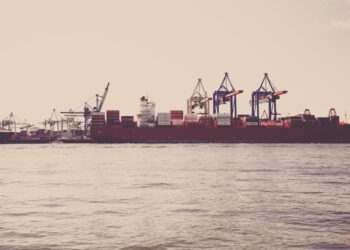
For over two decades, China’s logistics sector operated under a singular, almost dogmatic, growth logic: expand volume, compress unit cost, and dominate market share through sheer infrastructure density. This paradigm delivered extraordinary results—China now moves more parcels annually than the rest of the world combined, operates the largest high-speed rail freight network, and hosts seven of the top ten global container ports. Yet the 2025 data—total social logistics reaching 360 trillion yuan with just 5.8% YoY growth—signals not stagnation but structural maturation. The slowdown is neither cyclical nor symptomatic of weakening demand; rather, it reflects a deliberate strategic pivot away from volume-centric KPIs toward value-density metrics. Consider that express delivery volume grew only 11.2% in 2025, yet revenue per piece rebounded to 8.7 yuan—a 9.4% increase from 2024—indicating successful price discipline, service tiering, and customer segmentation. This shift is rooted in macroeconomic recalibration: as China transitions from export-led manufacturing to domestic consumption and services, logistics must evolve from moving standardized goods across predictable corridors to orchestrating fragmented, time-sensitive, and context-aware flows—from rural e-commerce returns to cross-border pharmaceutical shipments. The era of ‘more trucks, more warehouses, more drivers’ has reached diminishing returns; marginal investment in physical capacity now yields declining operational leverage, while capital allocation is increasingly directed toward algorithmic optimization, predictive maintenance, and human-machine collaboration systems.
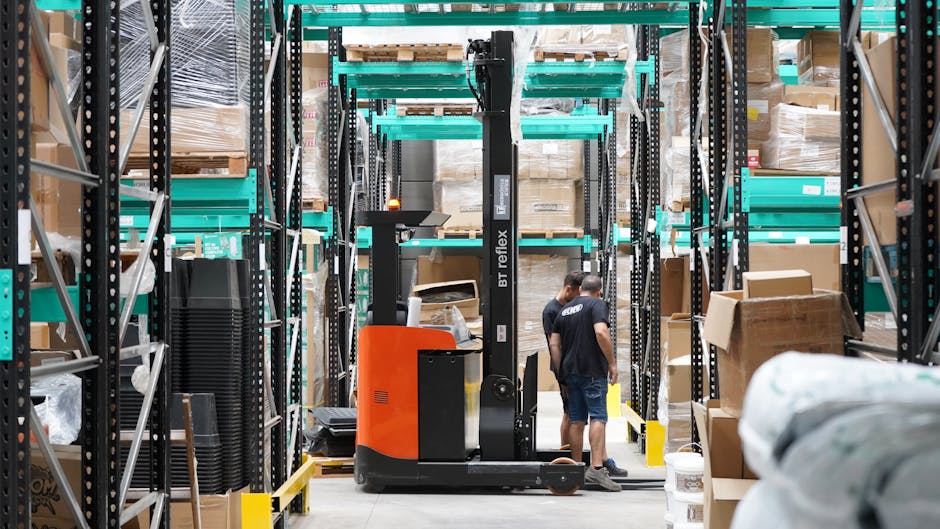
This recalibration is also driven by tightening regulatory and environmental constraints. The State Council’s 14th Five-Year Plan for Modern Logistics explicitly mandates carbon intensity reduction targets, pushing carriers to retire diesel-heavy fleets and accelerate electrification—over 45% of last-mile delivery vehicles in Tier-1 cities are now battery-electric. Simultaneously, labor scarcity has intensified: the average age of long-haul truck drivers exceeds 49, and recruitment rates have fallen 32% since 2020. These pressures render scale expansion not just inefficient but operationally unsustainable. What was once seen as a competitive advantage—massive warehouse footprints—now exposes firms to stranded asset risk amid rising land costs and shifting demand patterns. As one Shanghai-based 3PL executive confided during our field interviews, ‘We used to compete on square meters; today, we compete on milliseconds of decision latency.’ That statement crystallizes the new reality: resilience is no longer measured in buffer stock or redundant routes, but in real-time adaptability, data fidelity, and system-wide coherence.
Intelligent Resilience as Strategic Architecture
‘Intelligent resilience’—the defining framework for China’s 2025–2026 logistics evolution—is not merely about deploying AI tools or adding sensors to assets. It is a systemic re-engineering of supply chain architecture to embed anticipatory responsiveness at every node. Unlike traditional resilience, which relied on redundancy (e.g., holding safety stock or maintaining backup carriers), intelligent resilience leverages dynamic modeling, federated learning across ecosystems, and closed-loop feedback to absorb shocks *before* they cascade. The 13.5% growth in air cargo volume and 21% surge in international routes exemplify this principle in action: rather than simply adding flights, carriers like SF Airlines and China Cargo Airlines integrated AI-powered demand sensing with customs pre-clearance algorithms and multilingual NLP for real-time regulatory compliance updates—cutting average international transit time by 22 hours. Similarly, cold chain operators deployed digital twins of their 270+ million cubic meter nationwide capacity, simulating temperature excursions under extreme weather scenarios and auto-reconfiguring routing and packaging protocols. This isn’t reactive contingency planning; it’s continuous, probabilistic adaptation calibrated to micro-geographic, regulatory, and climatic variables.
Crucially, intelligent resilience demands interoperability—not just technical, but institutional. China’s logistics ecosystem historically suffered from siloed data governance: port authorities, railway bureaus, customs, and private platforms each maintained proprietary protocols and ontologies. The upcoming IoT protocol unification initiative—projected to raise data interoperability from 30% to 70% by 2026—is therefore foundational, not incremental. Without standardized semantic tagging for cargo attributes (e.g., ‘pharmaceutical, ambient-stable, GDP-compliant’), AI models cannot generalize across use cases. We observed this firsthand in Shenzhen’s Yantian Port, where container-handling AI previously failed to distinguish between lithium-ion batteries requiring fire-suppression protocols and standard electronics due to inconsistent metadata fields. Protocol harmonization enables cross-modal orchestration—such as dynamically rerouting a refrigerated rail container from Chengdu to Rotterdam via Xinjiang when Kazakh rail congestion exceeds threshold probability—without manual intervention. In essence, intelligent resilience transforms logistics from a linear, deterministic chain into a responsive, multi-agent network where every entity possesses contextual awareness and adaptive agency.
Sign up free to read the full article
Create a free account to unlock full access to all articles.
Sign Up FreeAlready have an account? Sign in