IMO Recommends Pricing Mechanisms to Reduce Ship GHG Emissions
Author: Stas Margaronis
The United Nations International Maritime Organization (IMO) is considering using a “pricing mechanism” to accelerate the transition of international shipping from greenhouse gas (GHG) emissions to zero emissions.
This proposal emerged from the Marine Environment Protection Committee (MEPC) meeting held at IMO headquarters in London from September 30 to October 4.
On October 10, IMO announced that the MEPC “made progress on developing mid-term measures to reduce GHG emissions to meet the goals set out in the 2023 IMO Strategy for Reducing Greenhouse Gas Emissions from Ships. These proposed regulations are scheduled to be adopted by the end of 2025 based on previously adopted short-term measures focused on improving ship energy efficiency. The mid-term measures under discussion include:
- Technical elements, such as global marine fuel standards that regulate a gradual reduction in the GHG intensity of marine fuels; and
- Economic elements, namely a maritime GHG emissions pricing mechanism.”
Maersk Proposes Incentives
On August 27, A.P. Moller-Maersk CEO Vincent Clerc urged the International Maritime Organization (IMO) to take measures to incentivize shipping companies to achieve net-zero carbon emissions for their vessels.
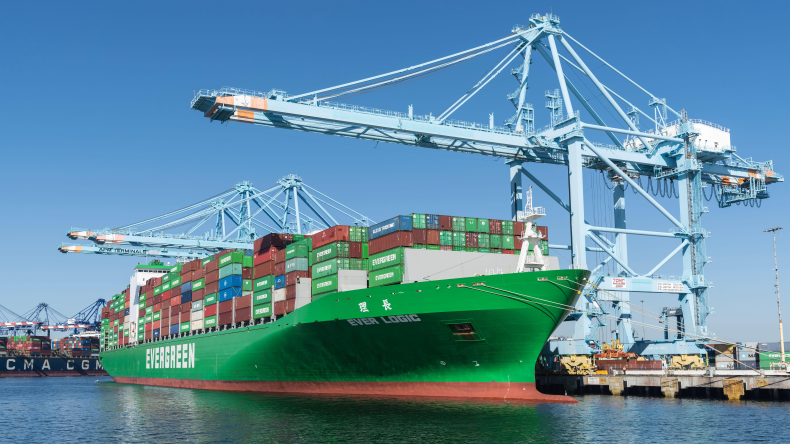
Clerc spoke with journalists at the naming ceremony of the green methanol-powered vessel Alette Maersk in Los Angeles Port.
Clerc hopes that assessing cargo containers powered by fossil fuels will encourage shipping companies to build zero and near-zero emission vessels: “So what we’re saying is, how do you create a level playing field without causing inflation? If it costs an extra $100 to transport one container with green fuel, and 1% of the containers are transported using green fuel, then imposing a tax of just $1 on the other 99% of the containers as a cost incentive for companies buying these 100 containers would be a fair incentivization process.”
Clerc emphasized that the industry-wide approach Maersk advocates through IMO is critical: “The situation now is that this industry has moved ahead of regulation, but at least now it requires regulatory help because the cost gap to do the right thing is so large that without leveling the market and making it easier for consumers and customers to make the right choice, it’s not economically feasible. That’s exactly what we’re trying to do… We’ve made significant investments. From an engineering perspective, we’ve proven that decarbonization is possible, and we can run the entire industry and global supply chain on a sustainable basis. But market conditions and economic realities make it difficult for consumers and customers to make the right choice without some form of incentive or carbon manipulation…”
Korean HHI Announces Successful Carbon Zero Emission Ammonia Engine Test
One highlight of the progress Clerc described is that HD Hyundai Heavy Industries (HD HHI) announced “the successful development of an ammonia dual-fuel (DF) engine, a carbon-zero fuel technology, and received type approval from seven major classification societies.”
The company stated, “From September 30 to October 2, 2024, HD HHI successfully conducted the type approval test for its first model ‘H22CDF-LA’ of the HiMSEN ammonia dual-fuel engine at its Engine Technology Center in Ulsan, South Korea.”
The company explained: “By developing this ammonia DF engine with power ranging from 1.4 to 2.2 MW, HD HHI can not only apply it to ammonia carriers and general commercial ships but also for land-based power generation. The ‘H22CDF-LA’ is the world’s first high-pressure direct injection ammonia engine designed to minimize GHG emissions by using carbon-zero ammonia as fuel. The engine controls NOx and unburned ammonia emissions in exhaust gases through only a selective catalytic reduction (SCR) system, effectively reducing the concentration of ammonia emissions. This progress with the ammonia DF engine builds on the success of HD HHI’s global first H32DF-LM methanol dual-fuel engine launched in 2022.”
Challenges of Ammonia Fuel
According to two maritime experts consulted by AJOT, the use of ammonia as a fuel still faces several challenges.
They noted that ammonia’s “biggest advantage is its molecular formula without ‘C’, meaning if an engine can burn ammonia, it automatically becomes ‘carbon-zero’.”
However, designing ammonia-powered engines requires addressing the following issues:
- High toxicity
- High corrosivity
- Burning ammonia in internal combustion engines is difficult and may require a significant amount of pilot fuel, which could result in by-products more harmful than those from burning ammonia.
However, the experts pointed out that “in Hyundai Heavy Industries’ press release, we see technological advancements attempting to address and mitigate these issues. However, actual data has not yet been released.”
MEPC Progress at IMO
The IMO stated that the Marine Environment Protection Committee also made progress on several other issues:
- Vessel energy efficiency
- Designation of new emission control areas
- Designation of new particularly sensitive sea areas
- Ballast water management
- Mitigation of marine litter
- Air pollution prevention
- Underwater noise from commercial vessels
- Pollution prevention and response
- Vessel recycling
Stas Margaronis
West Coast Correspondent
Copyright © 1999–2024 American Journal of Transportation. All rights reserved.
Source website: