Skip to content

Manufacturing

Analysis

India’s top 10.4% factories produce 72% of manufacturing output

A study in a National Statistical Office journal, using Annual Survey of Industries 2022-23 data, finds that factories employing more than 200 workers make up 10.4% of India's operational units but generate nearly 72% of manufacturing gross value added, or Rs 15.9 lakh crore of a total Rs 22 lakh crore. Micro units with up to 10 workers represent 36.3% of factories but yield 2% of output, and carry an 85% loan-to-GVA ratio versus 39% for large plants. Only 11% of the manufacturing workforce is female, and just 2.7% of factories run R&D units.

Original source: timesofindia.indiatimes.com

India’s top 10.4% factories produce 72% of manufacturing output

Ask SCI.AI about this story

📋 本文要点

A study in a National Statistical Office journal, using Annual Survey of Industries 2022-23 data, finds that factories employing more than 200 workers make up 10.4% of India's operational units but generate nearly 72% of manufacturing gross value added, or Rs 15.9 lakh crore of a total Rs 22 lakh crore. Micro units with up to 10 workers represent 36.3% of factories but yield 2% of output, and carry an 85% loan-to-GVA ratio versus 39% for large plants. Only 11% of the manufacturing workforce is female, and just 2.7% of factories run R&D units.

According to timesofindia.indiatimes.com, India’s manufacturing sector is sharply divided by scale: large factories employing more than 200 workers make up just 10.4% of operational units but generate nearly 72% of the country’s manufacturing gross value added, a study published in a National Statistical Office journal has found.

Large units dominate output and jobs

The study, drawing on data from the Annual Survey of Industries (ASI) 2022-23, shows that the manufacturing GVA of these large establishments amounts to Rs 15.9 lakh crore, out of a total sector GVA estimated at around Rs 22 lakh crore for the year. The same large factories also provide 63% of industrial jobs.

At the other end of the scale, factories employing up to 50 workers account for more than 71% of all operational units but contribute only 10% to overall manufacturing GVA. Micro units with up to 10 workers represent 36.3% of operational factories yet yield just 2% of output.

Policy experts cited in the report frequently recommend helping smaller units scale up through targeted technology upgradation, cluster-based supply chain linkages with larger firms and easier access to credit, as ways to accelerate industrial growth.

Smaller factories carry heavier debt loads

The productivity gap coincides with a large debt burden on smaller establishments. Factories with up to 10 workers carry a formal loan-to-GVA ratio of 85%, compared with around 39% for factories employing more than 200 workers.

The study indicates that while small units leverage significant formal credit relative to their size, low capacity utilisation and limited scale prevent them from translating that capital into proportionate output. The result is a manufacturing base where a small minority of large establishments drives the bulk of value creation while thousands of medium and small units remain burdened by debt and low productivity.

Women underrepresented on factory floors

On workforce composition, the ASI study underscores sharper vulnerabilities: merely 11% of the overall manufacturing workforce is female. The share rises marginally from 8.5% in factories employing up to 10 workers to 11.5% in large units with more than 200 workers.

The figures point to a gender gap that persists across every size category of factory, with even the largest establishments recording female participation only slightly above one in ten workers.

R&D and training scale with factory size

A key driver behind the productivity divide is the sharp disparity in shop-floor enablers such as research and development and worker training. Across all operating factories, a mere 2.7% maintain an active R&D unit, while only 6.7% provide formal skill training to workers.

Adoption scales heavily with size, the study finds. Nearly 12% of large units operate R&D facilities and 20% offer formal training, compared with just 0.6% and 2.5% respectively among micro units with up to 10 workers.

The gap in these enablers mirrors the output divide: the units least able to invest in research and skills are also the ones contributing the smallest share of manufacturing value added, while the large factories that dominate output are far more likely to run R&D departments and structured training programmes.

Source: timesofindia.indiatimes.com

Compiled from international media by the SCI.AI editorial team.

Ask SCI.AI Finished reading? Continue with SCI.AI. Explore the related policy, route, company and historical context. Continue asking
Stay ahead of supply chain shifts

One email a week: the stories that matter and new risk events — in English, free.

Prefer RSS? Articles Risk events

India port capacity hits 2.8B tonnes, hinterland gaps persist
Manufacturing

India port capacity hits 2.8B tonnes, hinterland gaps persist

India's port capacity has reached 2.8 billion tonnes a year, up 22 per cent from 2.3 billion tonnes in 2017-18, yet a new FICCI-Kearney report argues the binding constraint on trade has shifted inland. Cargo volumes rose 38 per cent to 1,668 million tonnes, lifting utilisation from 52 per cent to 59 per cent, while average vessel turnaround at major ports fell 18 per cent to about 49 hours. The report finds export clearance averaged 30 hours but the gap to vessel departure stretched to 158 hours, or 84 per cent of total time, and notes foreign hubs still handled around 75 per cent of transhipment containers as of May 2025.

Foundry Robotics raises $100M for autonomous assembly factory
Manufacturing

Foundry Robotics raises $100M for autonomous assembly factory

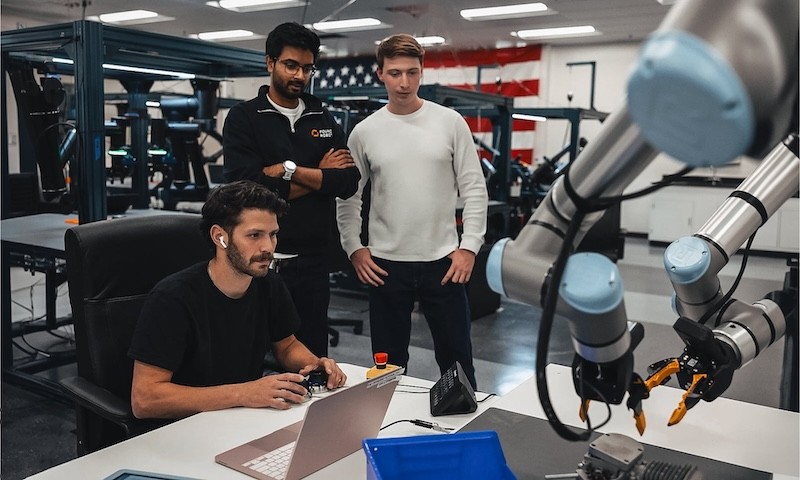
Foundry Robotics has raised an oversubscribed $100 million Series A led by Marlinspike Partners, with backing from Khosla Ventures, Red Glass Ventures, SE Ventures, Wing VC, Axiom Ventures, Hanabi and Zero Shot Fund. The company builds and operates autonomous factories for complex assembly, combining AI-powered robotic cells with manufacturing experts. The funding will build out its Emeryville site, accelerate deployment of AI models into production and grow its research, engineering and factory operations teams. Foundry has expanded its footprint twentyfold to a 130,000-square-foot facility and serves defense and commercial customers building drones, autonomous vehicle subassemblies, wire harnesses, satellites and other complex electro-mechanical products.

AFC, Munich Re launch $1B trade finance risk-sharing plan
Manufacturing

AFC, Munich Re launch $1B trade finance risk-sharing plan

Africa Finance Corporation and Munich Re have signed a $1 billion risk-sharing programme to expand trade finance capacity for African banks. The Unfunded Managed Debt Mobilisation Programme's first phase covers 38 financial institutions in 11 countries, focusing on letters of credit, trade loans and trade guarantees. Munich Re automatically assumes an agreed share of eligible transactions within pre-set risk parameters while AFC retains part of the risk. AFC executives Banji Fehintola and Wola Asase said the deal replaces a transaction-by-transaction approach in place since 2018 and supports trade financing as AfCFTA deepens commercial links. The programme anchors AFC's wider debt mobilisation platform.

Welcome Back!

Login to your account below

Create New Account!

Fill the forms below to register

Retrieve your password

Please enter your username or email address to reset your password.

Scan to share via WeChat

Open WeChat and scan the QR code to share

QR Code

Add New Playlist